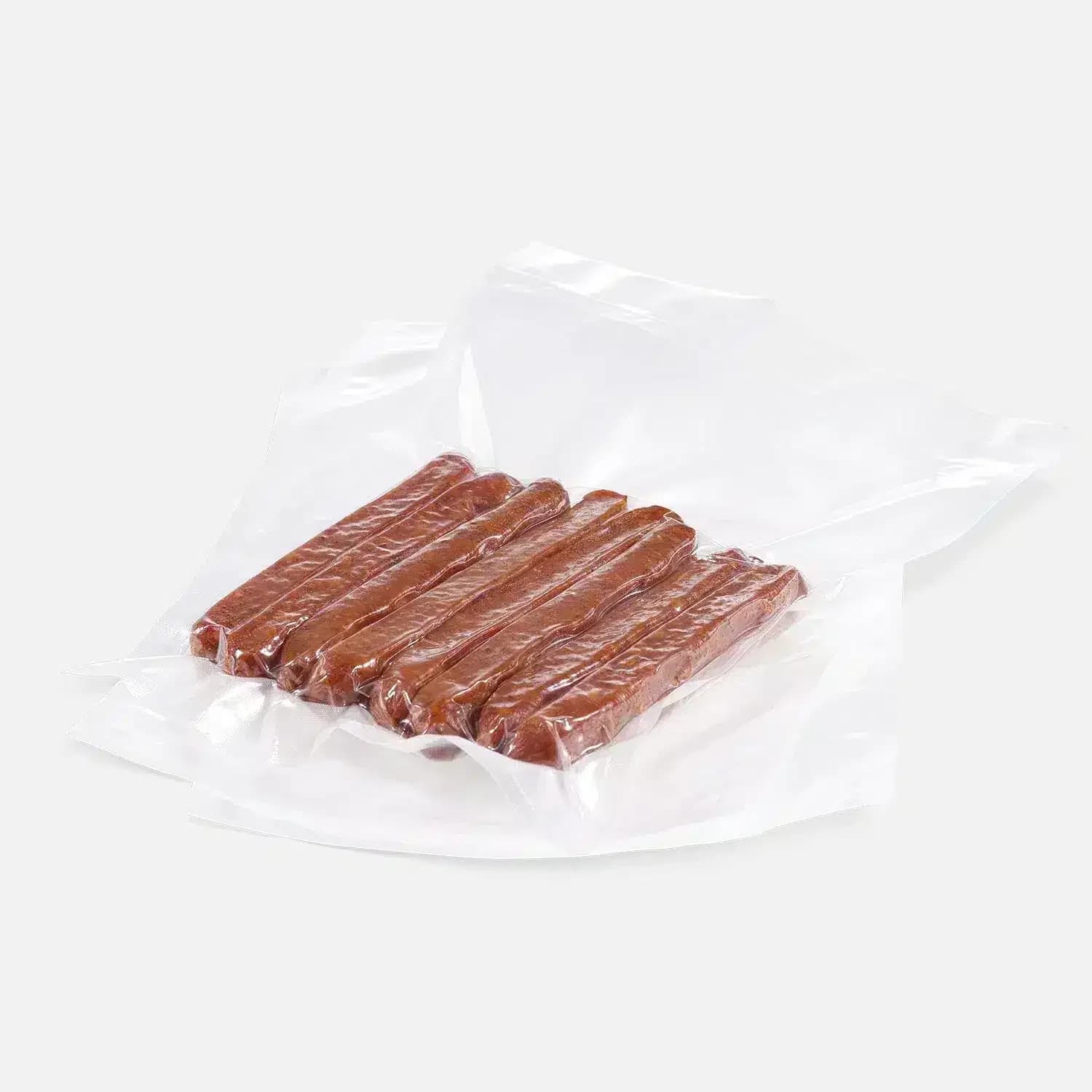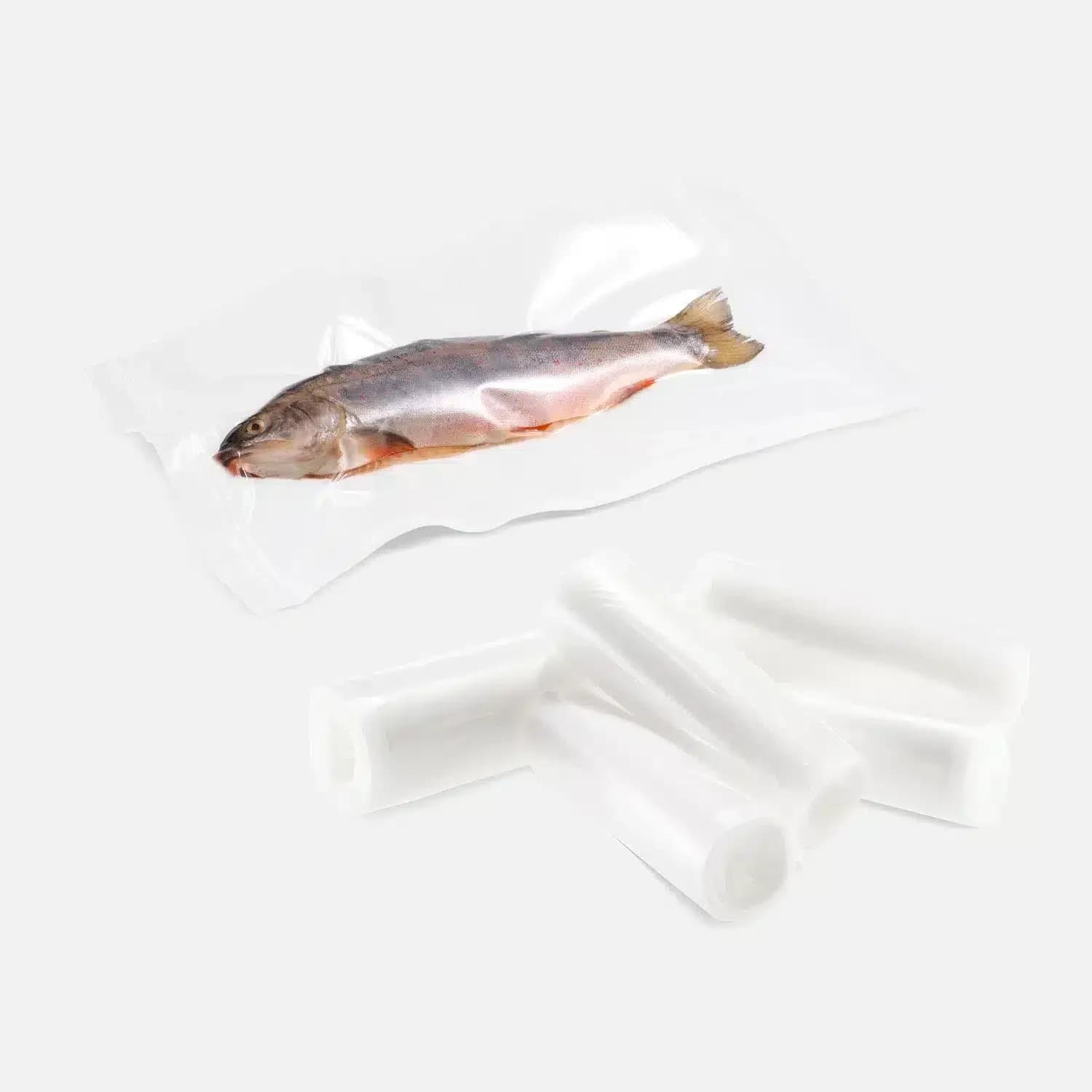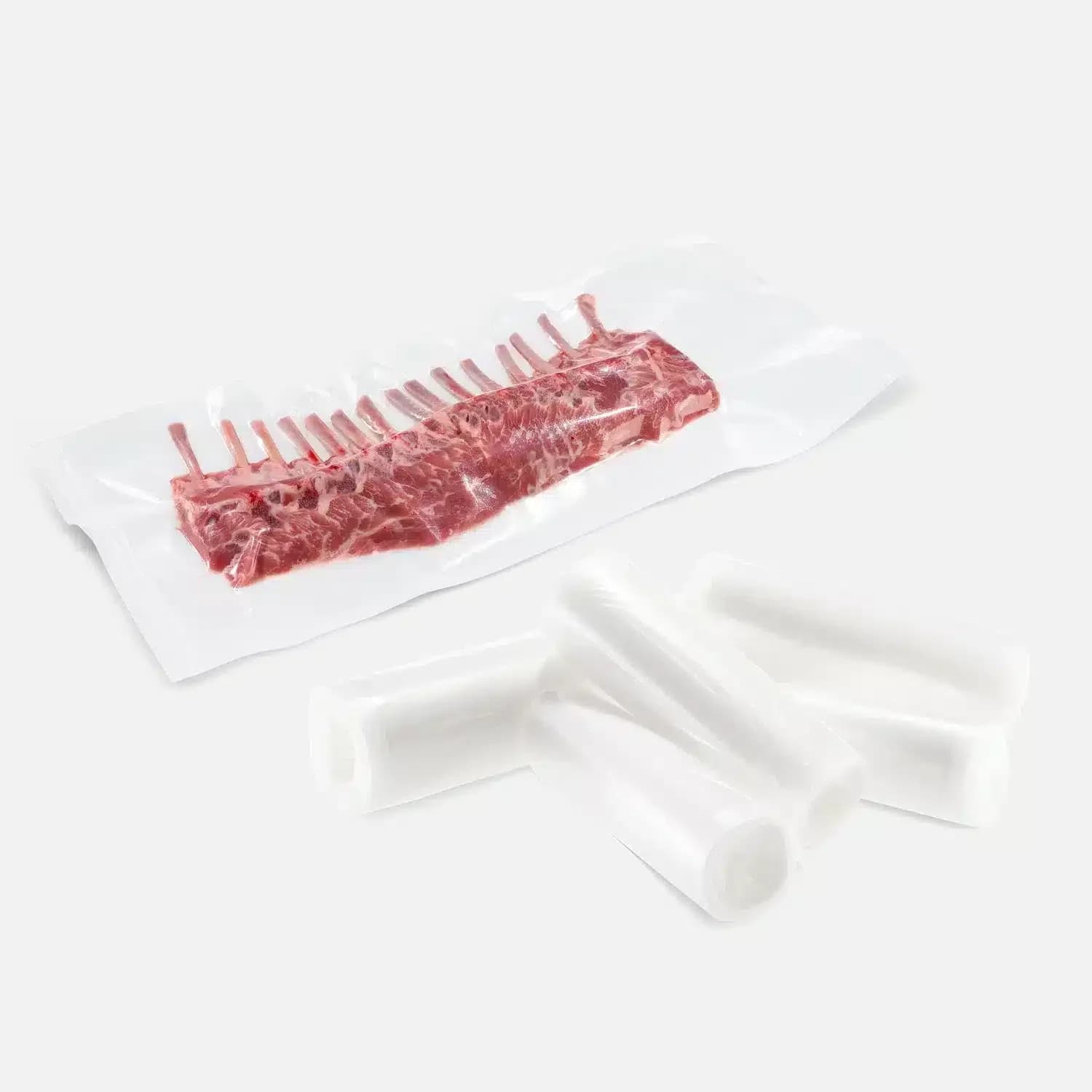
The short answer
- Made in Switzerland, with the embossed structure built into the film instead of stamped on afterwards.
- So the film is the full 90 micron everywhere, with no thin spots where it was pressed.
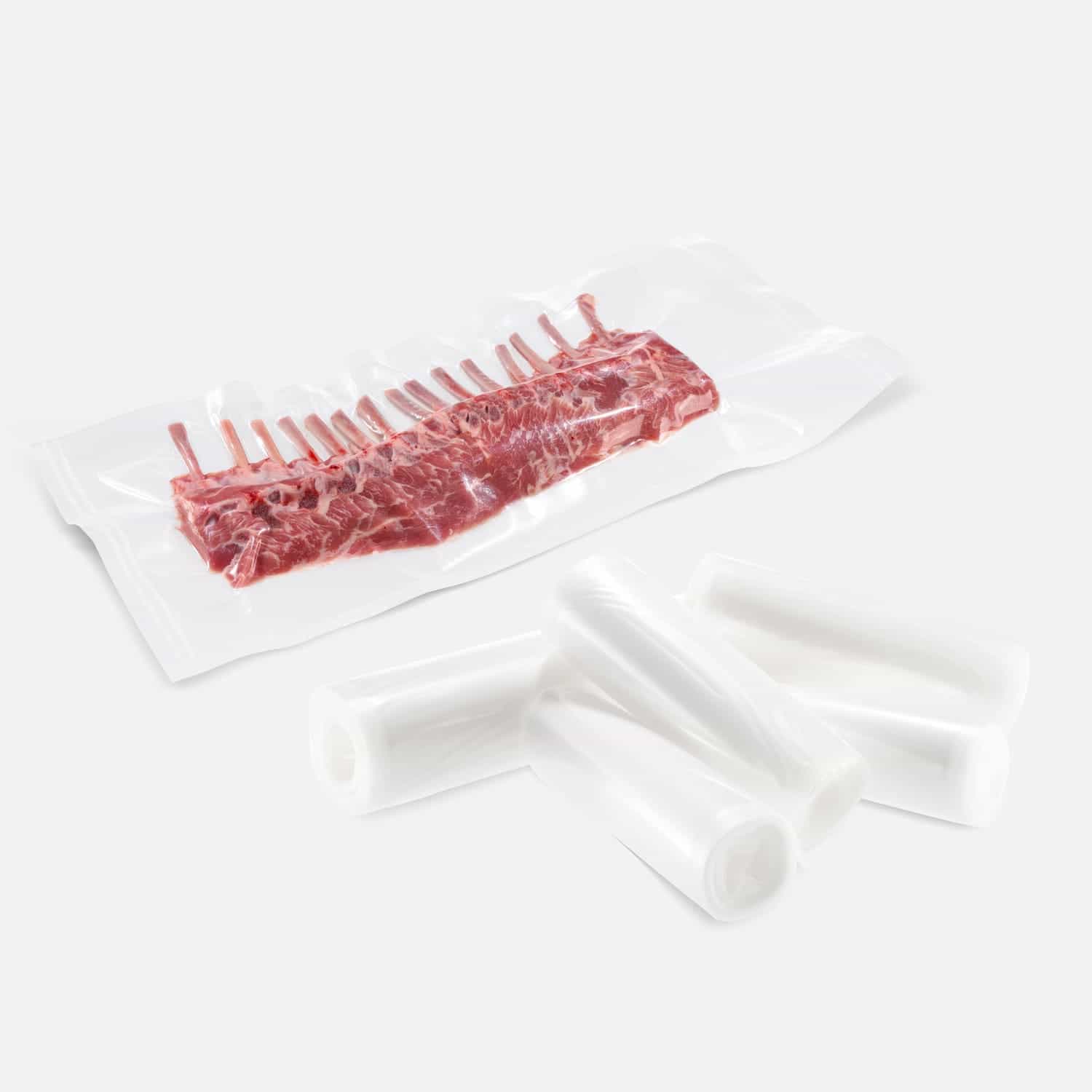
- PA/PE film free of plasticisers, BPA and microplastics; freezer, microwave and sous vide up to 95 °C.
- They work in every external vacuum sealer, and in chamber sealers.
Stamped bags against LAVA film
| Item | Bags with stamped structure | LAVA R-Vac |
|---|---|---|
| Structure | Pressed into the finished film | Built into the film |
| Thickness | Thinner where it's stamped | An even 90 micron |
| Strength | Weaker at the pressed points | The same across the whole bag |
| Over time | Higher risk of a seal or bag failing | Made for long-term use |
LAVA's comparison, from the R-Vac product data.
What the film does
A fine structure
The structure on one side keeps channels open for the air to the last corner, with any brand of external sealer. Because it's fine, liquid in the food isn't drawn towards the opening as quickly.
Two layers that do different jobs
PA keeps oxygen out and resists punctures; PE seals. The film is food-contact approved, tasteless and odourless, and free of plasticisers, BPA and microplastics.
Cold and hot
Rated for years in the freezer, for the microwave and for boiling, and for sous vide up to 95 °C for up to 2 hours.
Made to be used again
Dishwasher safe and reusable several times; leave a little extra length so there's film to seal again.
From Switzerland, through LAVA
- Swiss-made R-Vac and E-Vac, the strong RS-Vac and ES-Vac, and B-Vac, G-Vac, K-Vac and Z-Vac are produced in Switzerland.
- Only from LAVA in Australia R-Vac bags are available in Australia exclusively through LAVA.
- Custom sizes for businesses R-Vac in your own size from 2,000 bags; ask us for a quote.
LAVA AustraliaOfficial LAVA distributor and vacuum-packaging specialists since 2018.