The short answer
- Vacuum sealers fall into seven classes by the motor's power, from Portable (under 50W) to Commercial Plus (800W and above).
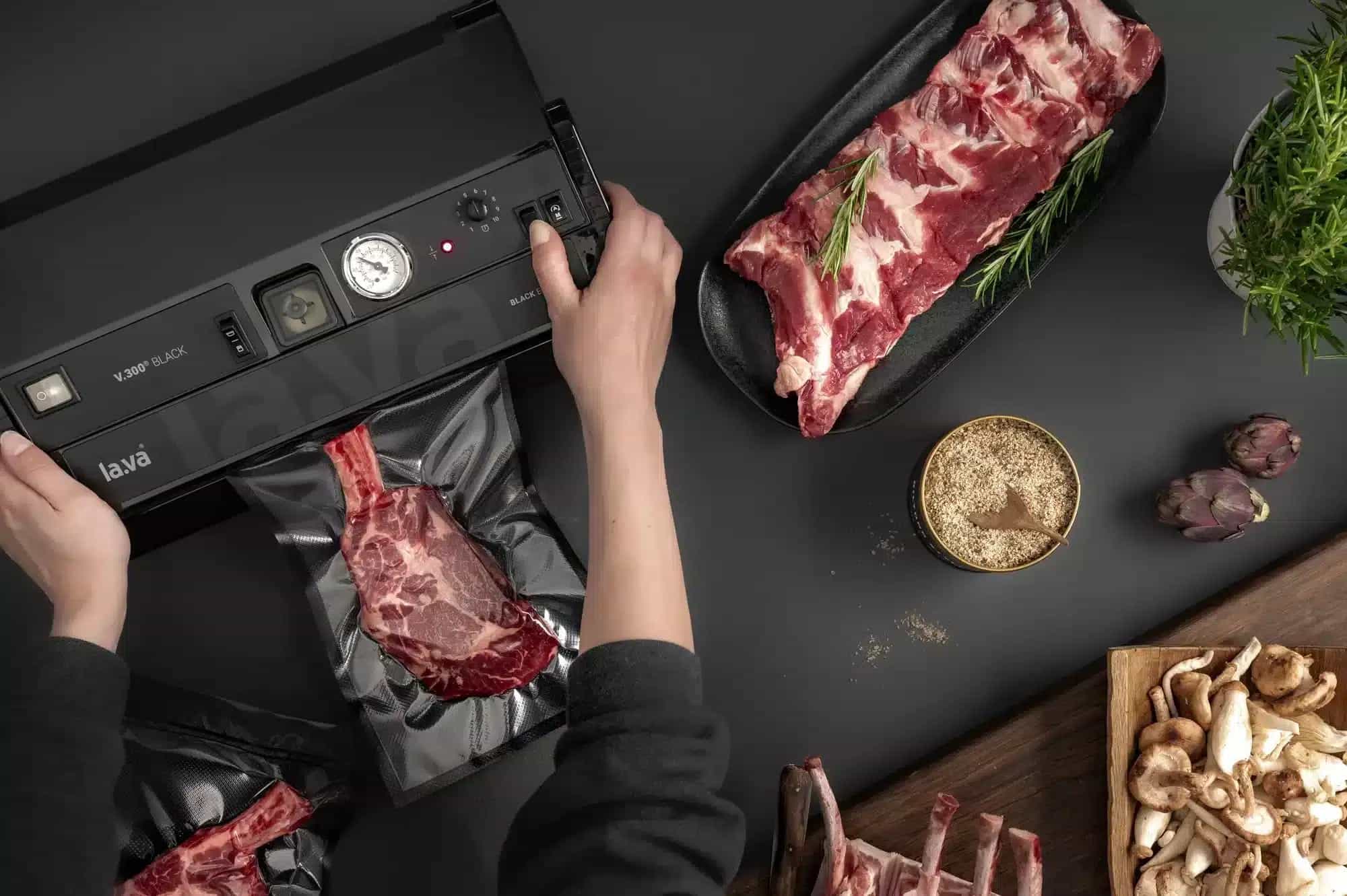
- Every LAVA sealer is class 6/7 Commercial or 7/7 Commercial Plus: 500W to 2,600W.
- Some features are left out on purpose: no built-in roll cutter, no locking handle. The space goes to the transformer and the pump.
- External sealers, LAVA's included, aren't made for liquids: soups and sauces need a chamber sealer, freezing first or a vacuum container.
Why sort sealers by watts
The motor's power in watts is the one figure every sealer has, and it says a lot about what the machine is built for: how strong the pump is, how much heat the seal bar can take, how long it keeps going. We sort every sealer into one of seven classes by it, so a machine shows the same class wherever you see it.
Each class runs from its lower figure up to just below the next one, so a round figure such as 300W or 800W starts the next class. Handheld sealers are always Portable, whatever their watts; chamber sealers go by their watts like the rest.
The seven vacuum sealer classes
| Class | Power | LAVA models |
|---|---|---|
| 1/7 Portable | <50W | – |
| 2/7 Basic | 50–<100W | – |
| 3/7 Domestic | 100–<200W | – |
| 4/7 Heavy-duty | 200–<300W | – |
| 5/7 Light commercial | 300–<400W | – |
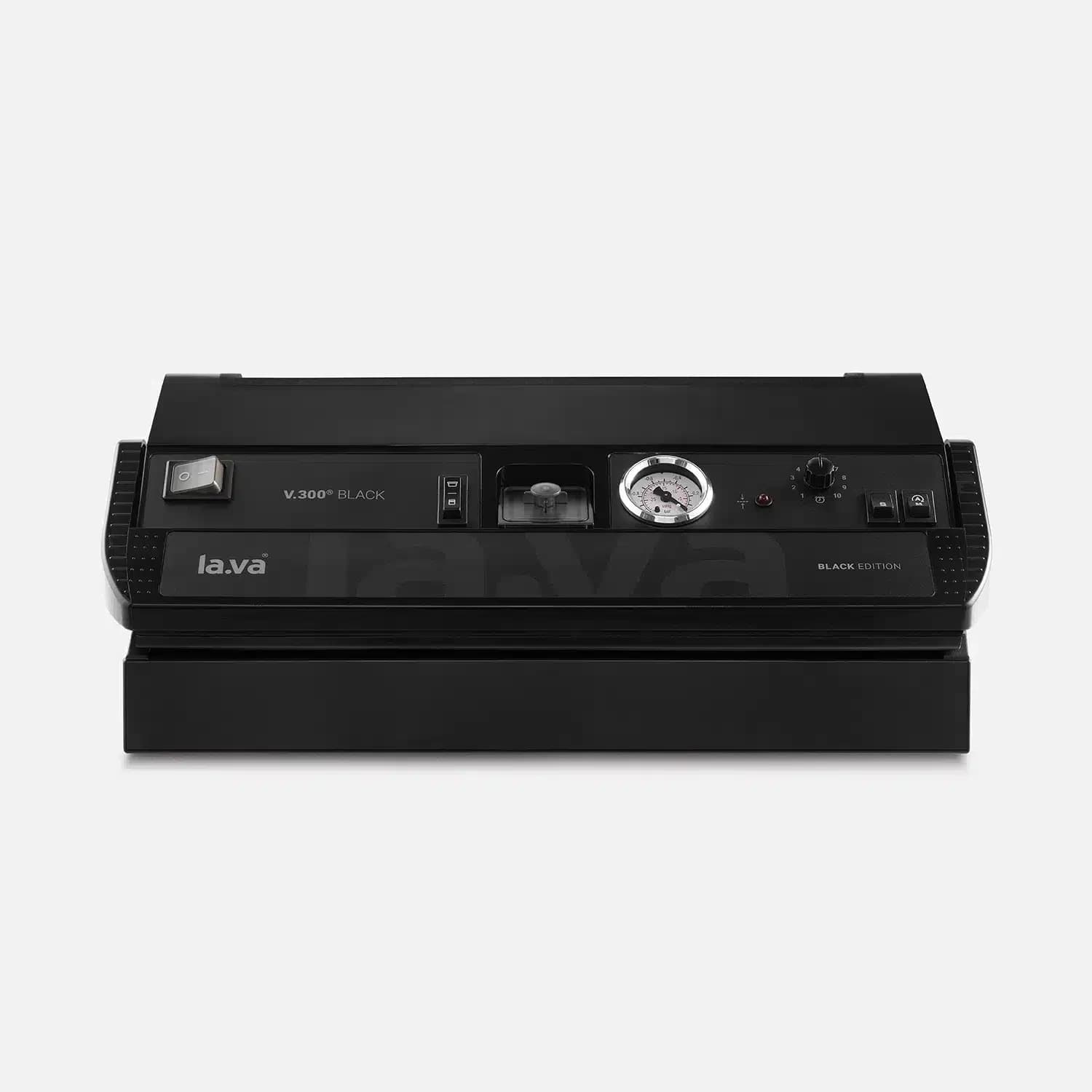
| 6/7 Commercial | 400–<800W | V.100, V.200 and V.300 Premium X (500W), V.300 Black and White (600W) |
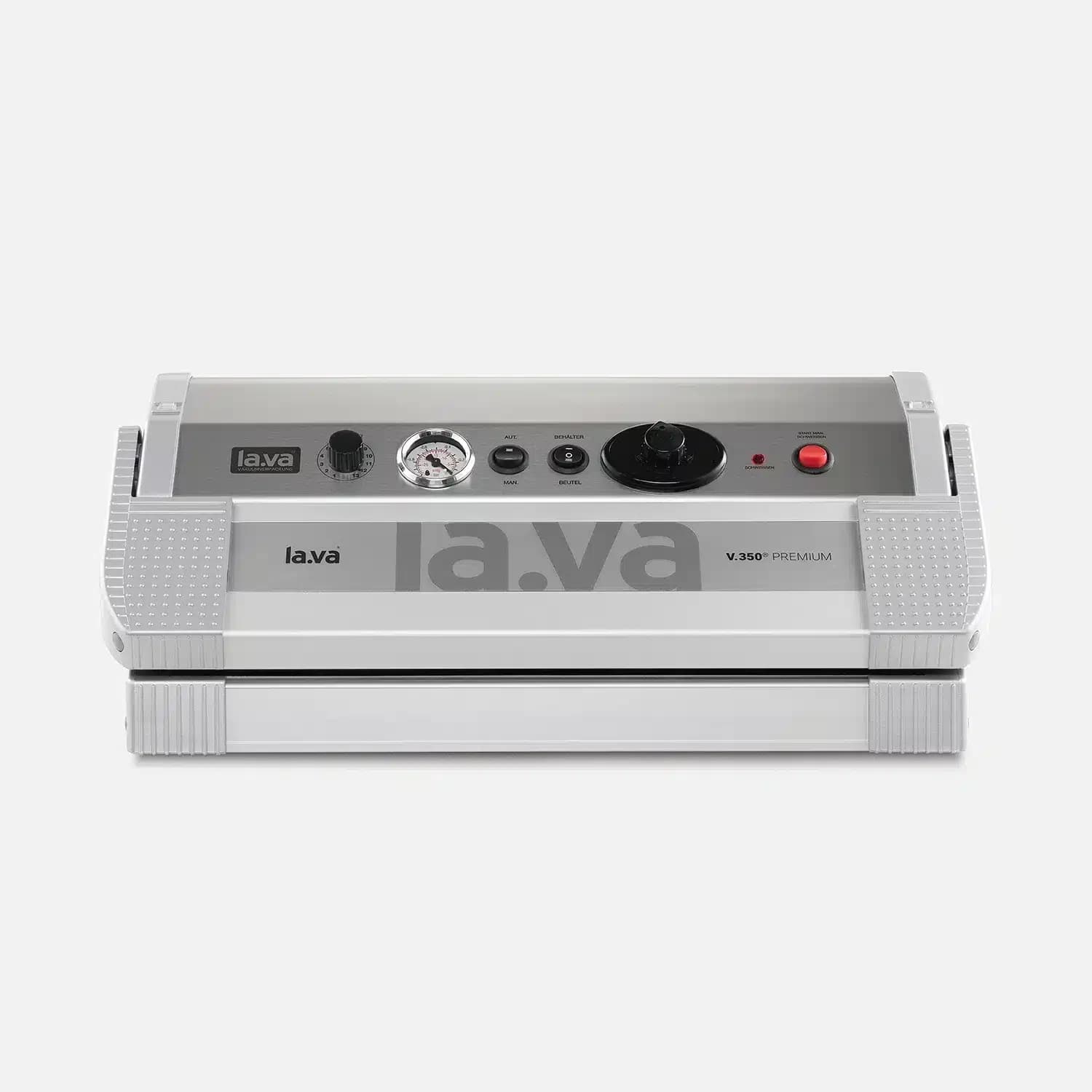
| 7/7 Commercial Plus | ≥800W | V.350 (900W), V.400 (1,100W), V.500 (1,800W), V.1200 (2,600W) |
The class scale used in our shops; watts from the LAVA data. Every model: LAVA vacuum sealers
LAVA plays in a different league
The smallest LAVA starts where most domestic sealers stop: class 6/7 Commercial. The V.100, V.200 and V.300 Premium X run at 500W, the V.300 Black and White at 600W. From the V.350 up, every model is 7/7 Commercial Plus, up to the 2,600W of the 121cm V.1200. For the machines built for kitchens and butcher shops, see the commercial vacuum sealers.
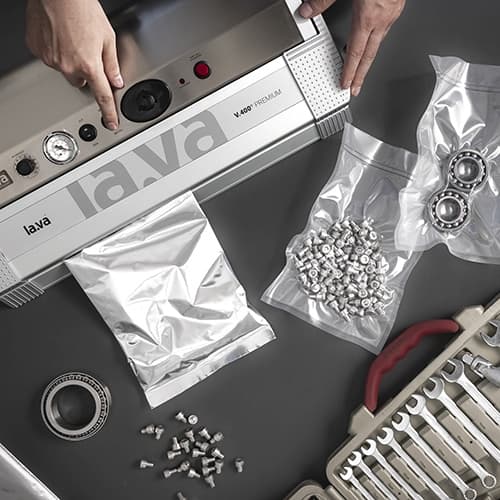
Those watts go into an oversized sealing transformer and a solid double-ball-bearing piston pump, with a fan-cooled housing around them. That is why every LAVA manages up to 1,000 seals in a row without overheating, and why the smallest one weighs 4.4kg.
Why some features are missing, on purpose
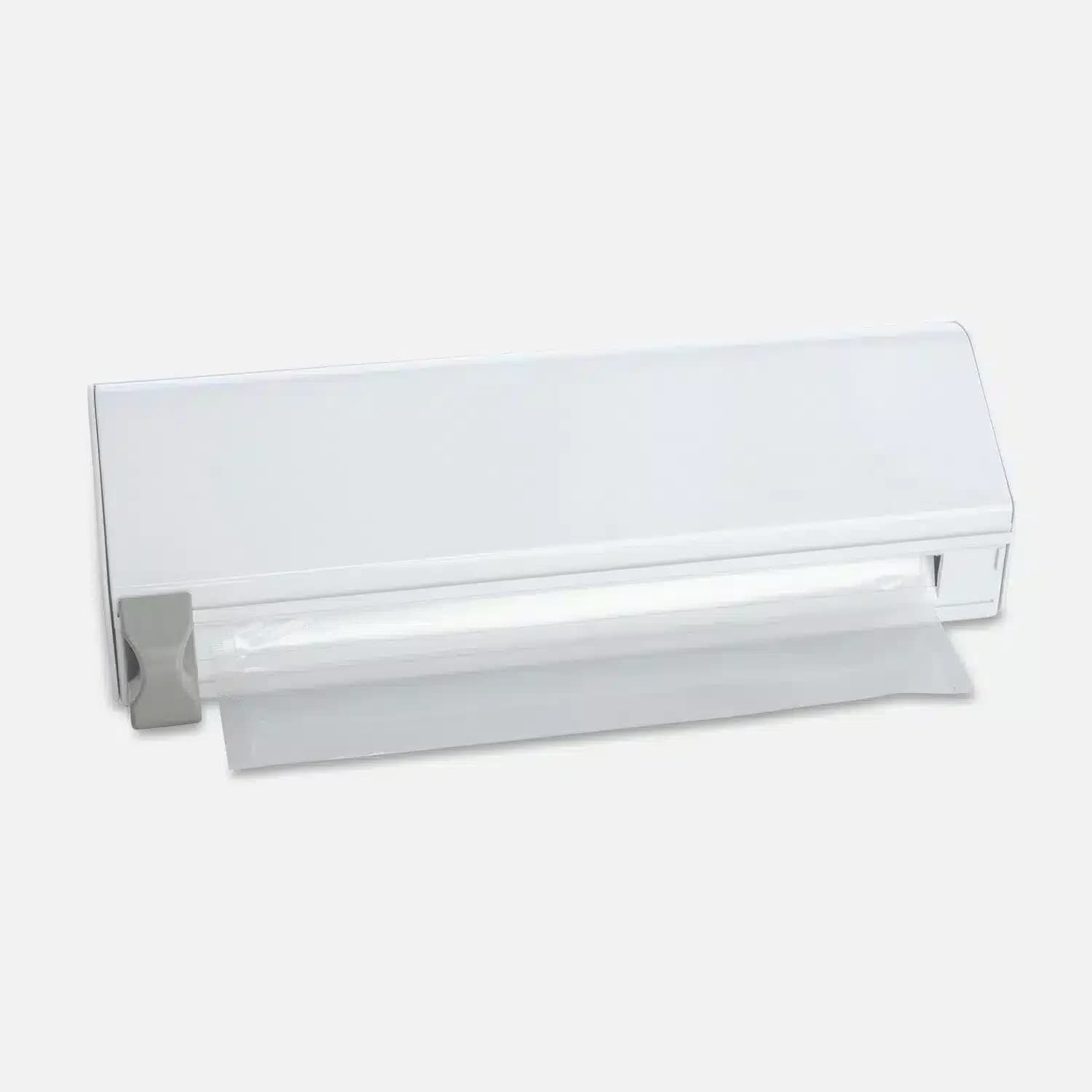
No built-in roll holder and cutter
A roll compartment with a cutter is handy, but it needs room inside the housing. LAVA gives that room to the oversized transformer and the solid pump instead: the parts that decide how well and how long the machine seals. A separate roll dispenser with a cutter does the same job on the bench.
Helps: Roll dispenser with cutter
No locking handle
Many sealers have a handle you lock down and unlock for every bag. For occasional use that is fine. LAVA uses a magnetic closing system instead: a short push on the lid and it holds while the pump works. When you seal bag after bag, that little push is the fastest way.
What quality looks like in a sealer
- Weight Solid pumps and big transformers are heavy: 4.4kg for the smallest LAVA, 32kg for the V.1200.
- Seals in a row Up to 1,000 without a break, so a whole deer or a day's catch goes through in one session.
- No overheating Fan cooling and an oversized transformer keep the seal bar at its work, cycle after cycle.
- Speed 35 litres a minute from the single-pump models, three pumps on the V.500 and V.1200.
- Reliability Built in Germany from serviceable parts, with spare parts for at least 20 years: vacuum sealer spare parts.
Liquids: what an external sealer can't do
LAVA vacuum sealers, like every external sealer, aren't made for vacuum sealing liquids. Soups, sauces and large amounts of marinade are a job for a chamber vacuum sealer, where the whole bag sits inside the vacuum.
Some sealers offer a pulse function: it removes most of the air, but it can't build a strong vacuum. LAVA's L+ pressure regulator works in a similar way. With a lot of liquid in the bag it still isn't easy, because the pump has to run to create the vacuum the seal needs: the vacuum holds the two sides of the film together while the seal bar melts them into one.
Moist food and liquids with a LAVA
- 1
Freeze it firstSoups, stocks and sauces frozen flat in a tray seal like any solid food.
- 2
A strip at the sealLiquidStop catches the moisture from fish and marinated meat before it reaches the weld.
- 3
Use a containerFor anything liquid, a vacuum container in container mode.
LAVA AustraliaOfficial LAVA distributor and vacuum-packaging specialists since 2018.