The short answer
- First time dry aging? Start with the Test Set.
- Long, flat or oddly shaped cuts up to 30cm wide? Take the roll.
- Whole striploins and hams of 8–11kg? You need the 40×70cm bag.
Why the right size matters
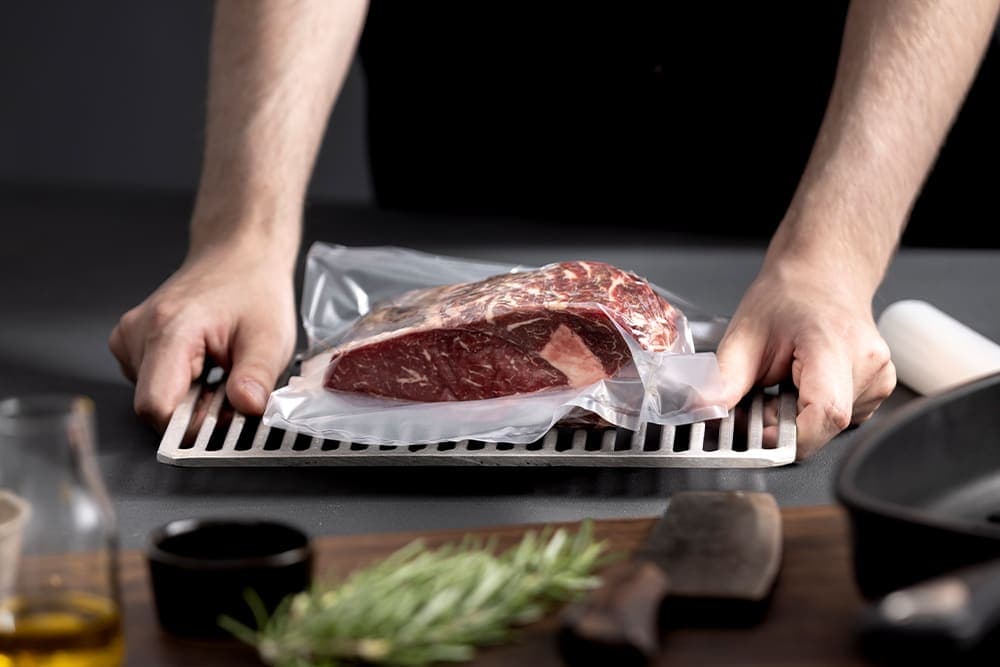
The membrane only works where it touches the meat. A bag that's too big leaves loose film and folds, and moisture can't escape evenly there. A bag that's too tight makes it hard to keep juice off the seal area. Aim for a snug fit with about 8cm of free film at the open end for sealing.
The Test Set: for your first dry age
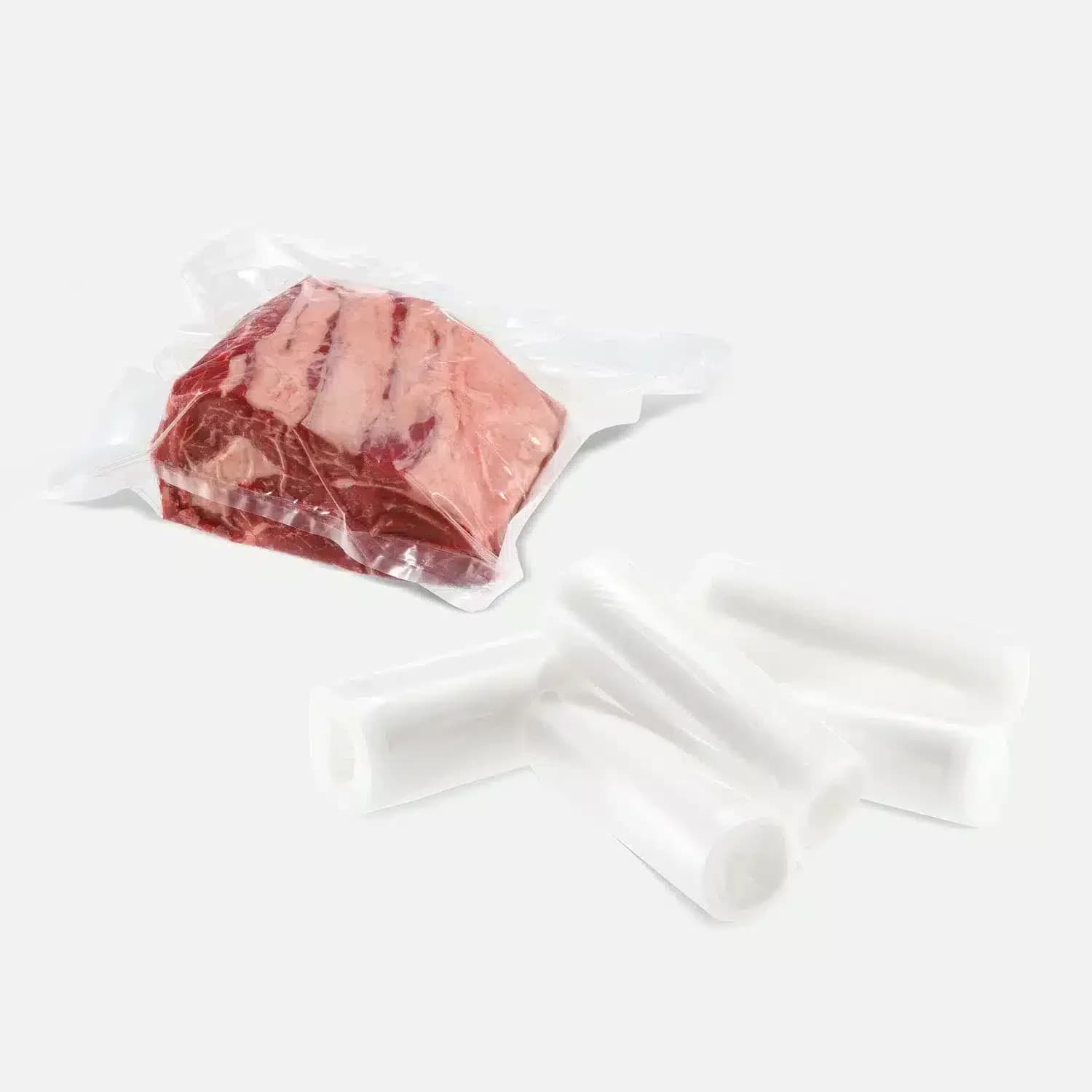
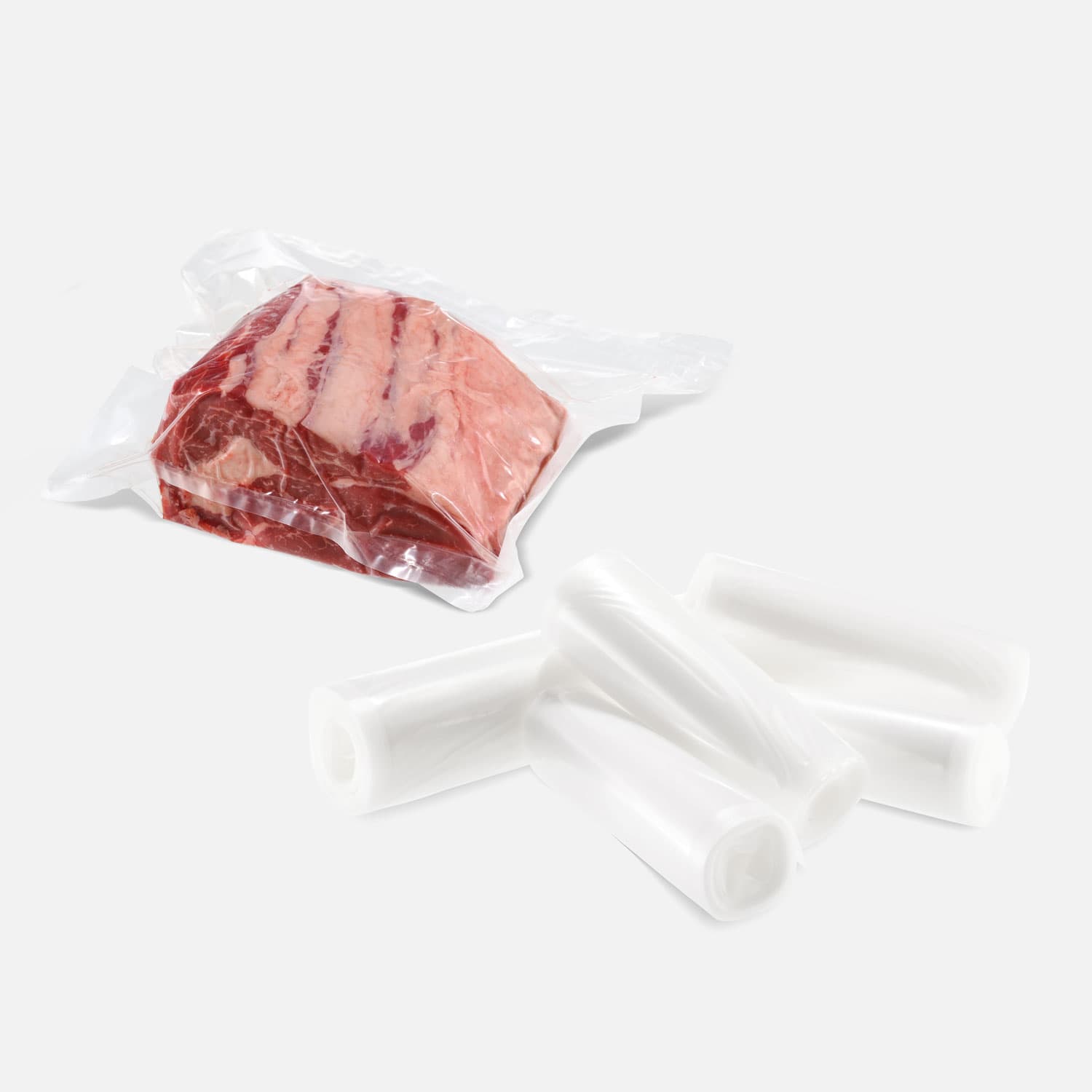
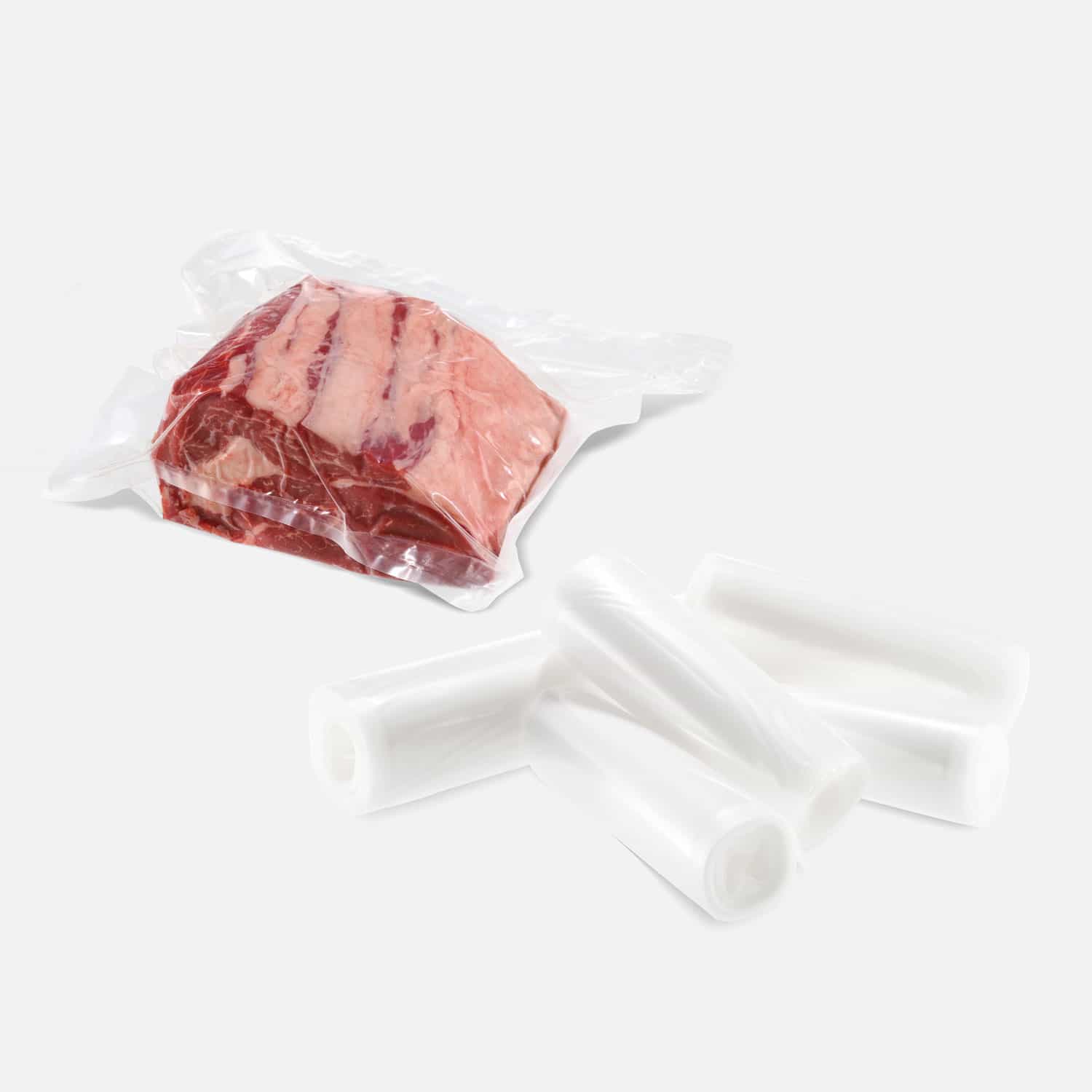
Four bags in the two sizes that cover most everyday cuts. The 20×30cm bags take 1–2kg, such as a small ribeye or a piece of rump. The 25×55cm bags take 2–5kg, such as a striploin section or a bone-in rib.
Age a small and a large cut side by side, taste the difference, and you'll know which size to order next time.
The roll: for cuts that don't fit a standard bag
A 35cm brisket flat or a 45cm ribeye roll doesn't sit cleanly in a pre-made bag. With the roll you cut each bag to exactly the right length, seal one end, load the meat, then vacuum and seal the other end with the Vac-Aid strip in place.
One roll gives roughly 9–10 bags of 30cm, or 5–6 bags of 50cm. The only limit is the width: the cut has to be under 30cm across.
The 40×70cm bag: for whole primals and hams
For 8–11kg: a whole striploin, a bone-in short loin, a ham or large dry-cured sausages. Bigger cuts lose proportionally less to trimming, so if you have the fridge space, a large piece gives the best yield.
Check your fridge shelf first: the bag needs to lie flat on a rack with air all around it.
Need another size?
There are six A-Vac formats in total. The 25×40, 25×55 and 30×60cm bags aren't stocked in Australia, but we order them from Germany on request. Call 1300 77 88 29 or see all six sizes.
LAVA AustraliaOfficial LAVA distributor and vacuum-packaging specialists since 2018.