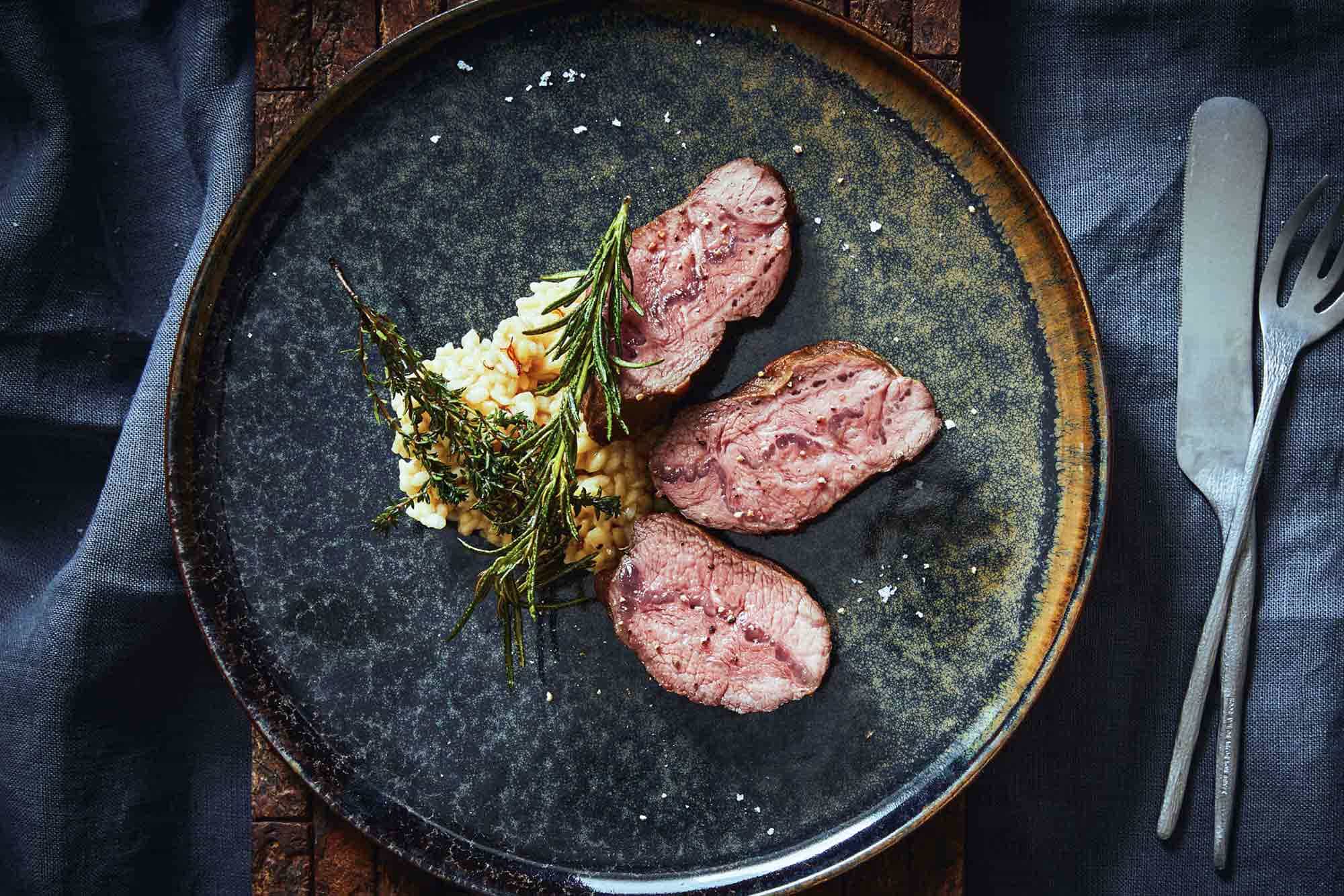
The short answer
- Temperature sets the doneness, time gets the centre there. A few minutes more rarely hurts; a few degrees more does.
- Rule of thumb for a medium steak: water at 54 °C, about 1 hour per centimetre of thickness.
- Fish cooks lowest (47–60 °C), vegetables highest (85 °C); tough cuts take long cooks of 10 hours and more.
- Seal the food without air, so the water reaches every part of it; then sear briefly for colour.
How sous vide works
The food is vacuum sealed and cooked in a water bath held at the exact temperature you want it to end up at. Because the water is never hotter than that, the food can't overcook at the edges: a steak is the same pink from one side to the other. The time only has to be long enough for the centre to reach the water temperature, which depends mostly on how thick the piece is.
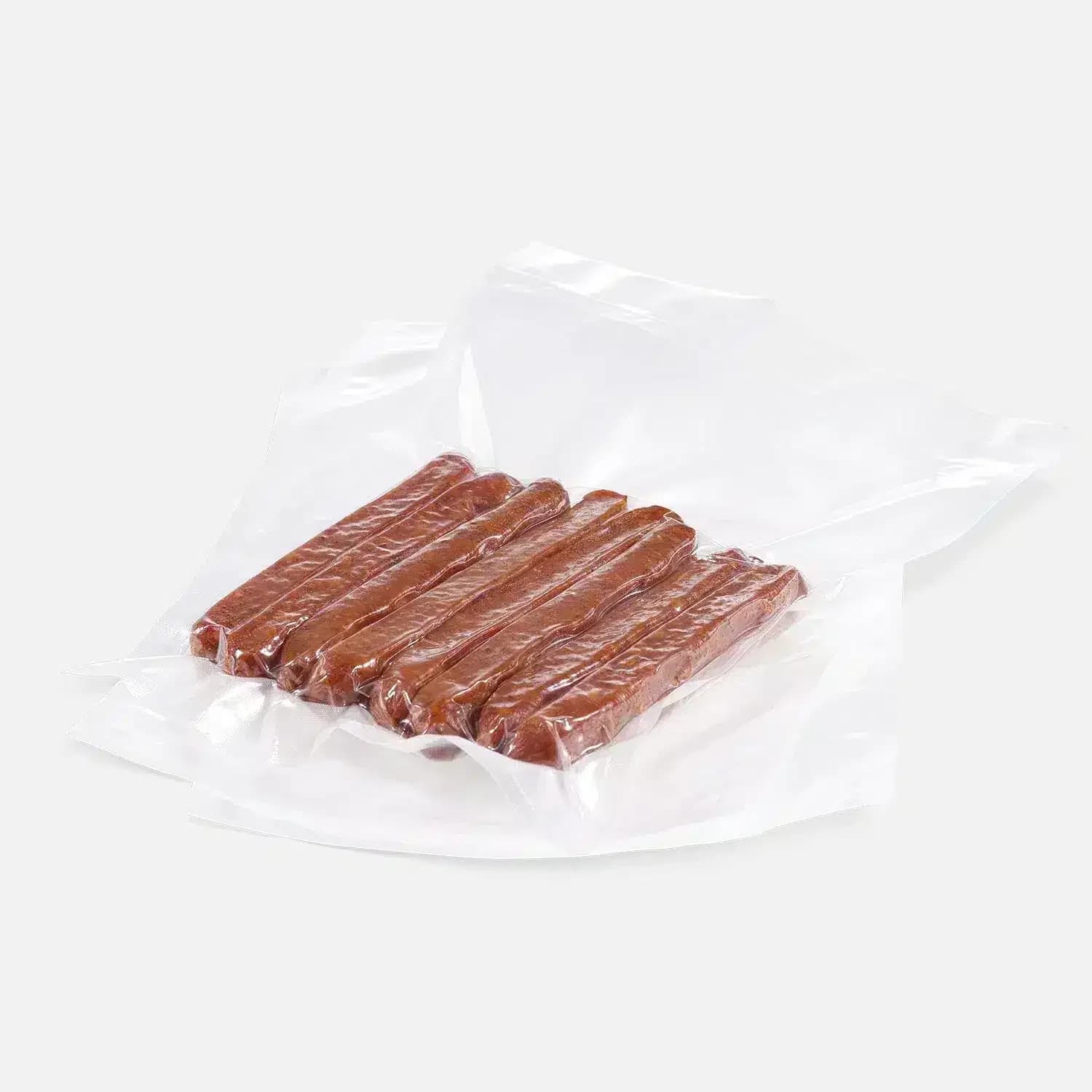
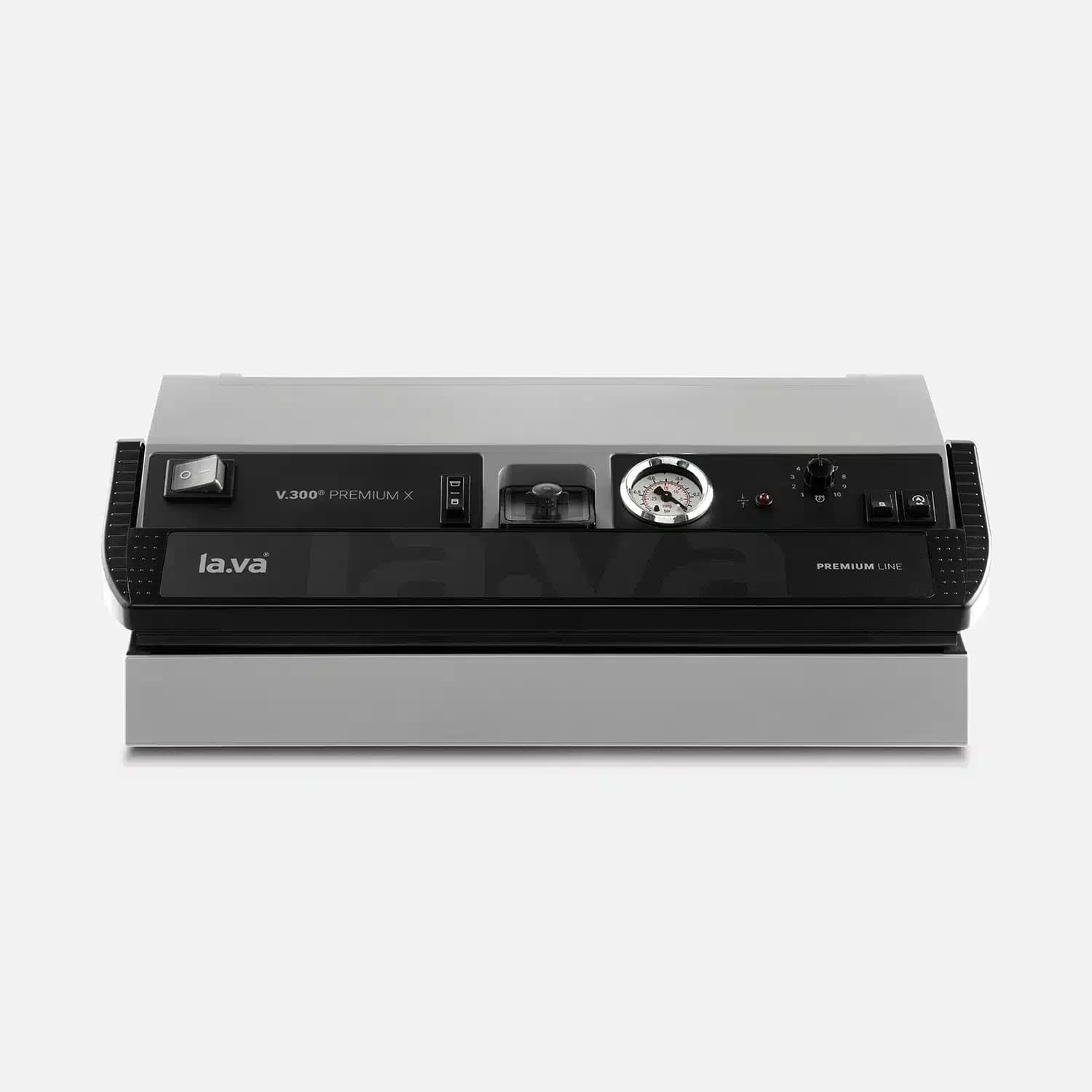
That's why a vacuum sealer matters here: air in the bag makes it float and insulates the food, so it cooks unevenly. A tight seal keeps the bag under water and the food in full contact with it.
Fig. 13 · Temperature map
Where each food cooks
Water temperature and time; medium unless noted. Figures: LAVA.
The full table
| Food | Doneness | Water | Time |
|---|---|---|---|
| Beef | |||
| Rib eye or porterhouse, 2.5cm | Medium | 56 °C | 45 min |
| Fillet or prime rib, 3–4cm | Rare / medium | 51.5 / 58 °C | 1 h 05 / 1 h 20 |
| Fillet or prime rib, 4–5cm | Rare / medium | 51.5 / 58 °C | 1 h 45 / 2 h 45 |
| Fillet or prime rib, 5–6cm | Rare / medium | 51.5 / 58 °C | 2 h 25 / 2 h 50 |
| Flank steak | Medium | 57 °C | 12 h |
| Short ribs | – | 65 °C | 16 h |
| Lamb and game | |||
| Lamb fillet, 2cm | Medium | 55 °C | 40 min |
| Leg of lamb | Medium | 58 °C | 6 h |
| Venison fillet or saddle, 2–3cm | Medium | 58 °C | 20–30 min |
| Wild boar, 2.5cm | Medium | 60 °C | 30 min |
| Rabbit leg | Medium | 62 °C | 4 h |
| Poultry | |||
| Chicken breast | – | 65 °C | 40 min |
| Chicken thigh | – | 65 °C | 1 h 30 |
| Duck breast, 2–3cm | Medium | 58 °C | 1 h 30 |
| Duck leg | – | 80 °C | 10 h |
| Fish and seafood | |||
| Salmon fillet, 2–3cm | Medium | 55 °C | 15 min |
| Trout fillet, 2–3cm | Medium | 47 °C | 18 min |
| Tuna fillet, 2–3cm | Medium | 58 °C | 30 min |
| Prawns | – | 50 °C | 25 min |
| Scallops | – | 47 °C | 30 min |
| Vegetables | |||
| Carrots, potatoes, beetroot | – | 85 °C | 50 min |
| Pumpkin | – | 85 °C | 25 min |
| Asparagus | – | 85 °C | 35 min |
| Corn on the cob | – | 85 °C | 1 h |
Source: LAVA's sous vide cooking times (la-va.com). Thickness matters more than weight: a thicker piece needs longer. Game cut by cut: Sous vide venison and game.
Four tips for better results
- 1
Seal flat, in one layerPieces side by side, not stacked, so the water reaches them evenly. Season before sealing; leave out raw garlic, which turns harsh over long cooks.
- 2
Let the bath reach temperature firstPut the bag in once the water is at the set temperature, and keep it fully under water.
- 3
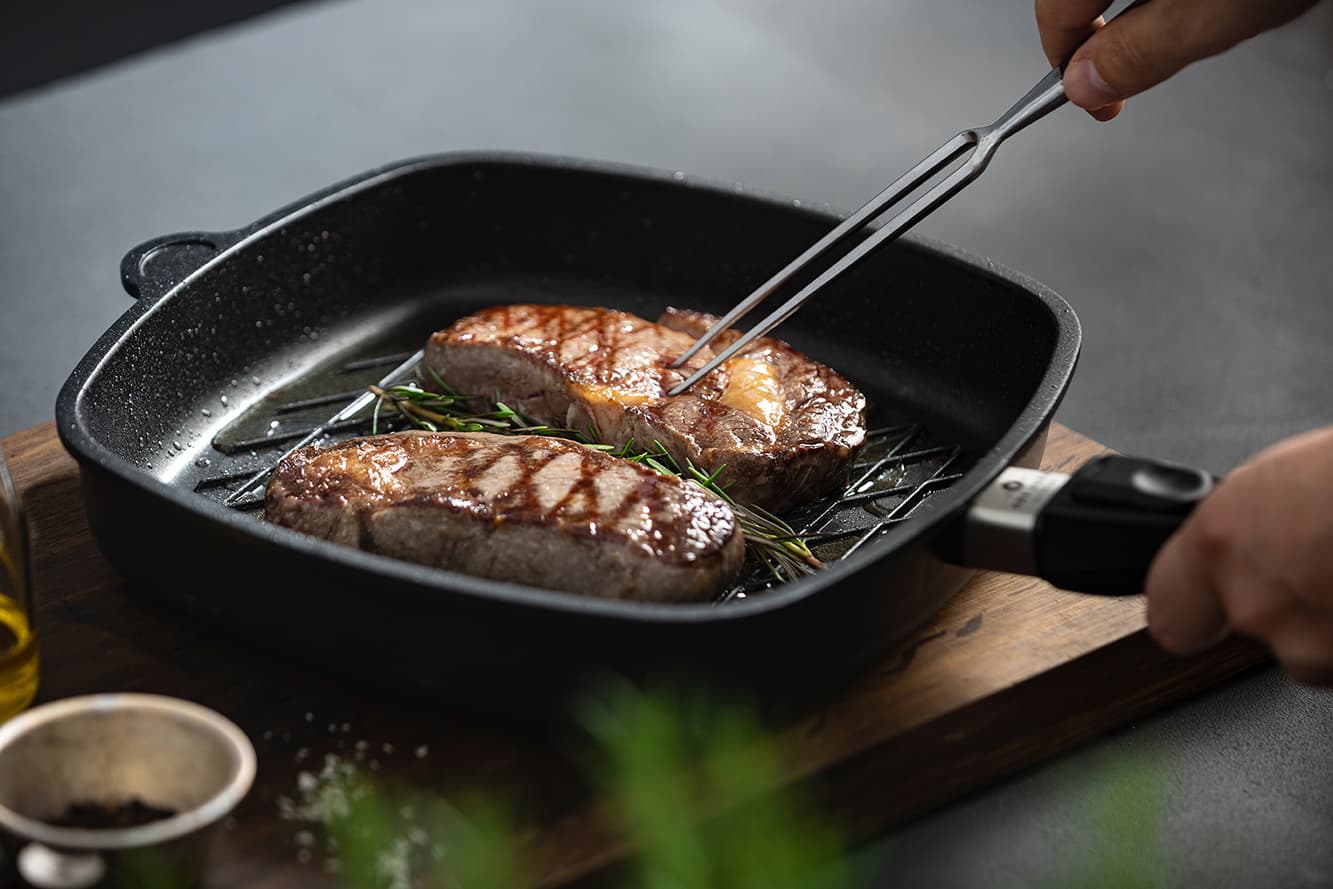
Dry, then sear hot and fastPat the meat dry out of the bag and sear it in a smoking-hot pan, so the crust forms before the inside heats further.
- 4
Long cooks need the right bagFor cooks longer than 2 hours above 70 °C, LAVA recommends its heat-resistant H-Vac cooking bags.
Low temperatures cook, they don't pasteurise. Fish at 47 °C or beef at 51.5 °C is cooked to taste, not made safe from bacteria the way longer, hotter cooking does. Use very fresh food, serve it straight away and don't keep it for later. For children, pregnant women, older people and anyone with a weak immune system, choose fully cooked dishes.
LAVA AustraliaOfficial LAVA distributor and vacuum-packaging specialists since 2018.