The short answer
- Most game cooks sous vide at 54–60 °C. The water temperature is the core temperature the meat ends up at, no more, no less.
- Tender cuts such as backstrap and fillet take about 1 hour per centimetre of thickness; collagen-rich cuts such as shoulder take 8–18 hours.
- Roe deer is the exception: so lean and fine that it turns mushy when cooked too hot or too long.
- Seal the meat without air, and sear it briefly after the bath for a crust.
Why sous vide suits game
Every cut of game is worth cooking well. Sous vide cooks it at a low, exact temperature for a long time, so venison, wild boar and rabbit stay juicy and tender, with their full flavour. It also brings cuts to the table that used to go into the sausage: shoulder, ribs, brisket and neck.
But game isn't all the same. Roe deer especially is very lean, with a fine texture and hardly any connective tissue, so its fibres fall apart quickly: cooked too hot or too long, it turns mushy. Three things decide the result: the right temperature, the right time and a clean vacuum.
What sous vide does for game
- Every cut becomes useful. Shoulder, neck and shank turn tender and juicy, and go on the plate as a main course instead of into the mincer.
- No overcooking. The water holds the temperature, so the meat reaches its core temperature and goes no further. There's no moment to miss, as there is in a pan or oven.
- Game still tastes of game. Cooked in its own juices in the bag, venison keeps its fine flavour and boar its spice, and herbs and spices go in deeper.
- Easy to plan for guests. Cook ahead in the bag, then sear or serve when you need it.
- Tender inside, a crust outside. A short finish on the grill or in a pan adds the roasted flavours.
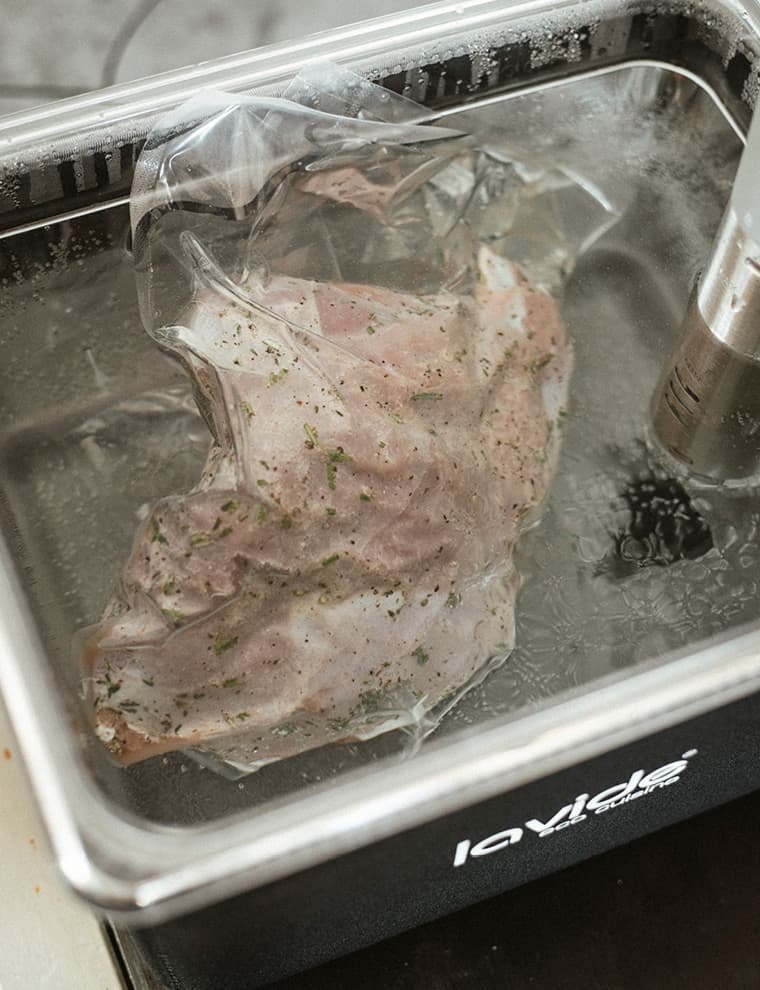
Four steps
1 · Trim and season
Trim the meat, pat it dry and season it lightly: herbs, spices, perhaps a little game stock or butter. Less is more, because flavours come out stronger in the sealed bag. Leave out onions, garlic and acidic marinades, which can turn bitter or mushy over long cooks.
2 · Vacuum seal
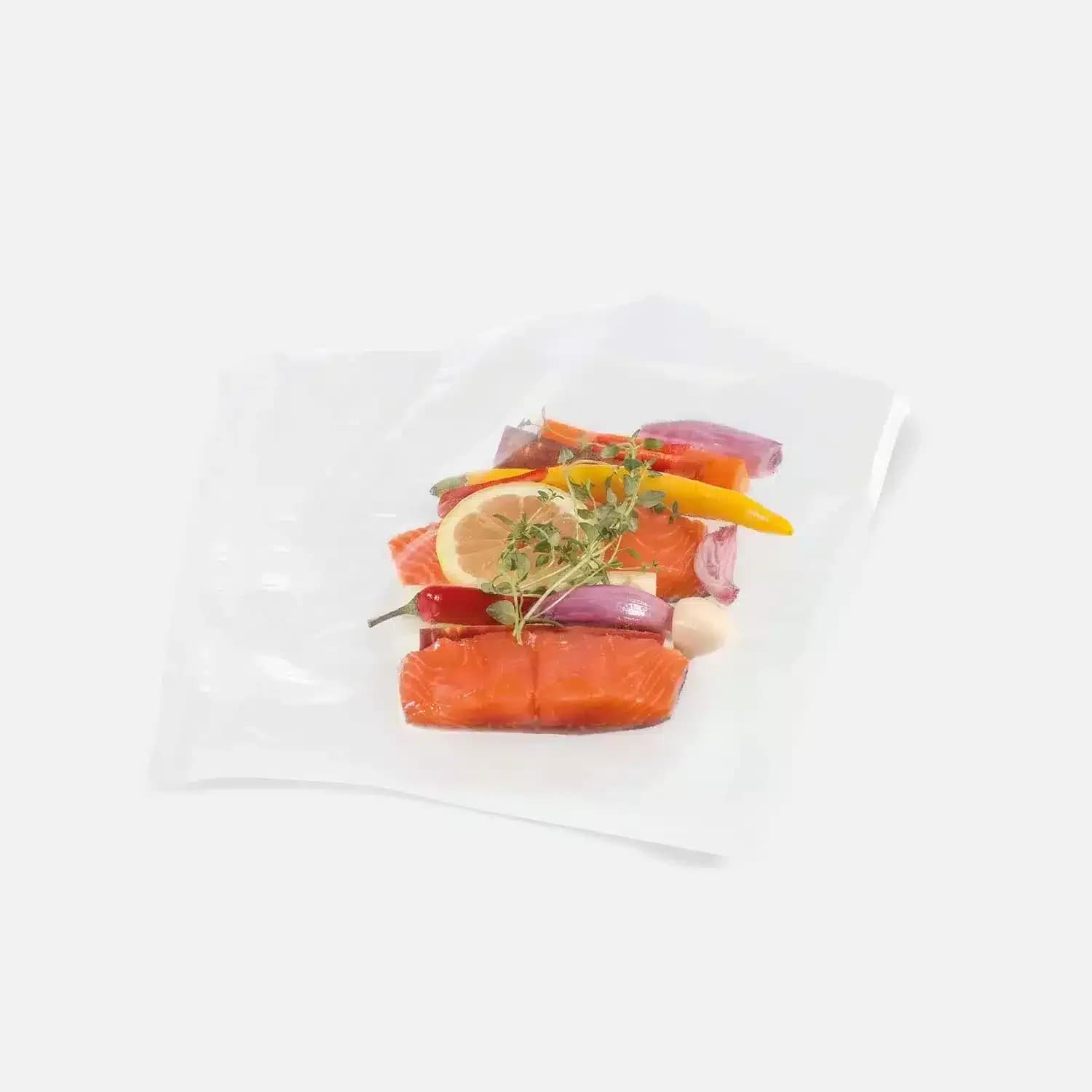
Seal the meat in a heat-resistant vacuum bag, ideally with a double seal. Without air the meat cooks evenly, and it's protected from oxidation.
Helps: H-Vac cooking bags
3 · Cook in the water bath
Set the stick to the temperature in the table, usually between 54 and 60 °C for game, depending on the species and the cut. That temperature is exactly the core temperature the meat reaches. Over several hours the connective tissue breaks down slowly, without the meat drying out, so even sinewy pieces turn tender and juicy.
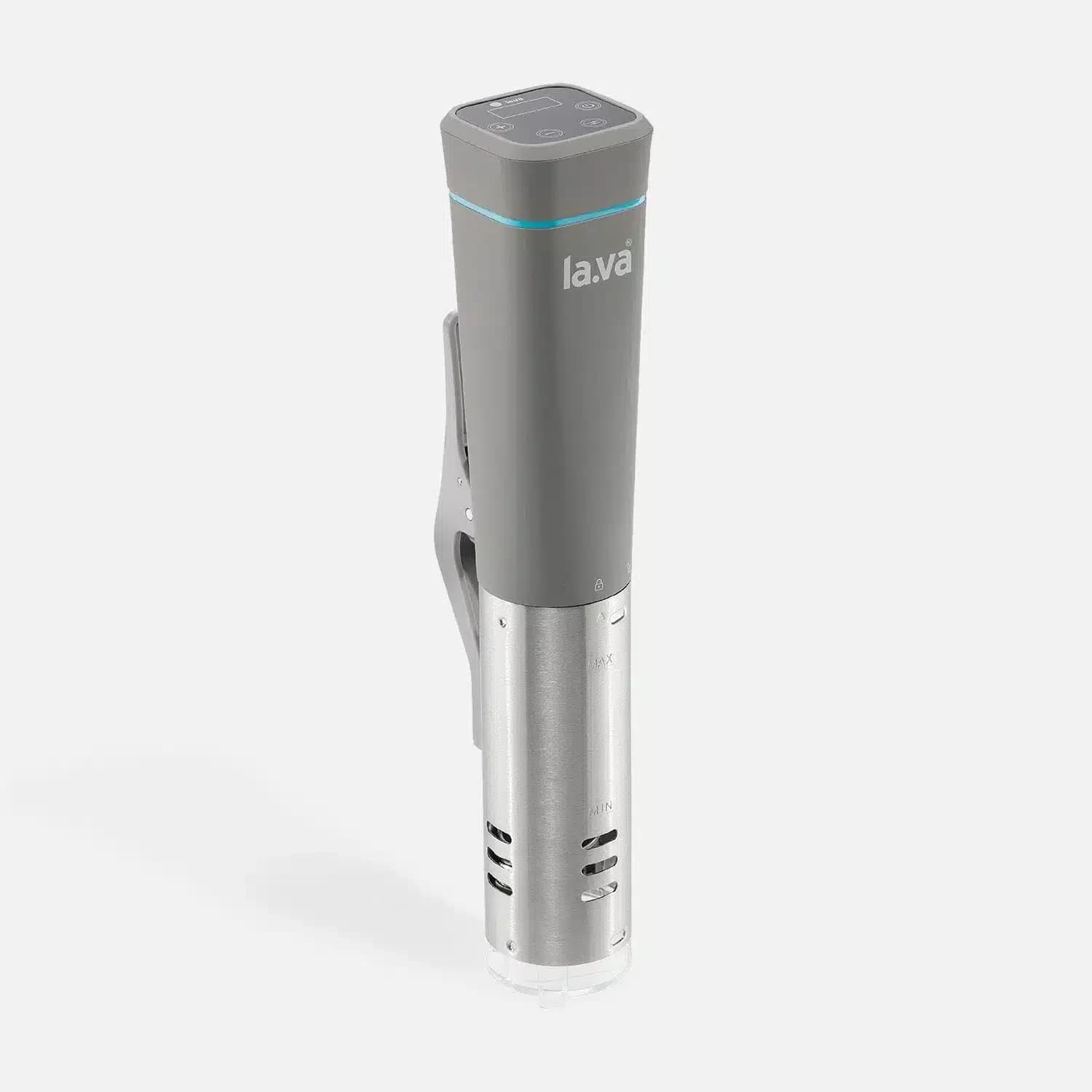
Helps: LaVide LX.20 sous vide stick
4 · Sear for a crust
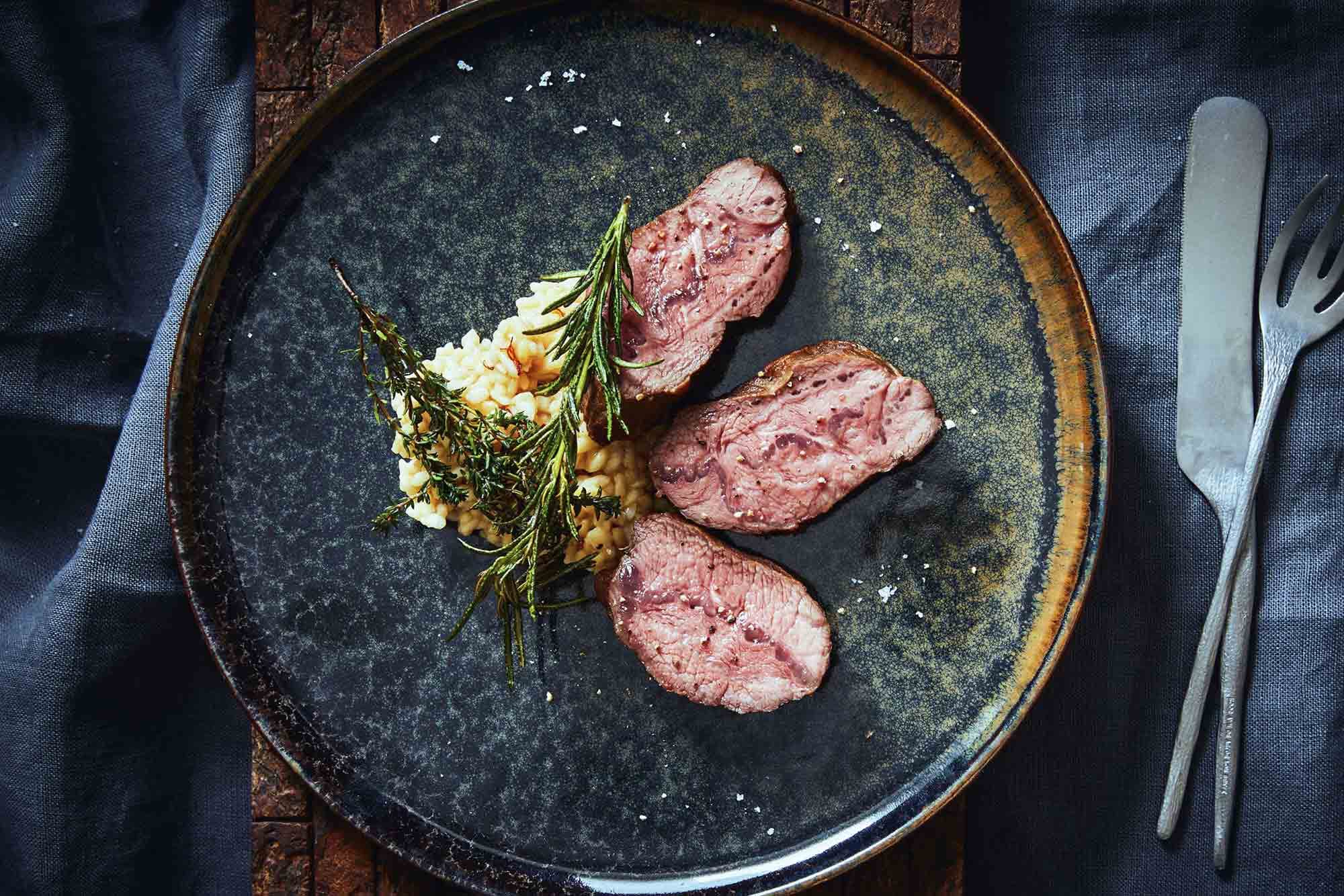
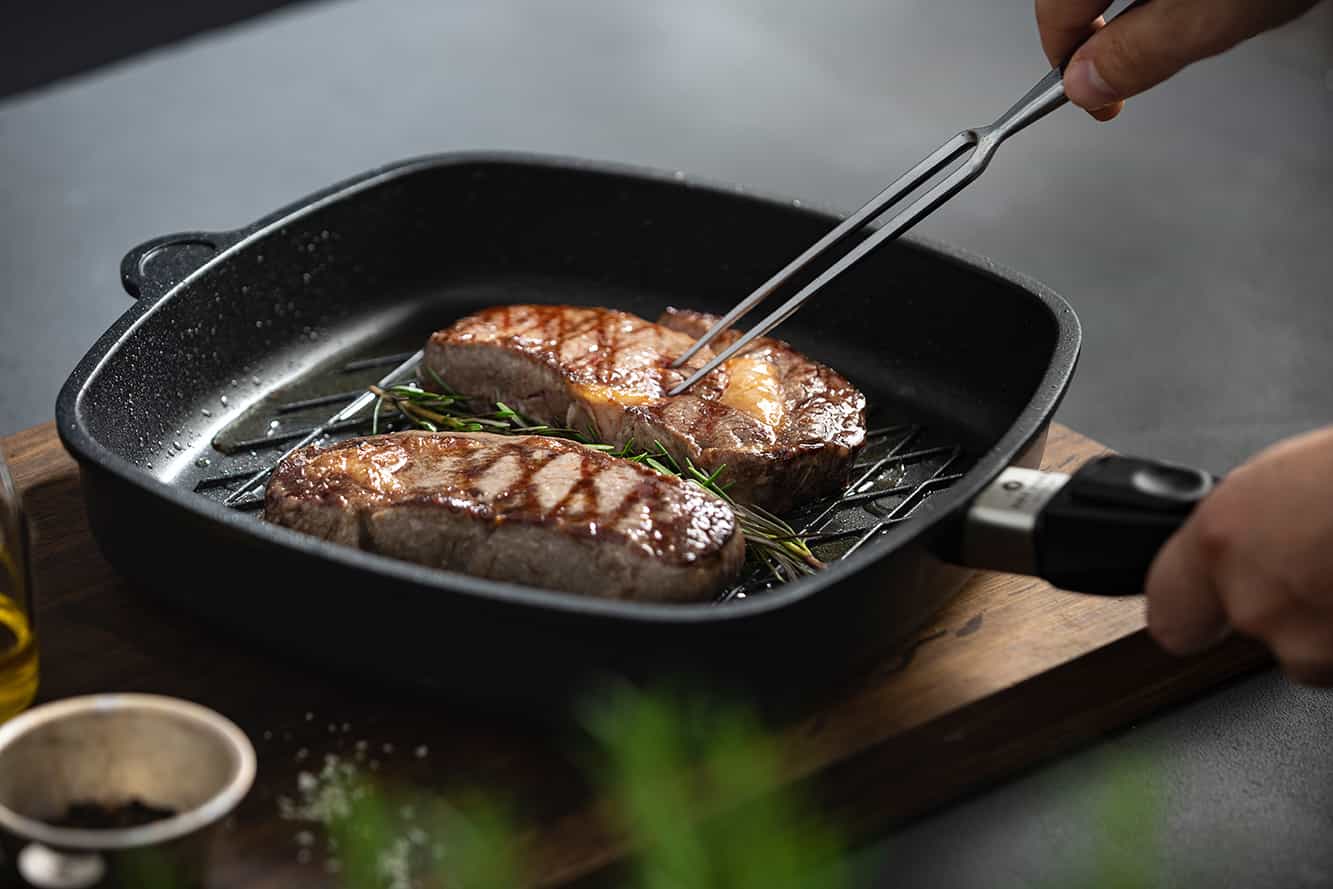
Take the meat out of the bag, pat it dry and sear it briefly in a very hot pan or on the grill: only for colour and roasted flavour, not to cook it further. Well browned outside, pink and juicy inside.
The rule of thumb, and its exception
About 1 hour per centimetre of thickness: that's the starting point for tender cuts with little connective tissue, such as backstrap and fillet. It gets the centre to temperature evenly, without over- or undercooking.
Roe deer is the exception. Its fillet takes at most 1–1.5 hours at 54 °C, its backstrap no more than 2 hours at 54–56 °C. Its leg, shoulder and neck have more connective tissue, and there the rule works again; these cuts even gain from longer cooking, for rolled roasts, shanks or pulled venison.
Collagen-rich cuts in general go by their structure, not their thickness: 8–18 hours, until the connective tissue has broken down.
Sous vide game table
Water temperature and approximate time, by species and cut, for game cooked pink to medium. LANDIG's figures, written for European game.
| Cut | Note | Water | Time |
|---|---|---|---|
| Roe deer | |||
| Backstrap (loin) | Tender and pink; don't cook too long or it turns mushy | 54–56 °C | 1–1.5 h |
| Fillet | Very fine texture: a short cook, ideal for searing | 54 °C | 1 h |
| Leg, boneless | Very tender, ideal for searing after the bath | 56–58 °C | 4–6 h |
| Shoulder | The long cook melts the sinew | 55–57 °C | 8–10 h |
| Wild boar | |||
| Backstrap (loin) | Juicy, slightly pink, with a firm bite | 55–58 °C | 30–60 min |
| Fillet | Tender and fine; finish on the grill | 54 °C | 40 min |
| Leg, boneless | For roasts or slices after the bath | 57–58 °C | 6–8 h |
| Shoulder or neck | Ideal for pulled game | 68 °C | 14 h |
| Red deer | |||
| Backstrap (loin) | Very tender; finish on the grill | 54–56 °C | 1–2 h |
| Fillet | Very fine texture: a short cook, ideal for searing | 56–58 °C | 40–45 min |
| Leg | Especially aromatic with bold seasoning | 58–60 °C | 6–8 h |
| Shoulder | Firm texture that turns beautifully tender | 60–62 °C | 10–14 h |
| Chamois | |||
| Backstrap or fillet | Tender but full of flavour; don't overcook | 54–56 °C | 60–75 min |
| Leg or shoulder | Intense flavour, ideal with herbs | 58–60 °C | 6–10 h |
| Rabbit | |||
| Leg | Juicy and tender; good with thyme and lemon | 60–65 °C | 2–2.5 h |
| Wild fowl | |||
| Duck breast (Muscovy) | Score the skin first, finish in the pan | 56–58 °C | 1–1.5 h |
| Duck leg | Cooked through to a confit texture, meltingly soft | 80–82 °C | 8–10 h |
| Goose breast | Sear the skin crisp; pink inside | 58–60 °C | 3–4 h |
| Goose leg | Cooked through, juicy and tender; ideal for festive dishes | 80–82 °C | 8–10 h |
Source: LANDIG's game sous vide table (gamecooling.com), by species and cut. Steaks and other meats by thickness: Sous vide cooking times.
Reading the table
- Pink to medium. The temperatures are for game cooked pink to medium, except the legs of wild fowl, which are cooked through.
- More well done. Add 2 °C and 1–2 hours; for roe deer, stay within the limits above.
- Very thick pieces. Over 6cm thick: add a little time.
- Always finish. Sear or grill briefly after the bath, for roasted flavours and a crust.
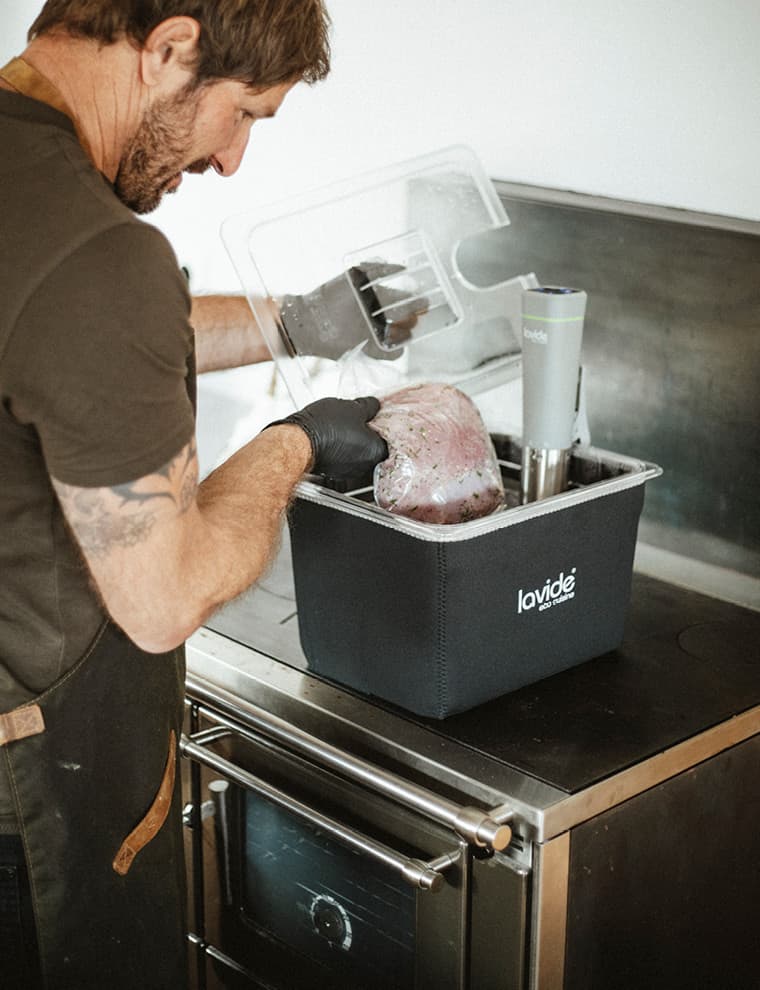
What you need
A sous vide stick
The heart of it: it brings the water to the cooking temperature and holds it there. The LaVide LX.20 controls the bath to ±0.1 °C, and its timer runs up to 99 hours 59 minutes.
Helps: LaVide LX.20
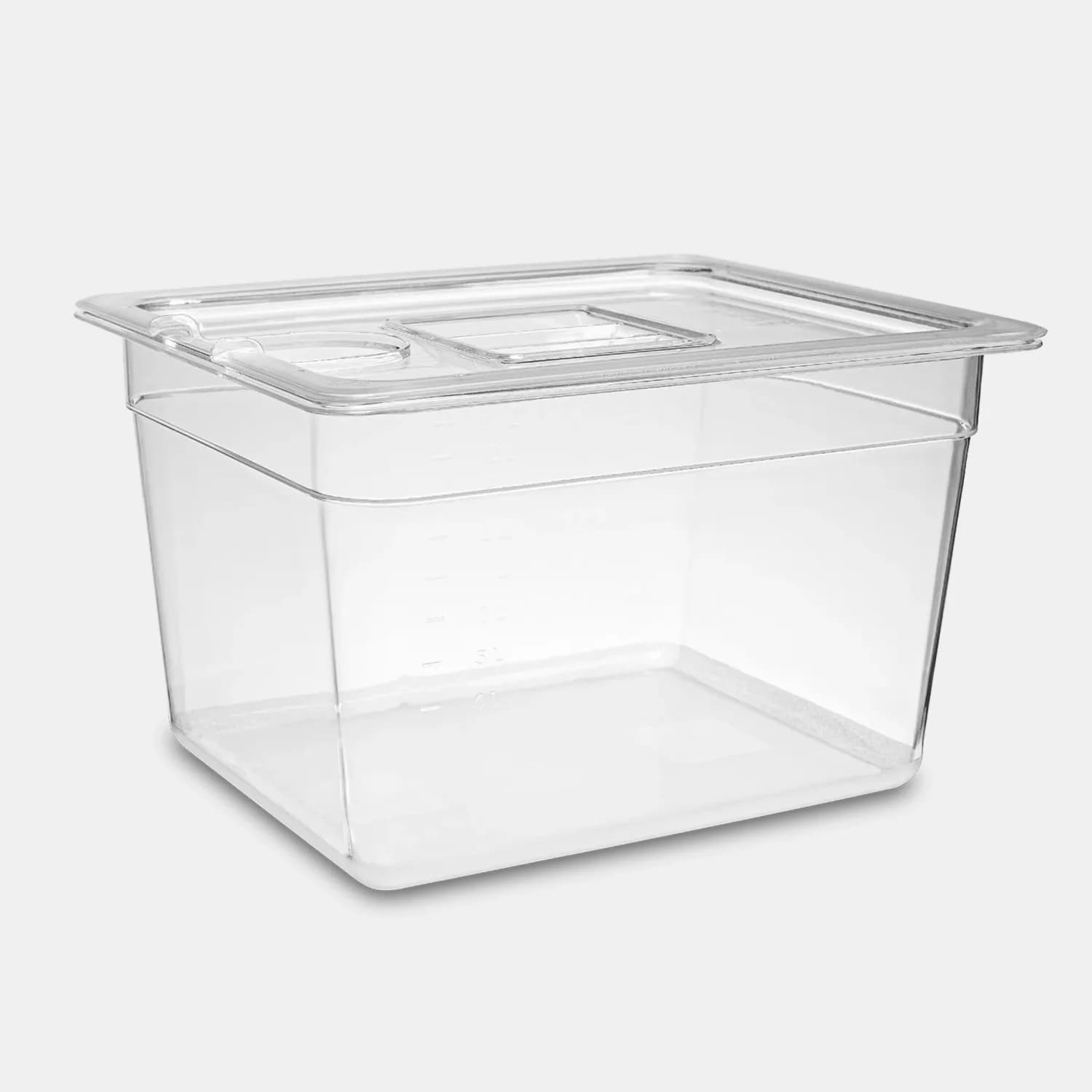
A container and a lid
Stainless steel tubs are sturdy; food-safe plastic containers are light and easy to handle. Both work: choose the size for the amount and the size of the pieces. A lid cuts evaporation and keeps the temperature steady, worth having for frequent use or long cooks. For small amounts a large pot will do, as long as the stick is held firmly and the water can circulate.
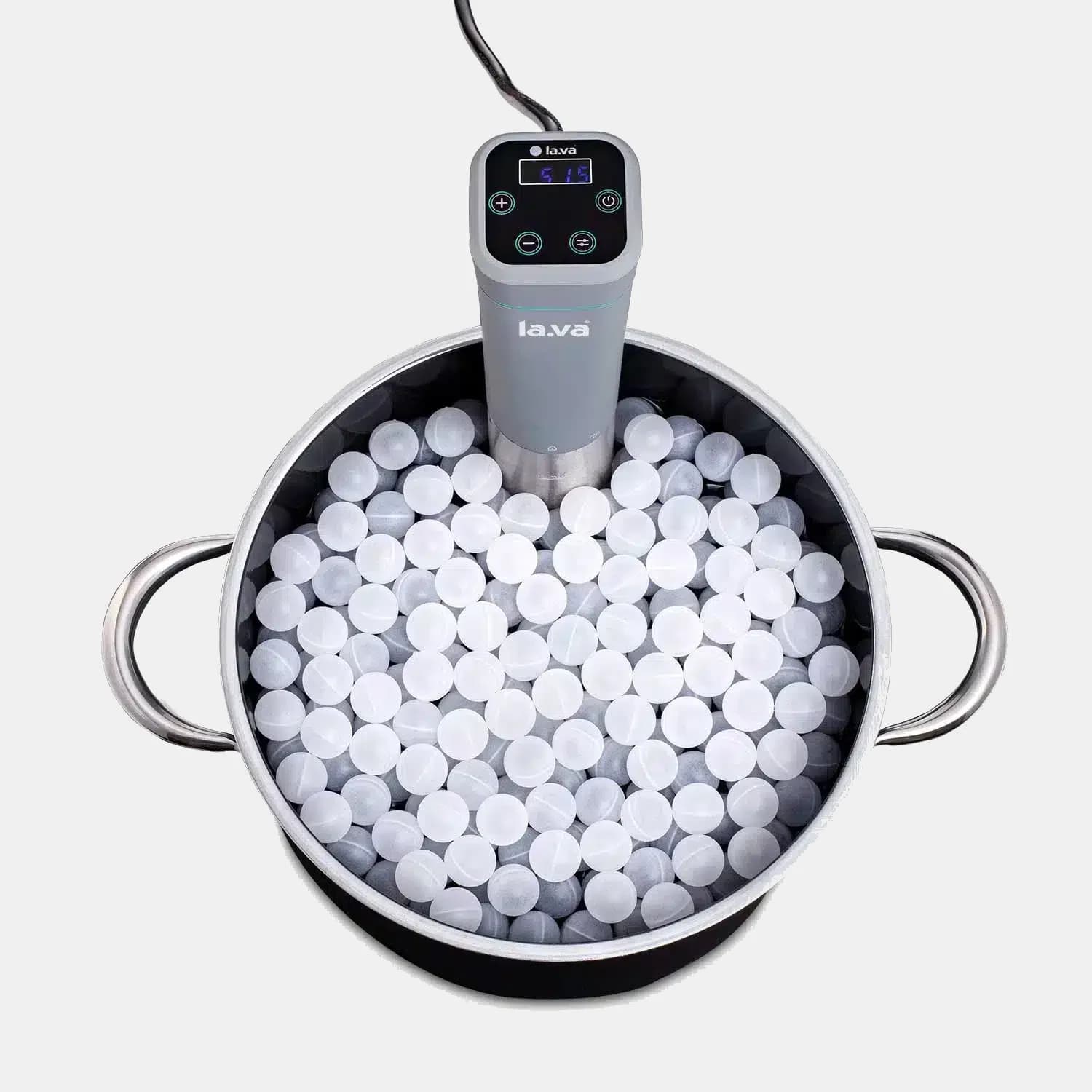
Insulation
An insulating sleeve around the container, or insulation balls floating on the water, keep the heat in for hours with less energy, and less water evaporates on long cooks.
Helps: Sous vide insulation balls
A bag rack
With several pieces or different cooking times, a rack keeps the bags from floating or sticking together, so each one cooks evenly.
Helps: PreserVide divider rack
Heat-resistant cooking bags
Long cooks need bags made for them: food-safe, BPA-free and neutral in taste, so they don't balloon, release plasticisers or tear. LAVA rates its standard bags for up to 2 hours at up to 95 °C; its H-Vac cooking bags for up to 72 hours at 85 °C.
Helps: H-Vac cooking bags
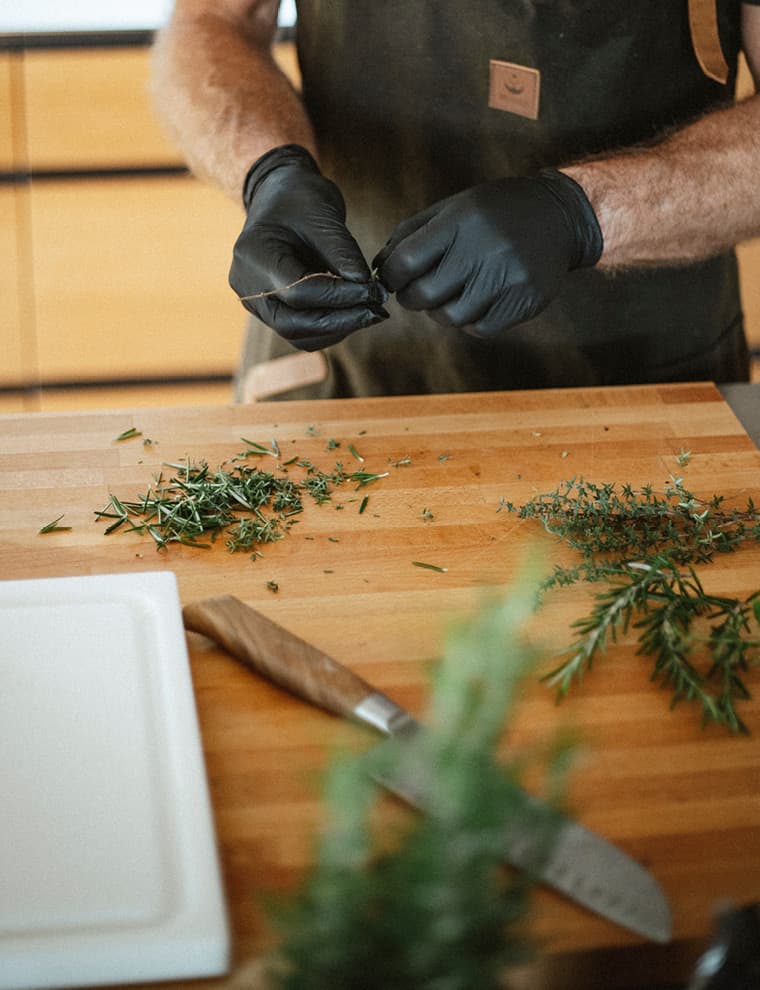
What goes in the bag
What suits game
Game brings a strong flavour of its own, and too much seasoning drowns it. Classic partners work best: lightly crushed juniper berries, rosemary, thyme and bay, allspice, black pepper and cloves, orange or lemon zest for freshness, and butter or game stock to carry the flavour. Bolder pairs such as rosemary and honey, chilli and cocoa, or mustard seed and apple suit wild boar.
What stays out
Raw garlic turns bitter, onions lose their structure and can taste stale, and vinegar or other acids such as wine or lemon juice attack the protein and spoil the texture.
For a first try
A thin slice of herb butter or a spoonful of game stock in the bag is often enough. The game itself is the star.
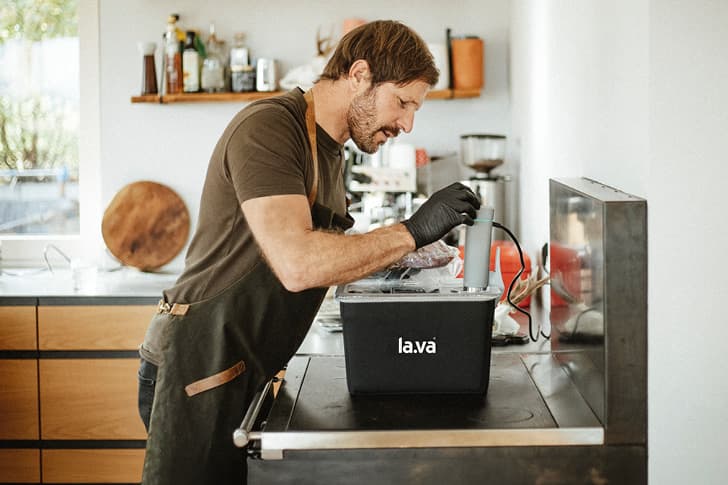
Four mistakes to avoid
- 1
Too hotGame is lean. Cooked too hot or too long it turns dry or mushy, roe deer above all.
- 2
Too shortShoulder and leg stay tough if the connective tissue doesn't get enough time to break down.
- 3
Air in the bagWithout a clean vacuum the heat doesn't spread evenly, and the meat cooks unevenly.
- 4
No finishOut of the bag the meat is cooked but pale. Only a short, hot sear gives it a crust.
Low temperatures cook, they don't pasteurise. Game at 54 °C is cooked to taste, not made safe from bacteria the way longer, hotter cooking does. Use very fresh meat, serve it straight away and don't keep it for later. For children, pregnant women, older people and anyone with a weak immune system, choose fully cooked dishes.
LAVA AustraliaOfficial LAVA distributor and vacuum-packaging specialists since 2018.