The short answer
- Fridge (−2 to +5 °C): beef and game around 30–40 days vacuum sealed, against 3–4 days on a plate.
- Freezer (−18 °C): meat, poultry and fish 2–3 years vacuum sealed, against about 6 months.
- Poultry, mince and fish keep far less long than red meat, sealed or not.
- Vacuum sealing slows spoilage; it does not replace cold storage or use-by dates.
Why vacuum sealing makes meat last longer
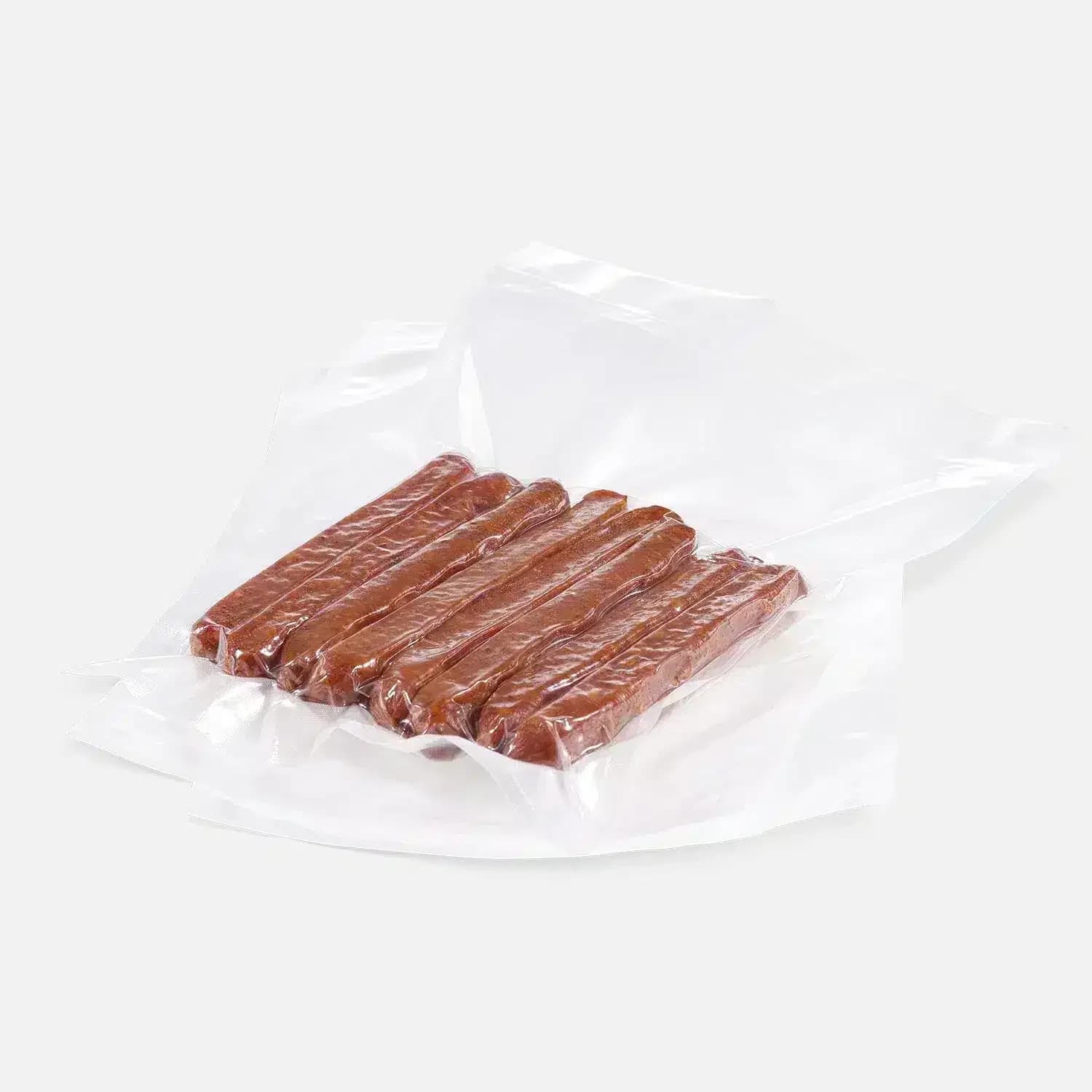
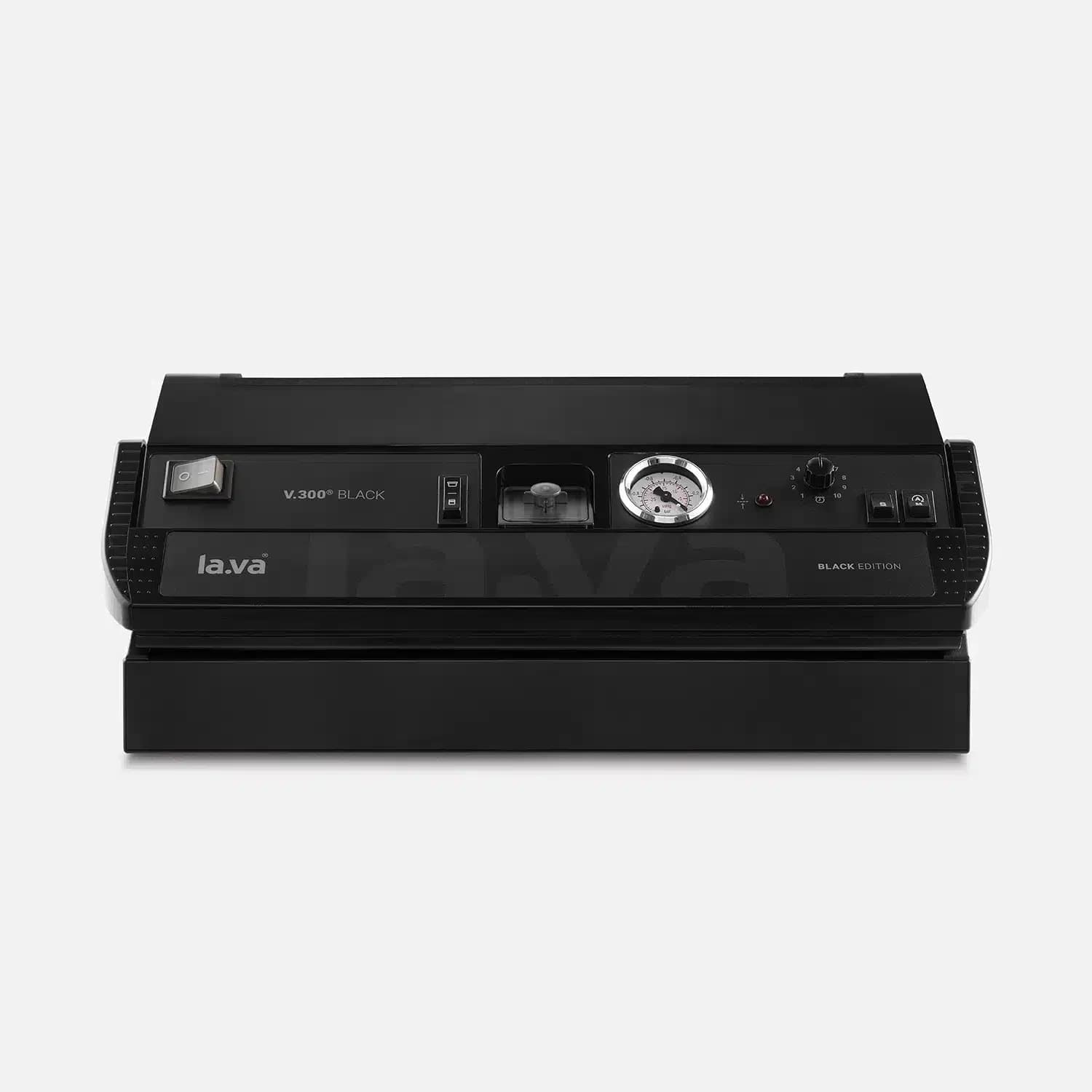
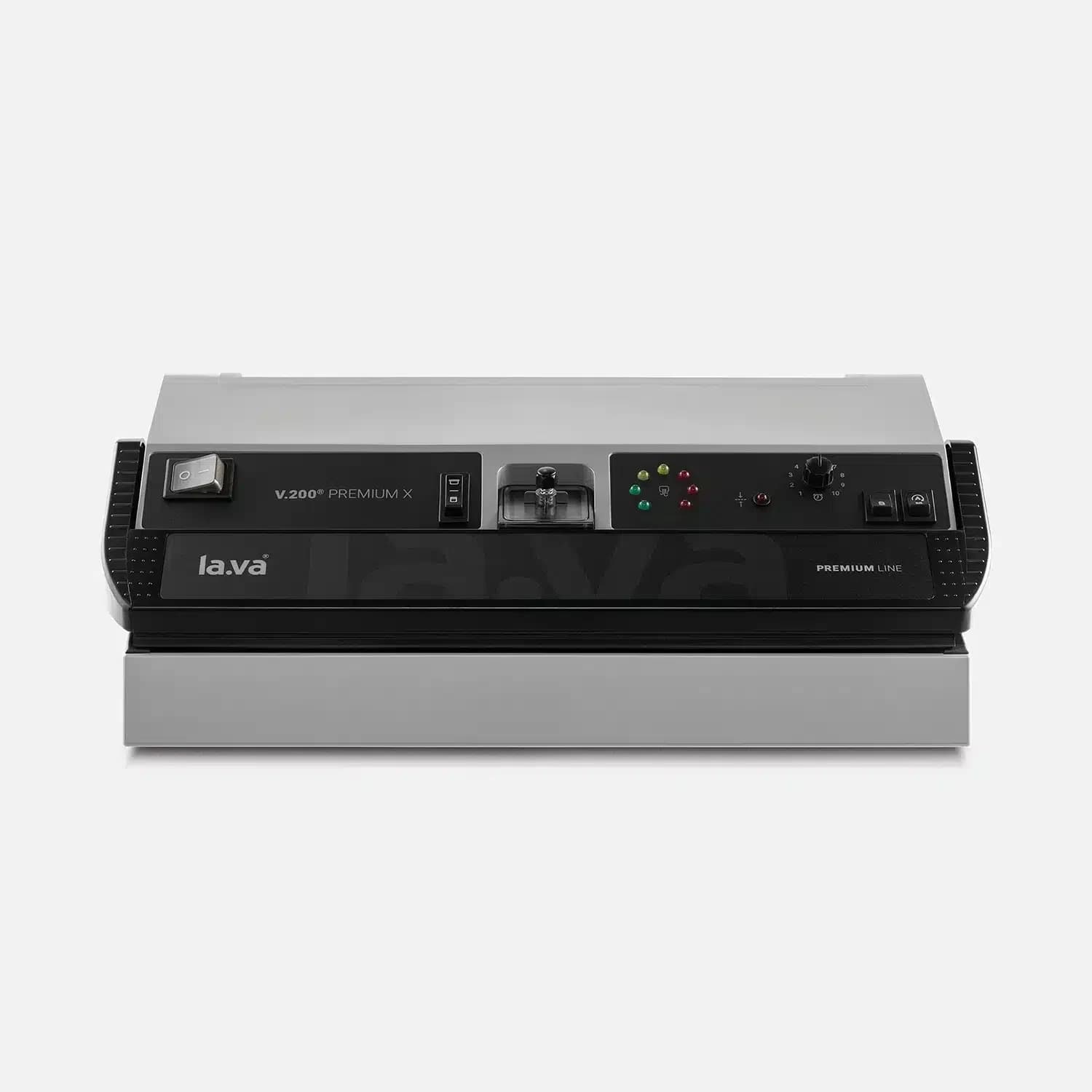
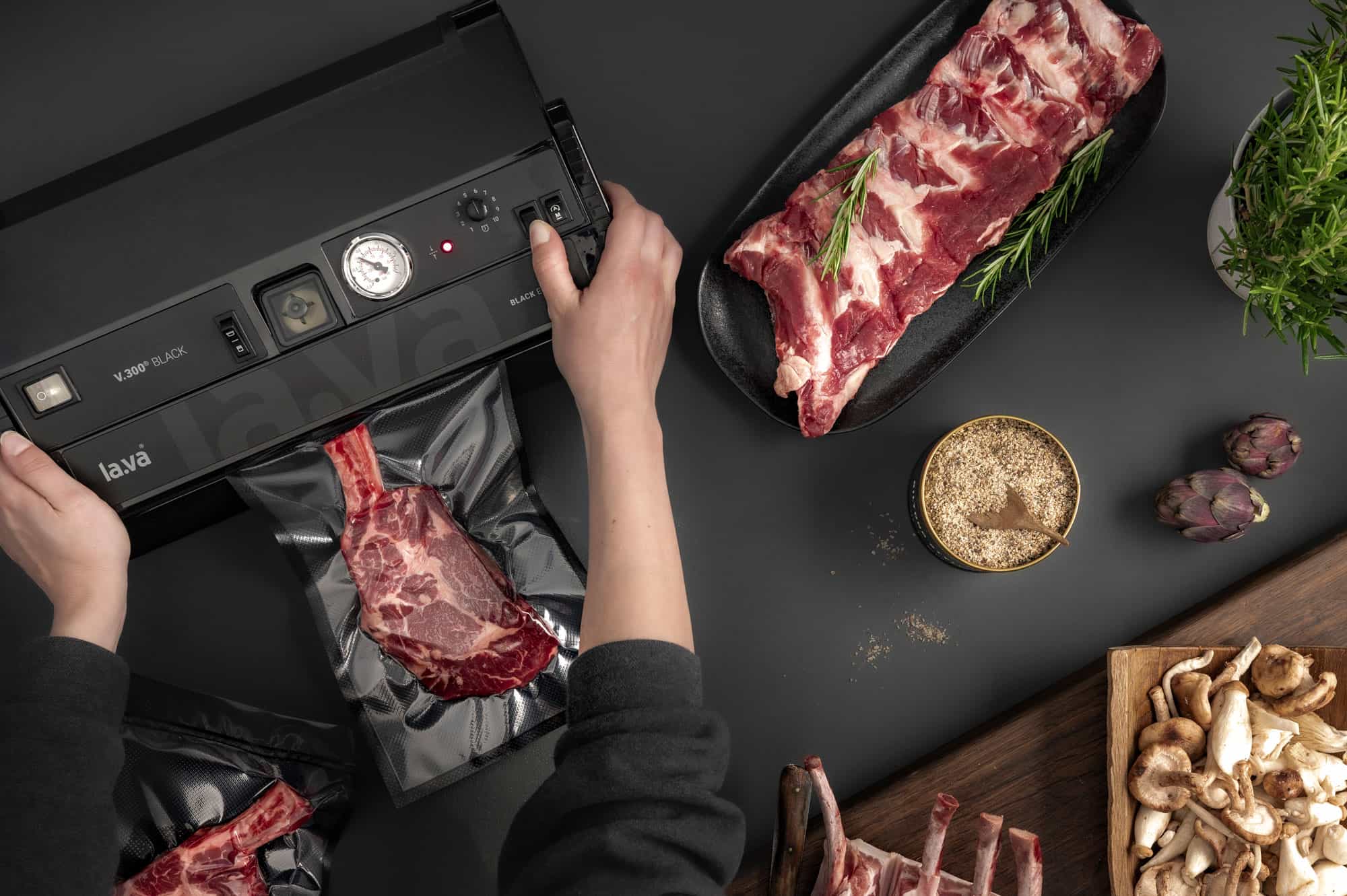
Meat spoils for three reasons: bacteria that need oxygen, oxidation that turns fat rancid and colour grey, and moisture loss in the freezer. Drawing the air out of the bag before sealing slows all three. A strong vacuum matters here: the less air left in the bag, the less oxygen there is to work with. A LAVA sealer reaches −0.94 to −0.97 bar, close to the −1.0 bar of a perfect vacuum.
In the freezer, the vacuum also stops freezer burn. Without air between meat and bag, ice crystals can't form on the surface and draw out the moisture, so a steak sealed in autumn still cooks like a fresh one in spring.
Which other foods seal well, and which need a trick: Which foods can you vacuum seal?
Fig. 08 · Shelf life in the fridge
Days, not sealed and vacuum sealed
Solid up to the shorter value of each range, lighter up to the longer one; −2 to +5 °C.
Fridge: how many days
These are LAVA's guide values for fresh meat, packed cleanly and kept between −2 and +5 °C. Many home fridges run warmer in the door and on the top shelf, so store sealed meat at the back of the bottom shelf, the coldest spot.
| Meat | Not sealed | Vacuum sealed |
|---|---|---|
| Game (e.g. venison) | 2–3 days | 30–40 days |
| Beef | 3–4 days | 30–40 days |
| Pork, sliced | 4–7 days | 20–28 days |
| Cured ham | 3–5 days | 160–180 days |
| Cooked or fried meat | 2–3 days | 8–12 days |
| Poultry | 2–3 days | 6–9 days |
| Whole fish | 1–3 days | 4–5 days |
Guide values from LAVA's shelf-life table (Landig + Lava, Germany). They depend on how fresh the meat is, clean handling and an unbroken cold chain, and are not a guarantee.
Freezer: how many months
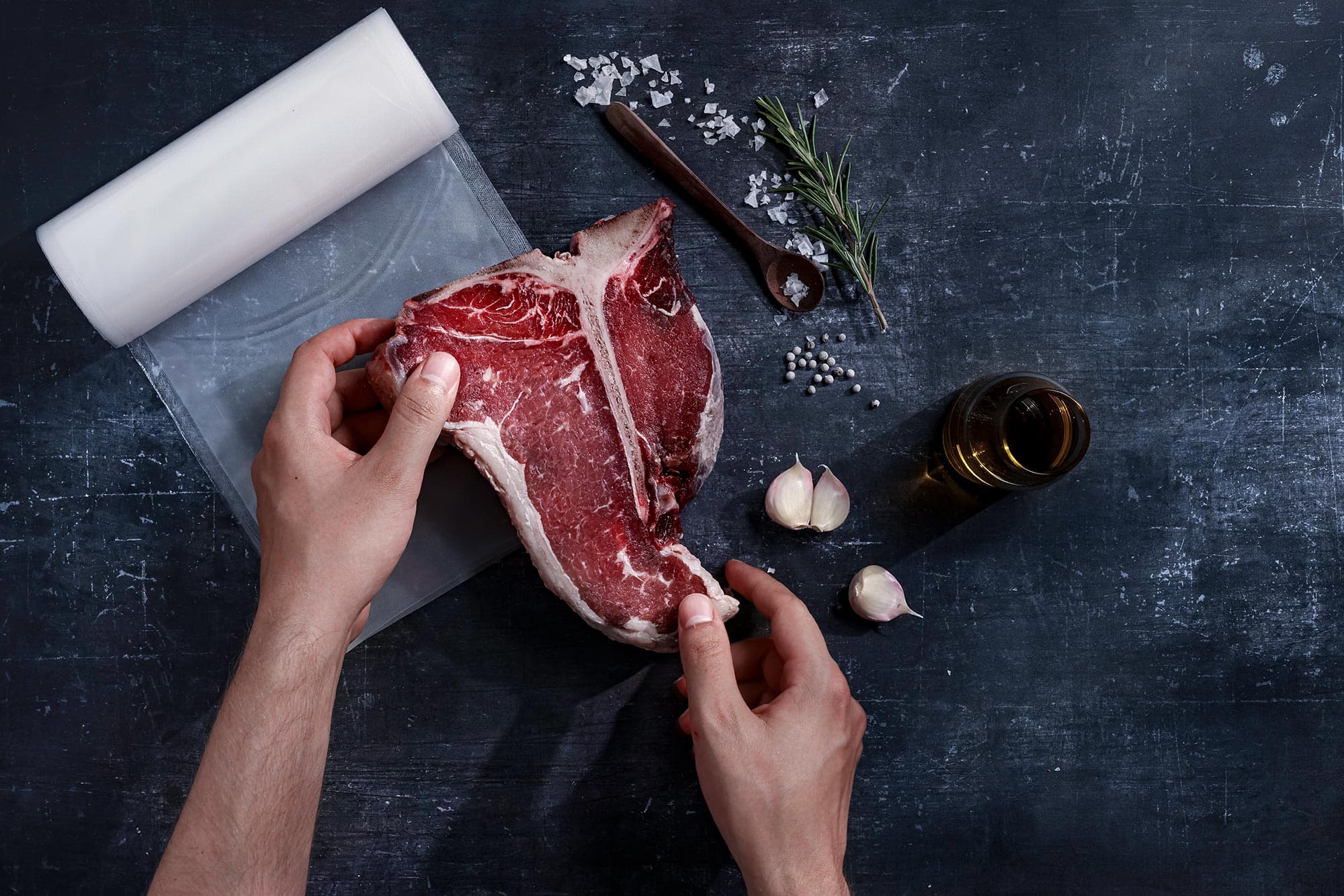
At −18 °C bacteria stop growing, so in the freezer the vacuum is about quality: no freezer burn, no rancid fat, no smell taken on from other food.
| Meat | Not sealed | Vacuum sealed |
|---|---|---|
| Meat (beef, lamb, pork, game) | 6 months | 24–36 months |
| Poultry | 6 months | 24–36 months |
| Fish | 6 months | 24–36 months |
| Mince | 4 months | 12 months |
Guide values from LAVA's shelf-life table, for −15 to −18 °C.
Vacuum is not a preservative. Some bacteria grow without oxygen, so sealed meat must stay chilled or frozen like any fresh meat. Never leave it at room temperature, thaw it in the fridge, and for bought meat the use-by date on the label still applies. If it smells off or the bag has puffed up, throw it out.
Five habits for the longest shelf life
- 1
Seal it freshSeal on the day you buy or butcher, and chill the meat first: cold meat seals cleaner and drips less.
- 2
Keep the seal clean and dryFold the bag's opening back while filling, so no juice or fat reaches the seal. Pat wet cuts dry, or freeze them for an hour before sealing.
- 3
Leave room above the meatAbout 3–4cm of empty bag above the meat lets the sealer pull the bag tight and make a full-width seal.
- 4
Pad bones and sharp edgesA folded piece of baking paper over a bone stops it piercing the bag in the freezer.
- 5
Label every bagCut, weight and date on each pack, so you use the oldest first.
LAVA AustraliaOfficial LAVA distributor and vacuum-packaging specialists since 2018.