The short answer
- Electric stuffers are quick and leave both hands free, but cost more, need power and servicing, and are made for large runs.
- A manual stuffer costs less, is simple to use and keep, works anywhere and lets you set the pace: ideal for a hunter's needs, says LANDIG.
- On a manual stuffer, look for a metal gearbox, a piston with an air release valve and stainless steel filling tubes in several sizes.
- Just starting? Your mincer's sausage funnel can fill a first small batch.
What a stuffer does
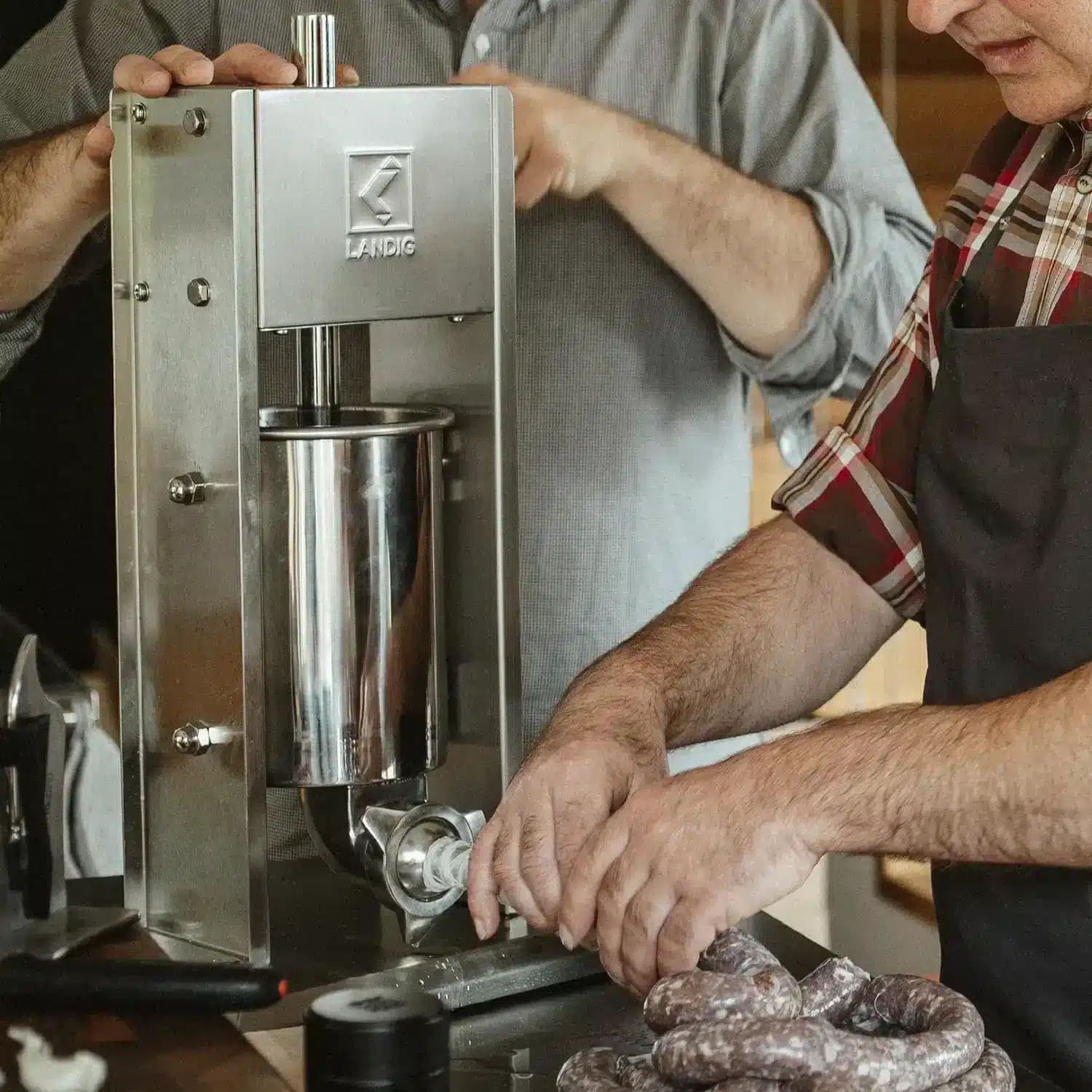
A sausage stuffer presses seasoned sausage meat out of a cylinder, through a filling tube and into the casing. In an electric stuffer a motor drives the piston; in a manual one, you turn a crank. Which suits you depends mostly on how many sausages you make. The LANDIG sausage stuffers we sell are all manual.
Electric or manual at a glance
| Item | Electric | Manual |
|---|---|---|
| Speed | Quick, made for large runs | A little slower |
| Hands | Both free while it runs | One turns the crank |
| Price | Usually higher | Usually lower |
| Upkeep | Regular servicing, with time and know-how | Simple, no special knowledge |
| Power | Needs a reliable supply | None needed: works anywhere |
| Getting started | More complex to use | Easy from the first batch |
| Moving and storing | Heavier | Lighter and easier |
From LANDIG's buying advice for sausage stuffers (gamecooling.com).
Which one suits you
Electric: for large runs
Where sausages are made in large quantities, an electric stuffer is efficient: it fills quickly, with little physical effort, and both hands stay free. Weigh that against the price, the servicing and the need for power wherever you work. Electric models are also more complex to run, which makes them a poor place to start.
Manual: for most hunters
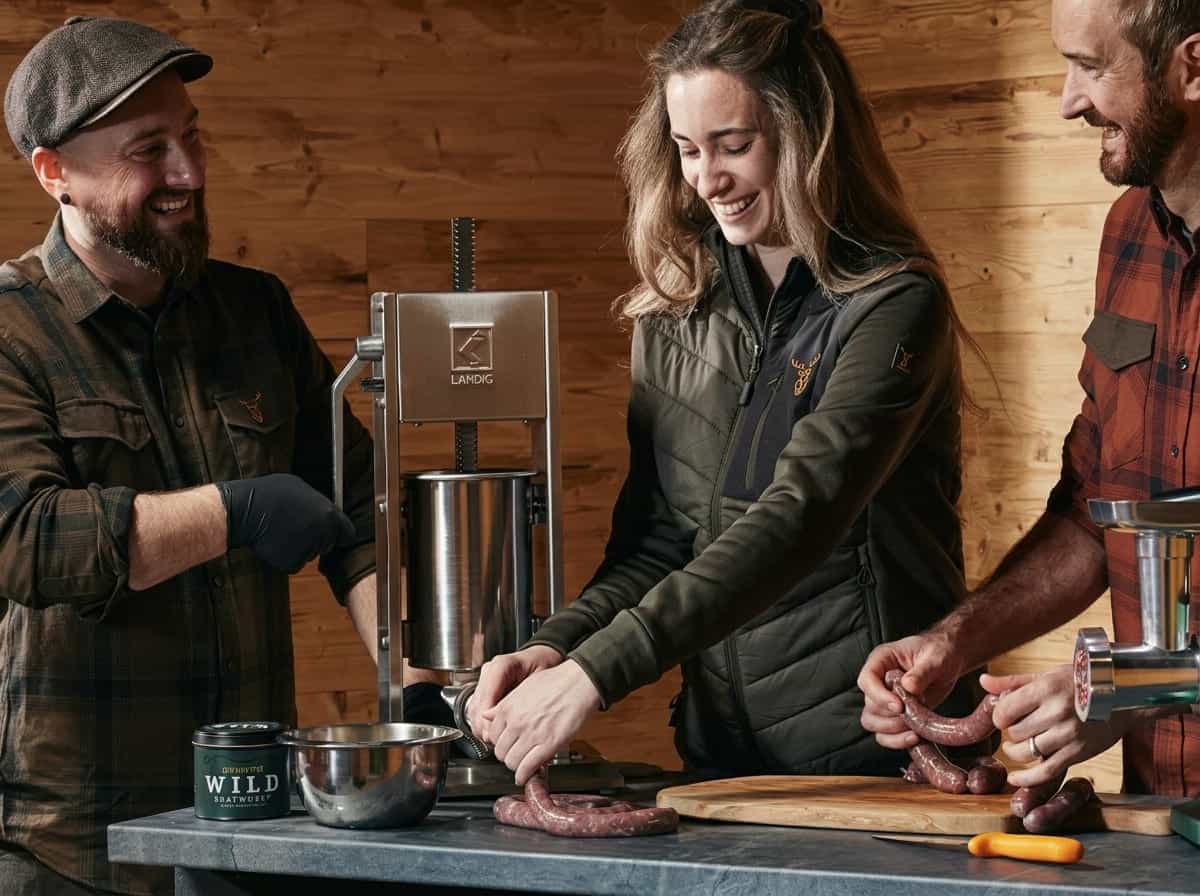
Most hunters make sausages now and then, and for that LANDIG recommends a manual stuffer. You set the pace with the crank, the upkeep is simple, and it works wherever you are, with or without power. Some models, LANDIG's upright stuffers among them, suit left- and right-handers alike.
Not sure yet? Start with your mincer
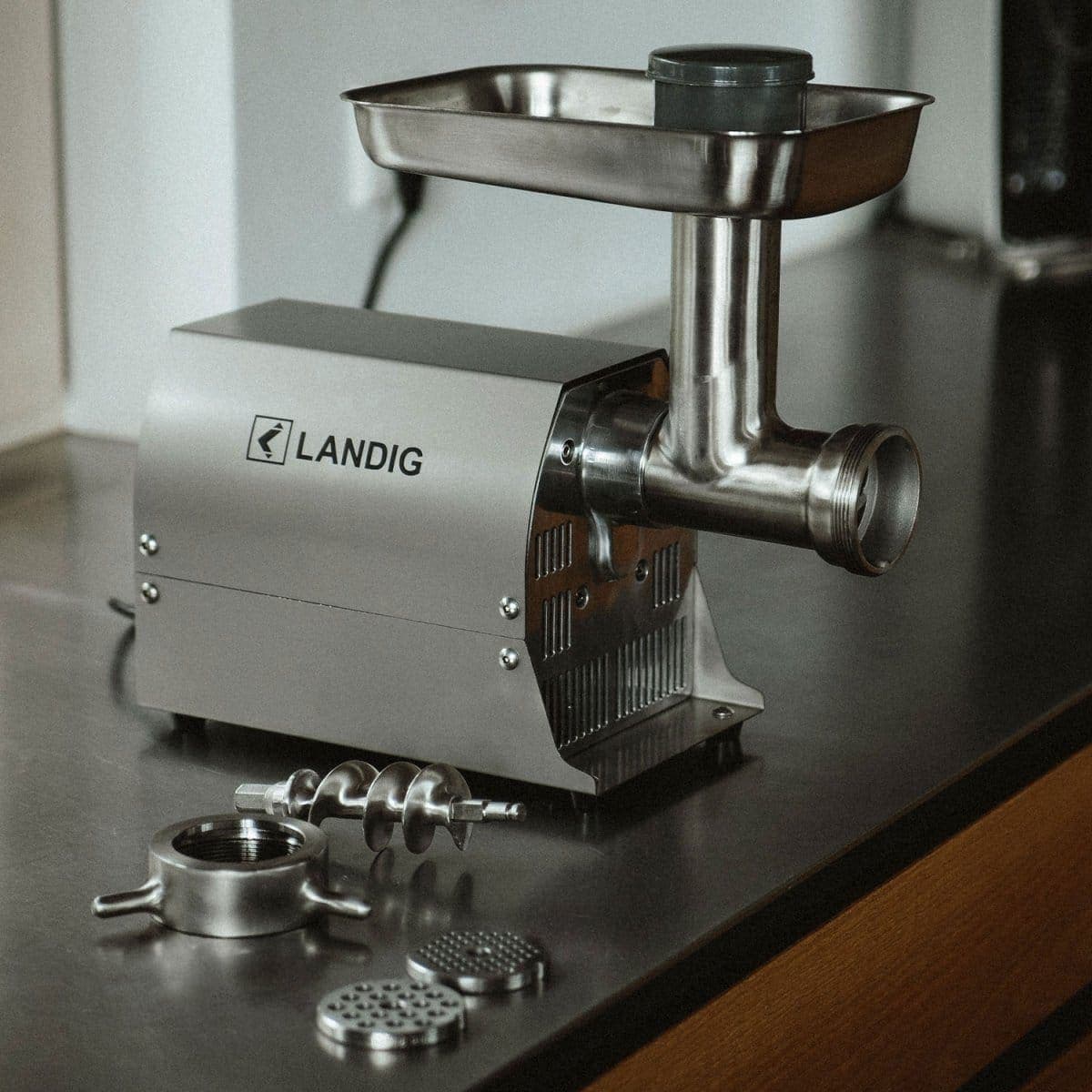
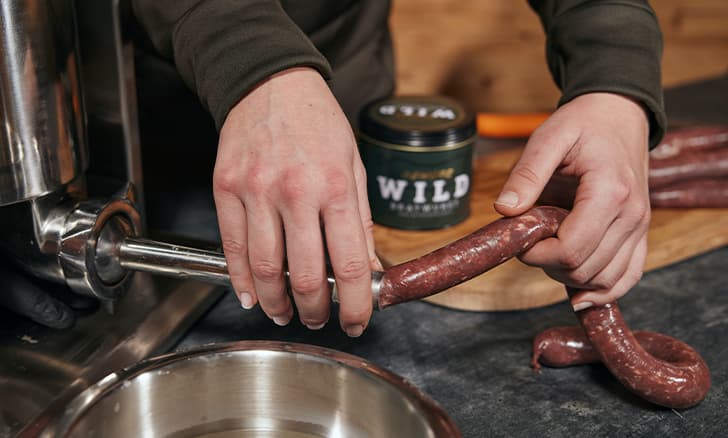
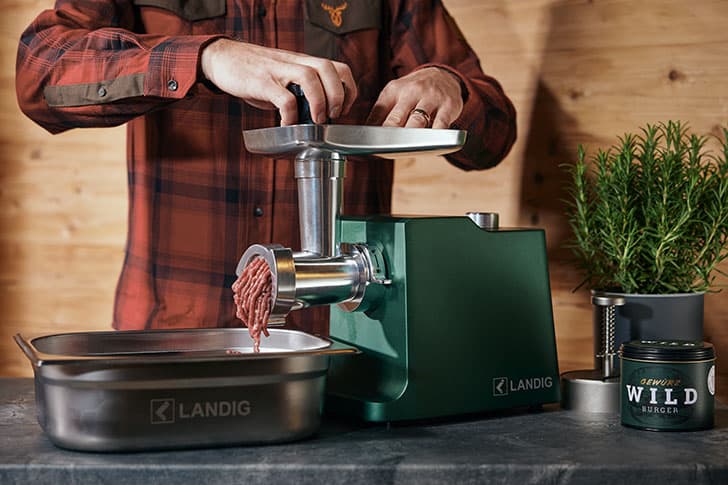
For a first try, or if you only make sausages occasionally, your mincer can do the job: every LANDIG mincer comes with a sausage funnel, so it fills small batches straight from the grinding head. When the batches grow, a stuffer is quicker. More on mincers: A meat grinder for hunters.
What makes a good manual stuffer
A two-stage metal gearbox
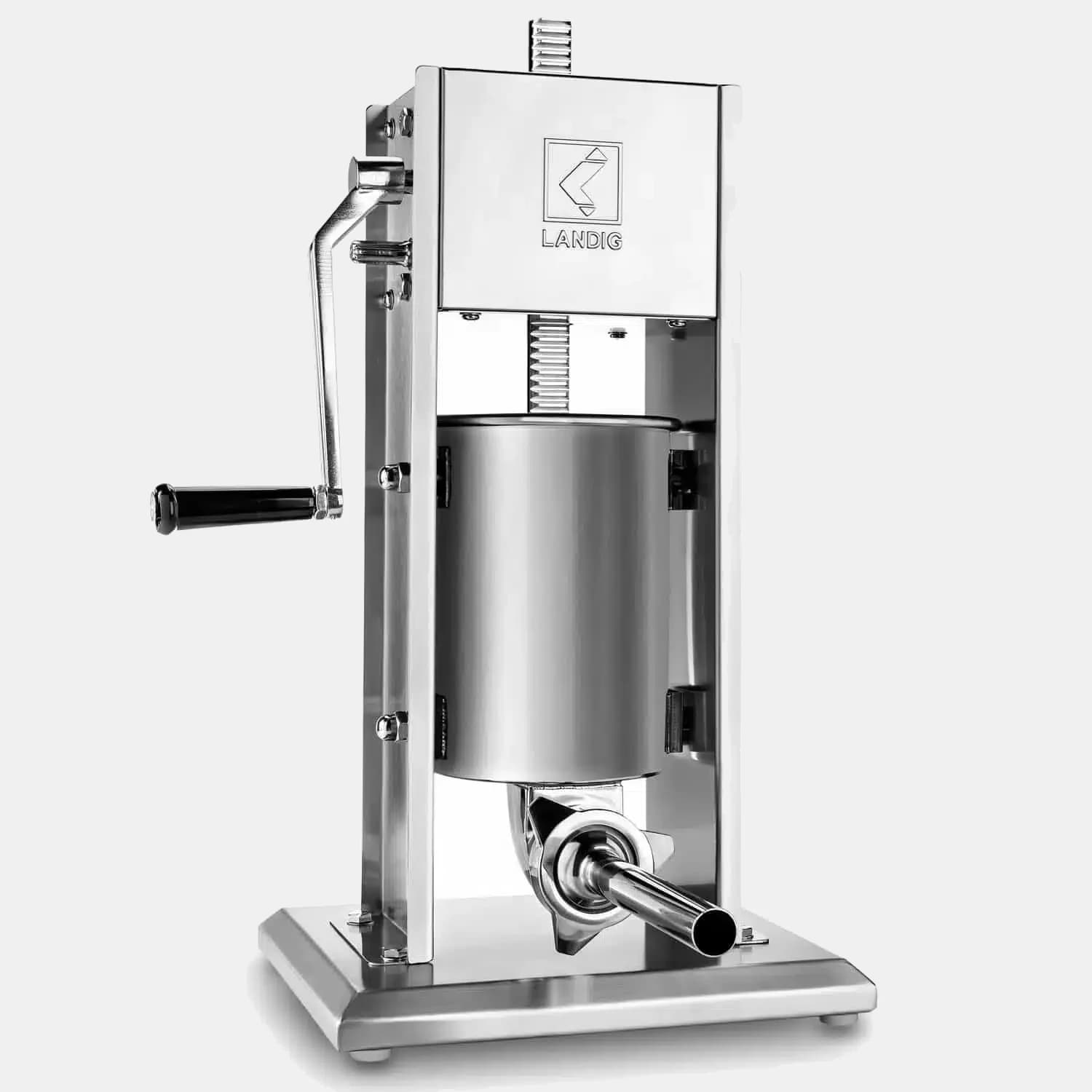
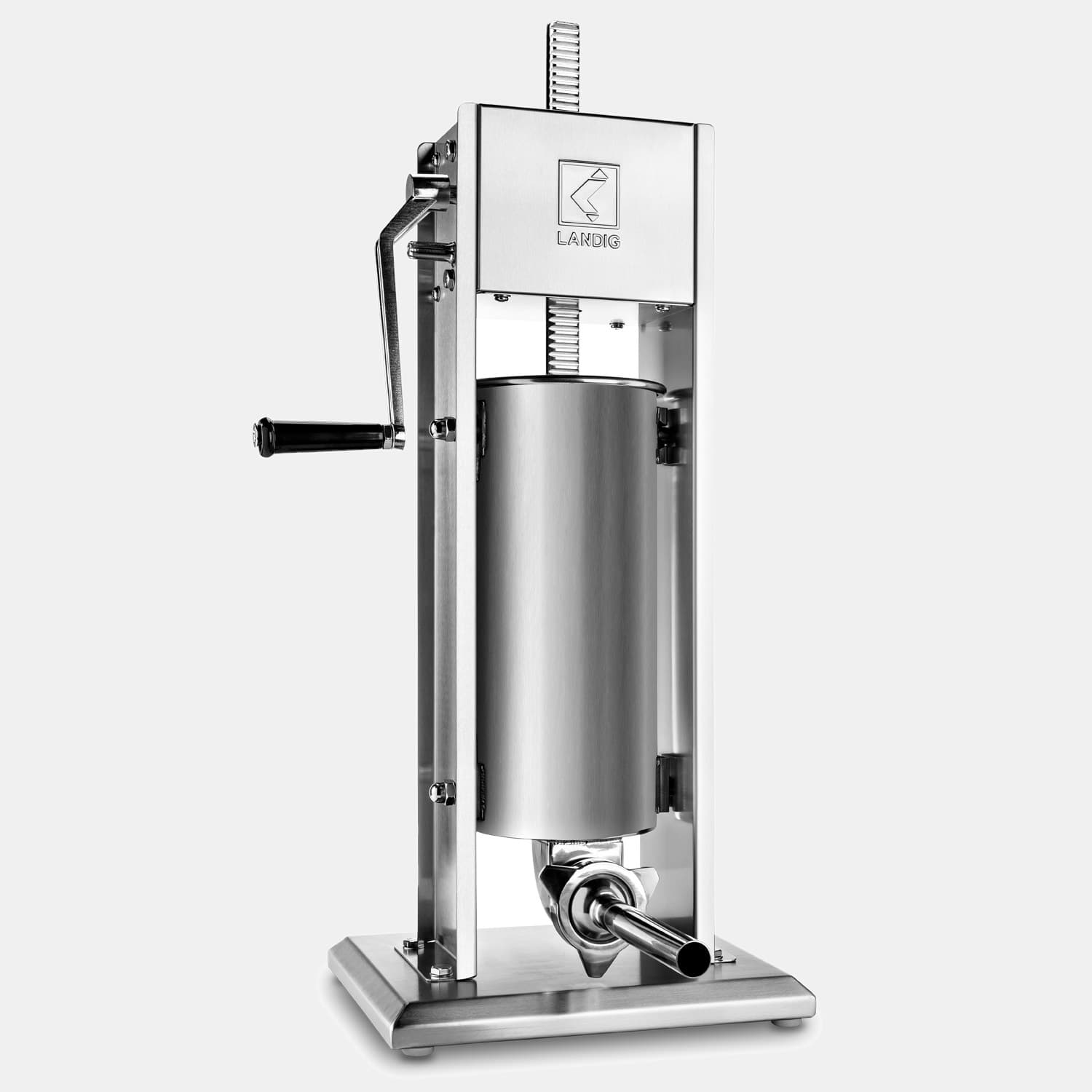
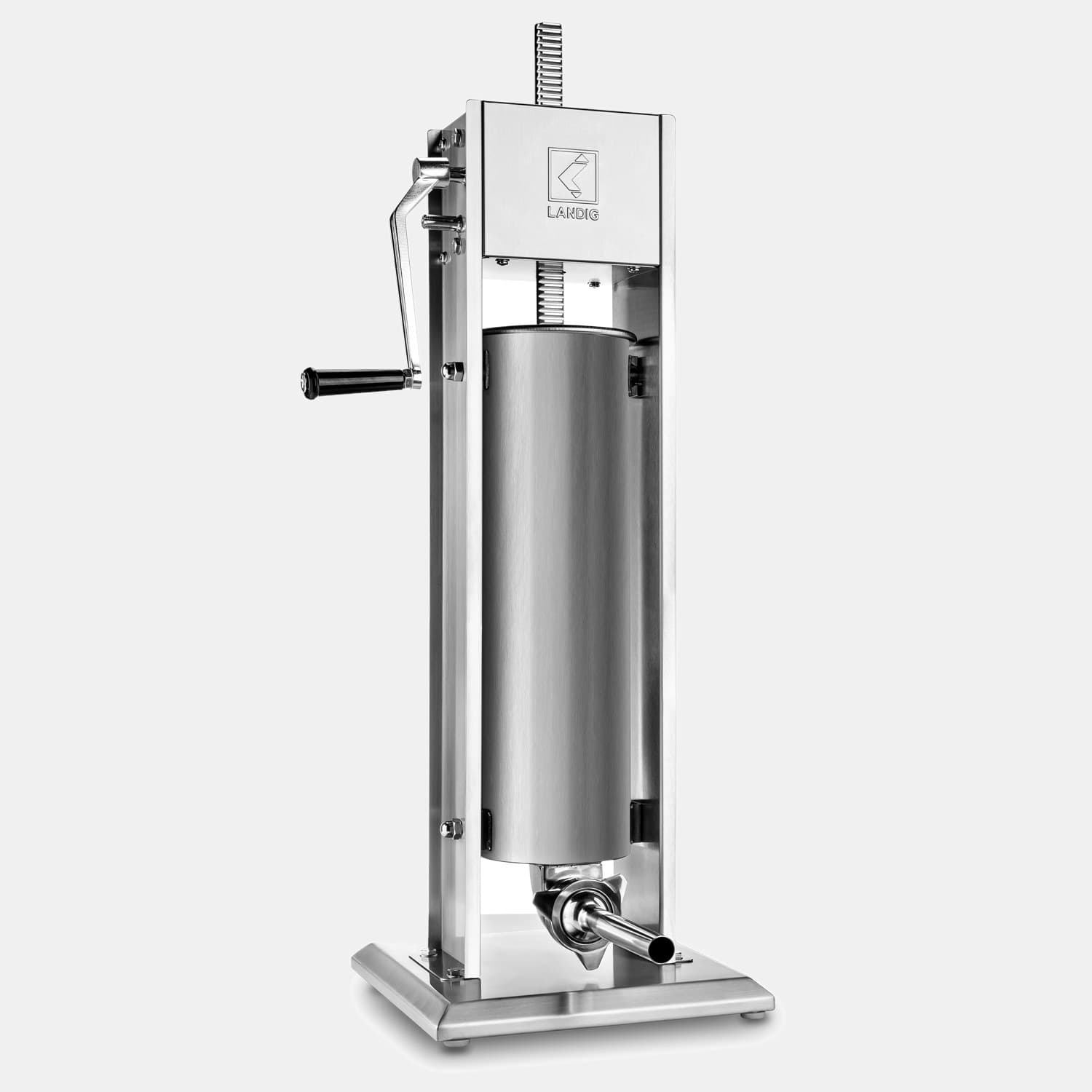
It passes the force on better and runs steadier than a simple gear, so firm sausage meat goes through evenly and you can dose it precisely. LANDIG's 3, 5 and 7 litre stuffers have a 2-speed metal gearbox.
A piston that lets the air out
An air release valve in the piston lets trapped air escape as the cylinder is filled, so fewer air bubbles end up in the sausage. LANDIG's upright stuffers have one as standard.
Filling tubes for every casing
Tube widths vary with the casing and the sausage: thin ones for slim sausages, wide ones for plump bratwurst. Some stuffers come with a set, for others you buy them separately. Stainless steel is best, plastic the alternative, and they must come apart and clean easily. Which tube for which casing: How to make sausages at home.
Stainless steel, not aluminium
Stainless steel resists rust, lasts and is easy to clean. Cheaper stuffers are often aluminium: lighter, but less rust-resistant and easily damaged in the dishwasher, so follow the maker's care instructions closely.
A steady stand
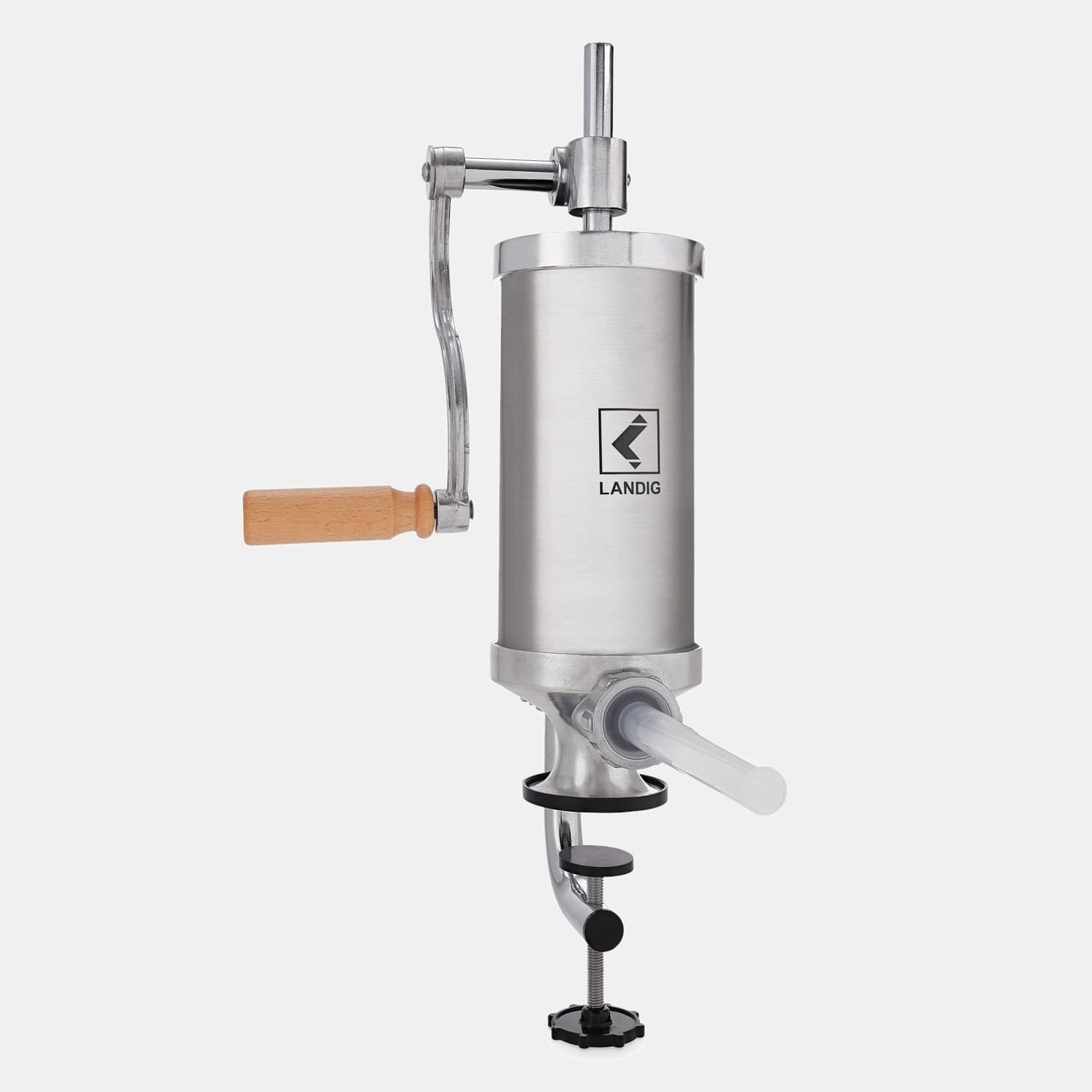
LANDIG's upright stuffers stand on a heavy stainless steel base plate with non-slip feet, so they stay put while you crank. The 1.2 litre table filler clamps to the benchtop instead.
LANDIG's four stuffers
| Stuffer | Build | Filling tubes | Capacity |
|---|---|---|---|
| 1.2L table filler | Clamps to the benchtop; stainless steel and aluminium | 4 plastic: 15, 20, 22, 25mm | 1.2 litres |
| 3L upright | Stainless steel, 2-speed metal gearbox | 5 stainless: 10, 16, 22, 32, 38mm | 3 litres |
| 5L upright | Stainless steel, 2-speed metal gearbox | 5 stainless: 10, 16, 22, 32, 38mm | 5 litres |
| 7L upright | Stainless steel, 2-speed metal gearbox | 5 stainless: 10, 16, 22, 32, 38mm | 7 litres |
From LANDIG's product data. Weights and sizes side by side: sausage stuffers.
What else you need
A meat grinder
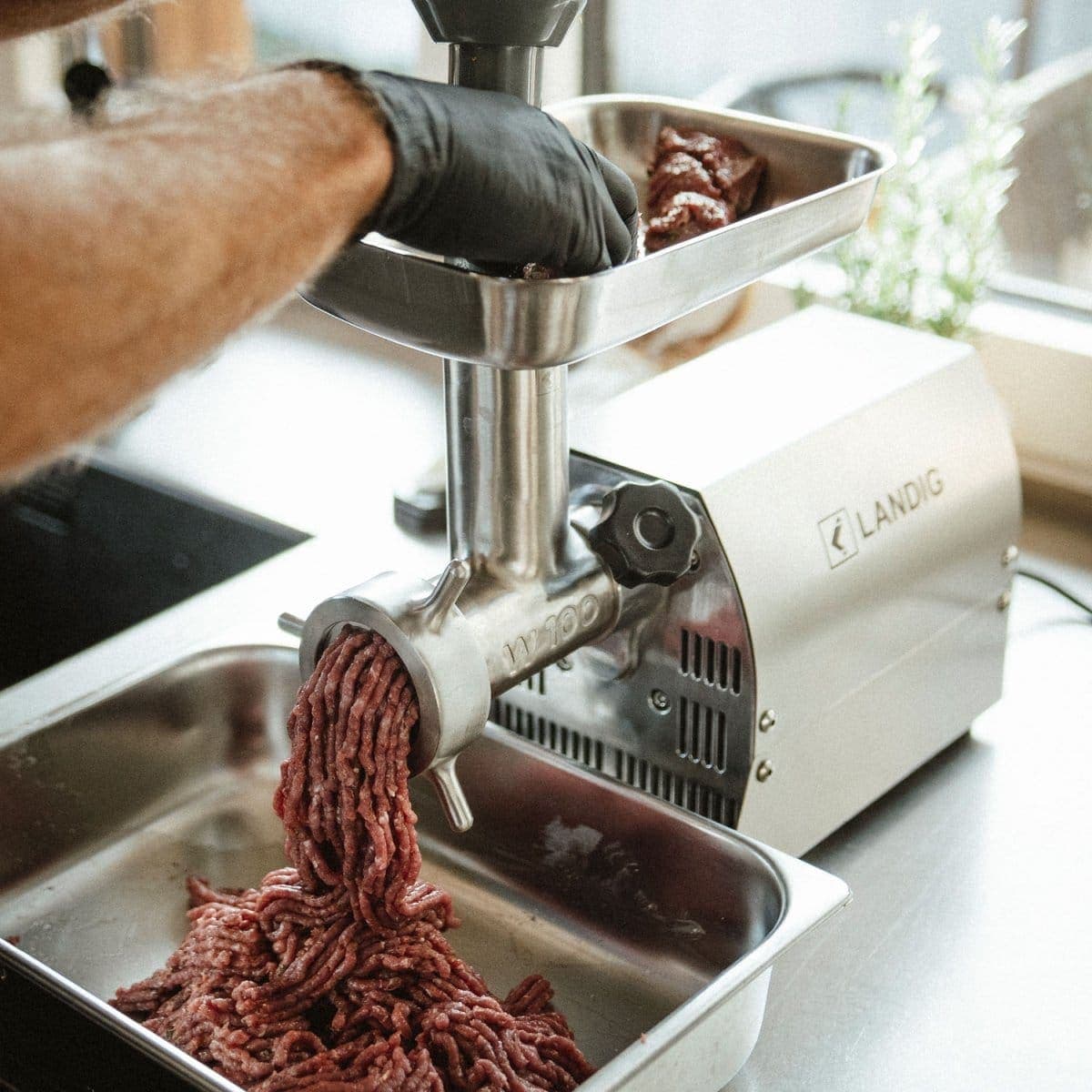
It makes the sausage meat in the first place. What to look for: A meat grinder for hunters.
Helps: LANDIG W 100
Casings
Natural casings come from pigs, cattle or sheep. They're easy to work with and suit fresh sausages such as bratwurst.
Collagen casings and other artificial casings give sausages an even size and shape; collagen lets moisture and smoke through, which suits cured sausages.
Sterile casings, a type of plastic casing, are sterilised before use, very tear-resistant and waterproof. They're mostly used where sausages are made in large numbers.
A sausage pricker and twine
The pricker lets out air bubbles left in the casing, for an even sausage. Butcher's twine ties off sausages that need to keep their shape and hangs them up for drying or curing.
Cleaning brushes
Brushes made for stuffers and filling tubes reach the meat left inside.
A vacuum sealer
Vacuum sealed and frozen, fresh sausages keep about 12 months, LAVA's figure for mince. Firm them up in the freezer first, then seal them in meal portions: step by step.
Helps: R-Vac bags
Cleaning
Clean the stuffer after every use, for hygiene and a long life. Stainless steel parts such as the cylinder and the filling tubes can go in the dishwasher, but rinse them by hand first: the dishwasher alone won't get all the meat out. Follow the maker's care instructions for any aluminium parts.
LAVA AustraliaOfficial LAVA distributor and vacuum-packaging specialists since 2018.