The short answer
- A mincer makes the most of every animal: neck, shoulder and rib trimmings become sausages, burgers and mince.
- Watts alone say little. A geared motor passes more torque to the blade for tough, sinewy pieces: the W 100 puts through more meat an hour than the W 50 with a third of its watts.
- For more than the odd batch, choose a motor built for continuous use and a stainless steel cutting set with spare blades and plates on sale.
- Stainless steel parts can go in the dishwasher; aluminium parts are washed by hand.
Why hunters mince
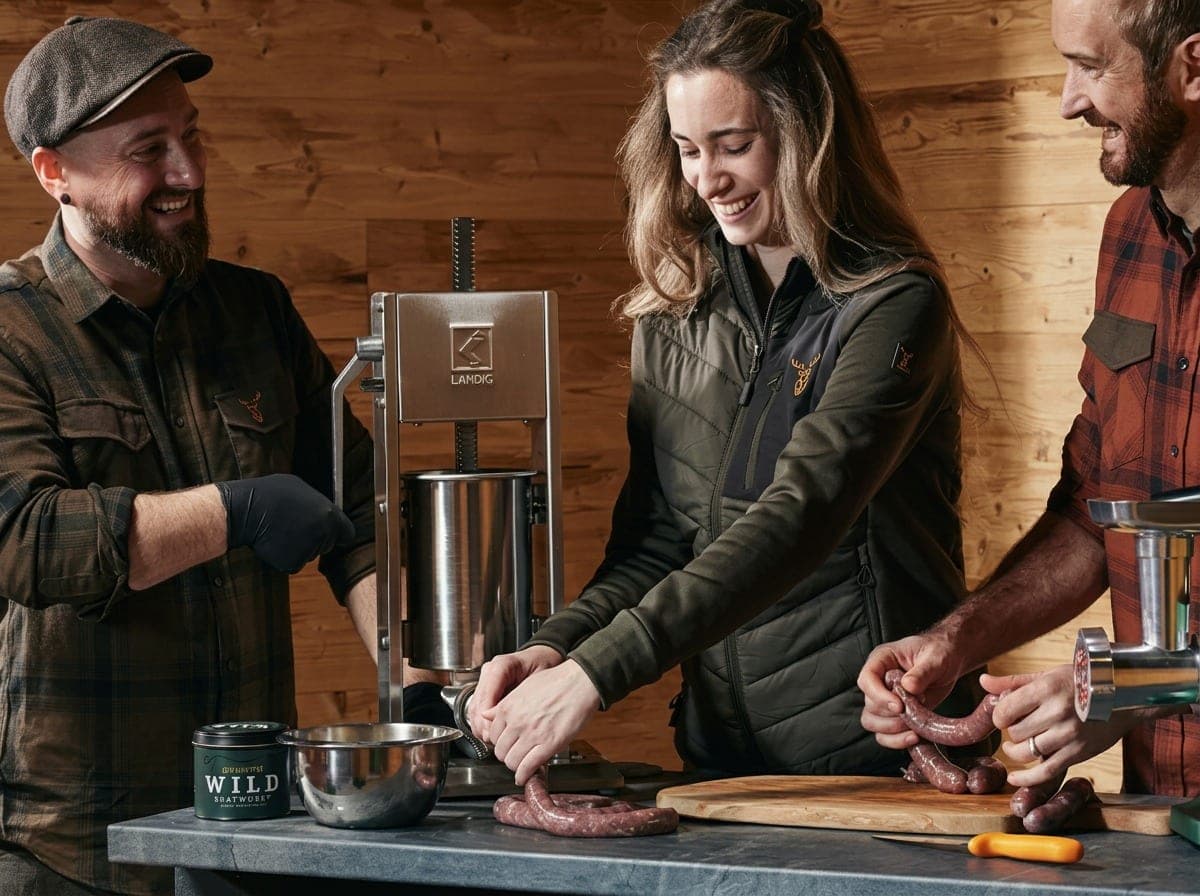
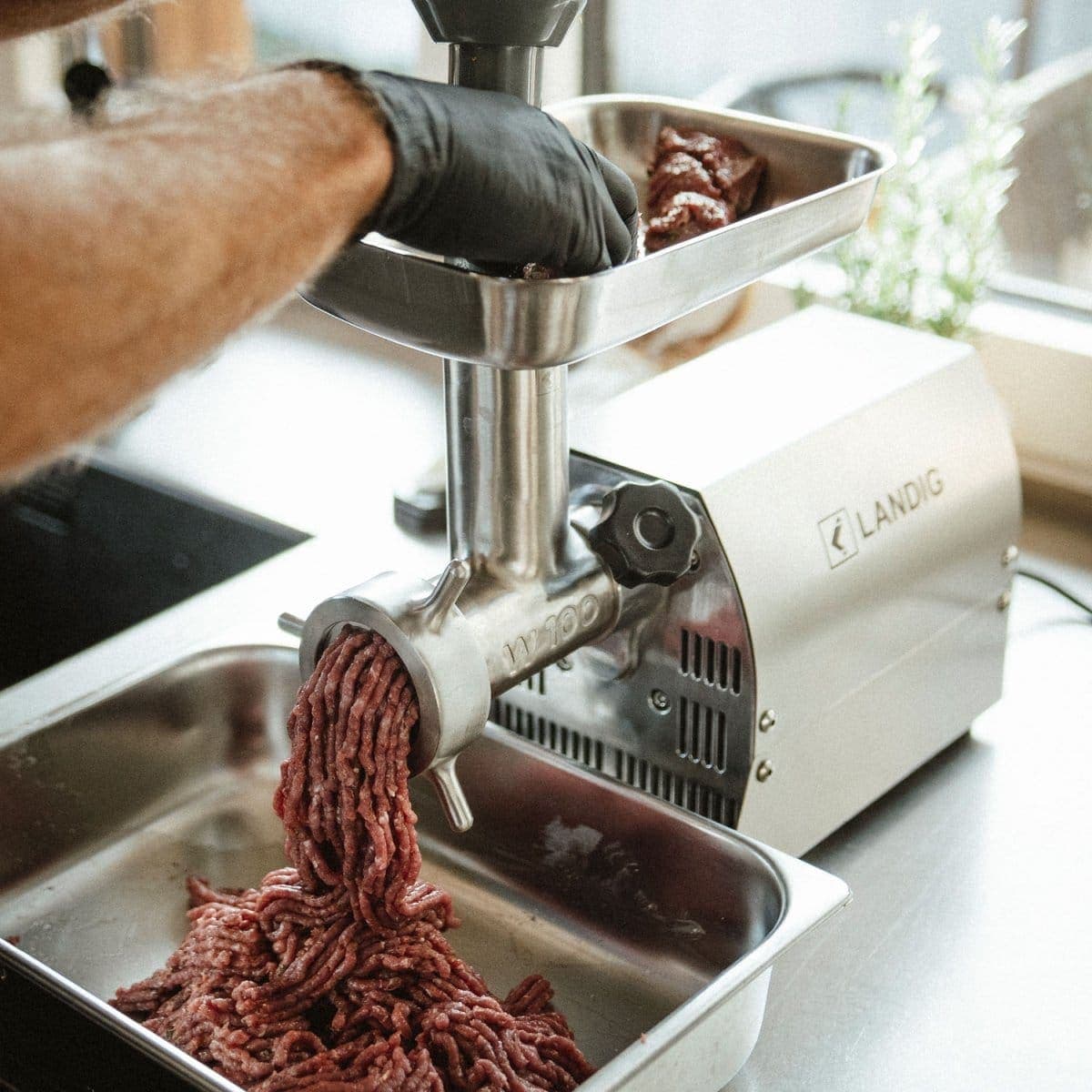
Every animal you bring home is worth using whole. A meat grinder turns the cuts that are hard to cook on their own, the neck, the shoulders and the trimmings from the ribs, into fresh sausages, game burgers or mince for a ragù, and whole pieces from the leg work just as well.
This guide follows LANDIG's buying advice for hunters. LANDIG, the family company behind LAVA, makes the W 50, W 100 and W 200 meat grinders we sell in Australia.
Manual or electric
A hand-cranked mincer needs no power point, but it has far less power, and one hand is always on the crank. An electric mincer is faster and stronger, gets through larger amounts and leaves both hands free to feed the meat. LANDIG builds only electric mincers: in its experience they suit processing game best.
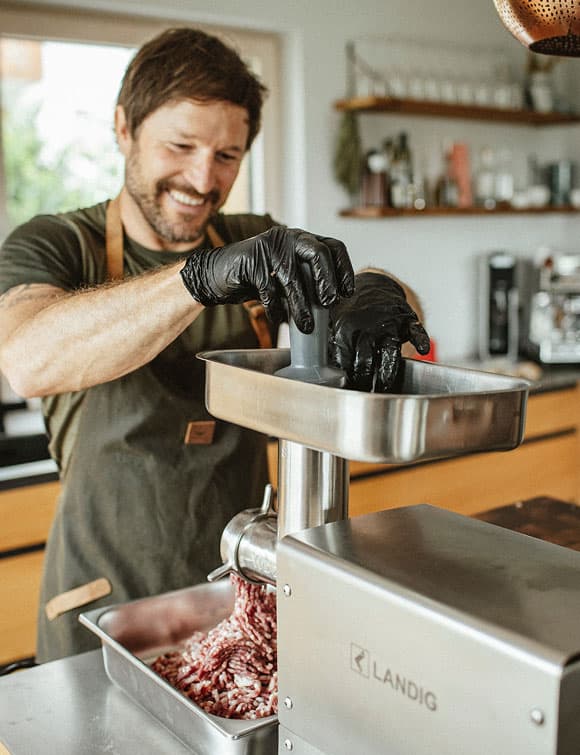
Power: what the watts don't tell you
Watts
Makers give an electric mincer's power in watts. In theory, more watts means a faster, stronger mincer, but how the motor drives the blade matters as much.
Direct drive
The motor's power goes straight to the blade. That's efficient and uses a little less electricity. The W 50 has a high-speed direct-drive motor of up to 2,400W.
Geared
A gearbox passes more torque to the blade. The mincer runs more evenly and smoothly, and has power in reserve when it meets tough, sinewy pieces. The W 100 (790W) and W 200 (1,955W) have LANDIG's professional gearbox: high torque at a low power draw.
Continuous use
Not every mincer is made to run for long. The W 100 and W 200 have LANDIG's WolfsHeart motor: permanently air-cooled, with a gearbox on two ball bearings, made for continuous use.
Kilos per hour
The other figure makers give is throughput in kg per hour. It's worked out from the size of the grinding head and how much the auger moves, so it's a theoretical figure, but a useful guide for comparing models: the W 100 is rated at up to 100kg an hour with 790W, the W 50 at up to 90kg with 2,400W.
The cutting set
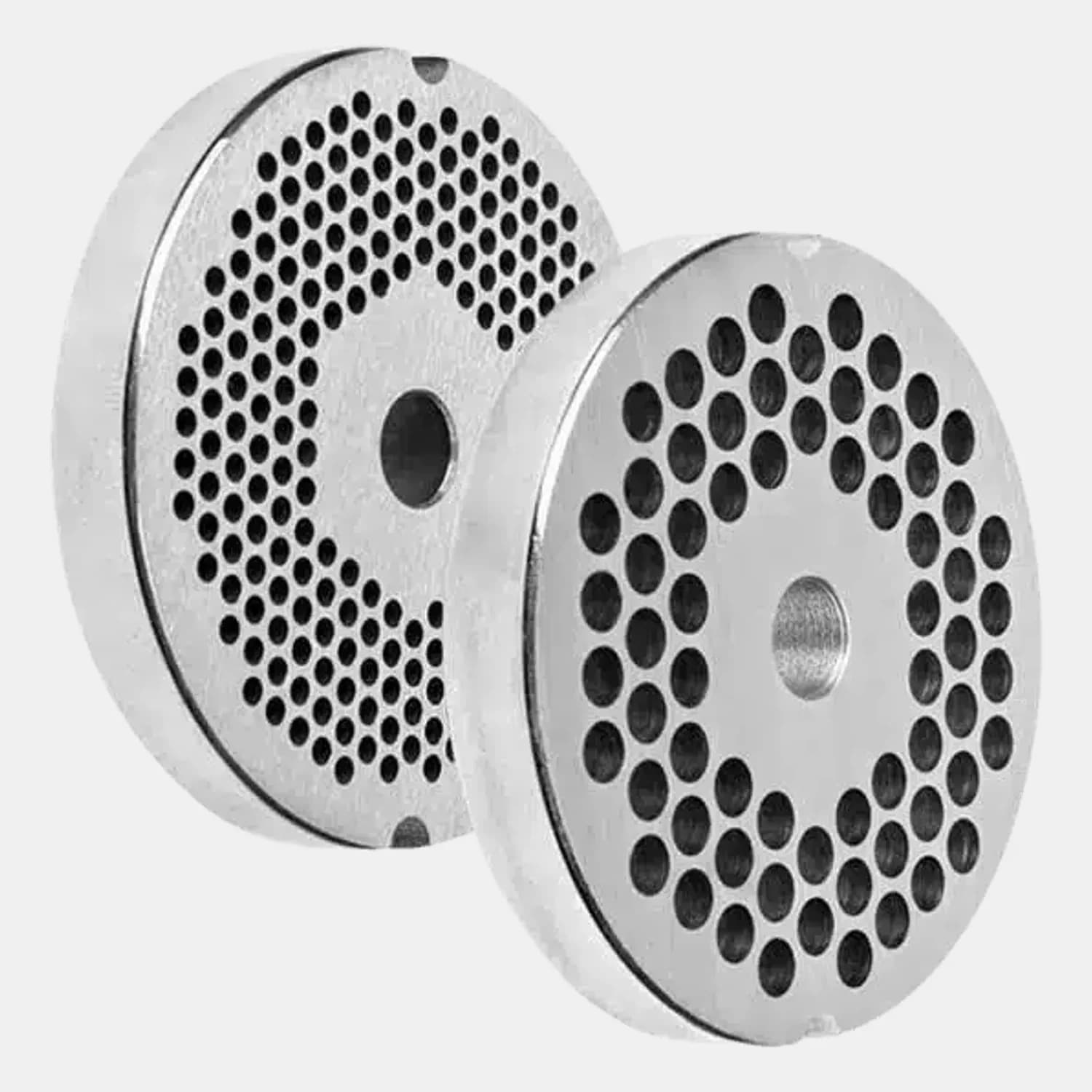
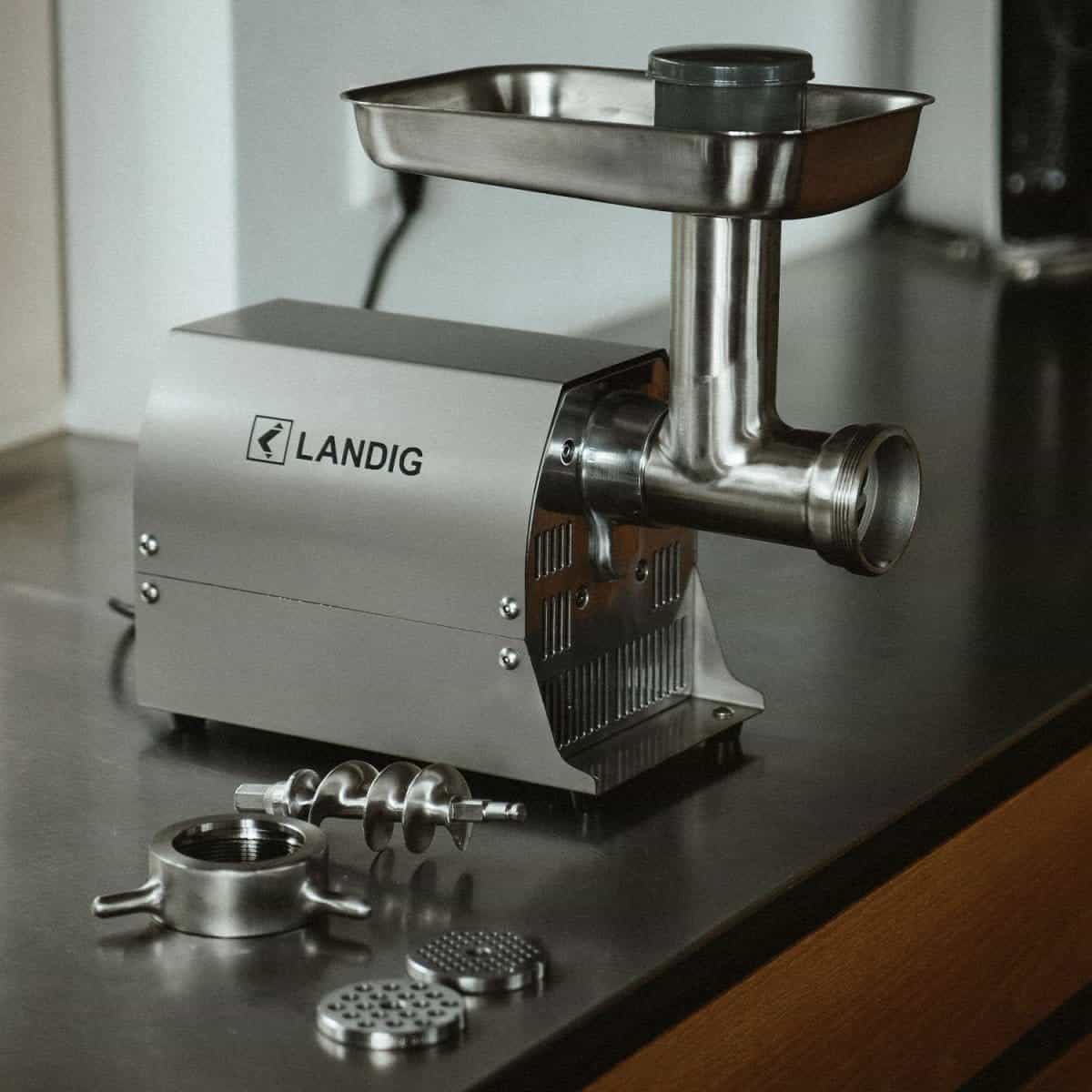
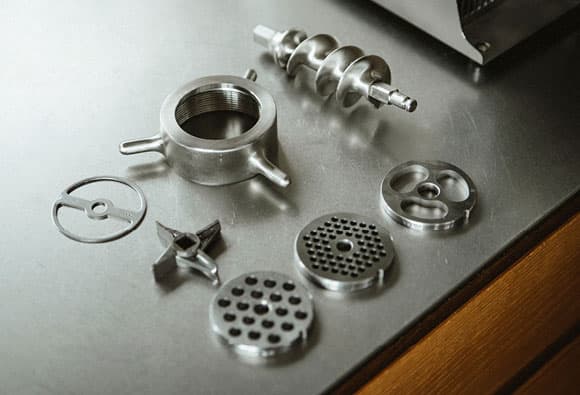
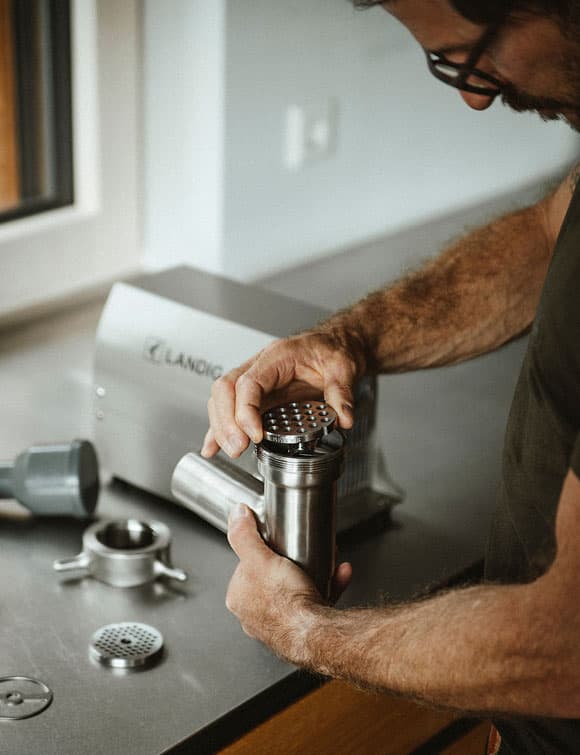
The cross blade decides the quality of the mince. It should be stainless steel and sharp, and you should be able to order a new one from the maker. The hole plate sets the texture, so a choice of plates lets you make anything from smooth sausages to coarse, rustic ones.
On a good mincer every part of the cutting set, the grinding head, auger, blade, plates and locking ring, is rustproof stainless steel: it lasts and is easy to clean. That's the case on the W 100 and W 200. The W 50's blade and plates are stainless steel too; its grinding head, auger and locking ring are cast aluminium.
Spare parts for the W 100 and W 200: a cross blade and hole plates from 2 to 12mm. The W 50 has its own blade and 3, 5 and 8mm plates. Which plate for what: How to make sausages at home.
Housing: plastic, aluminium or stainless steel
- Plastic. The cheapest and easy to clean, but not as robust as aluminium or stainless steel.
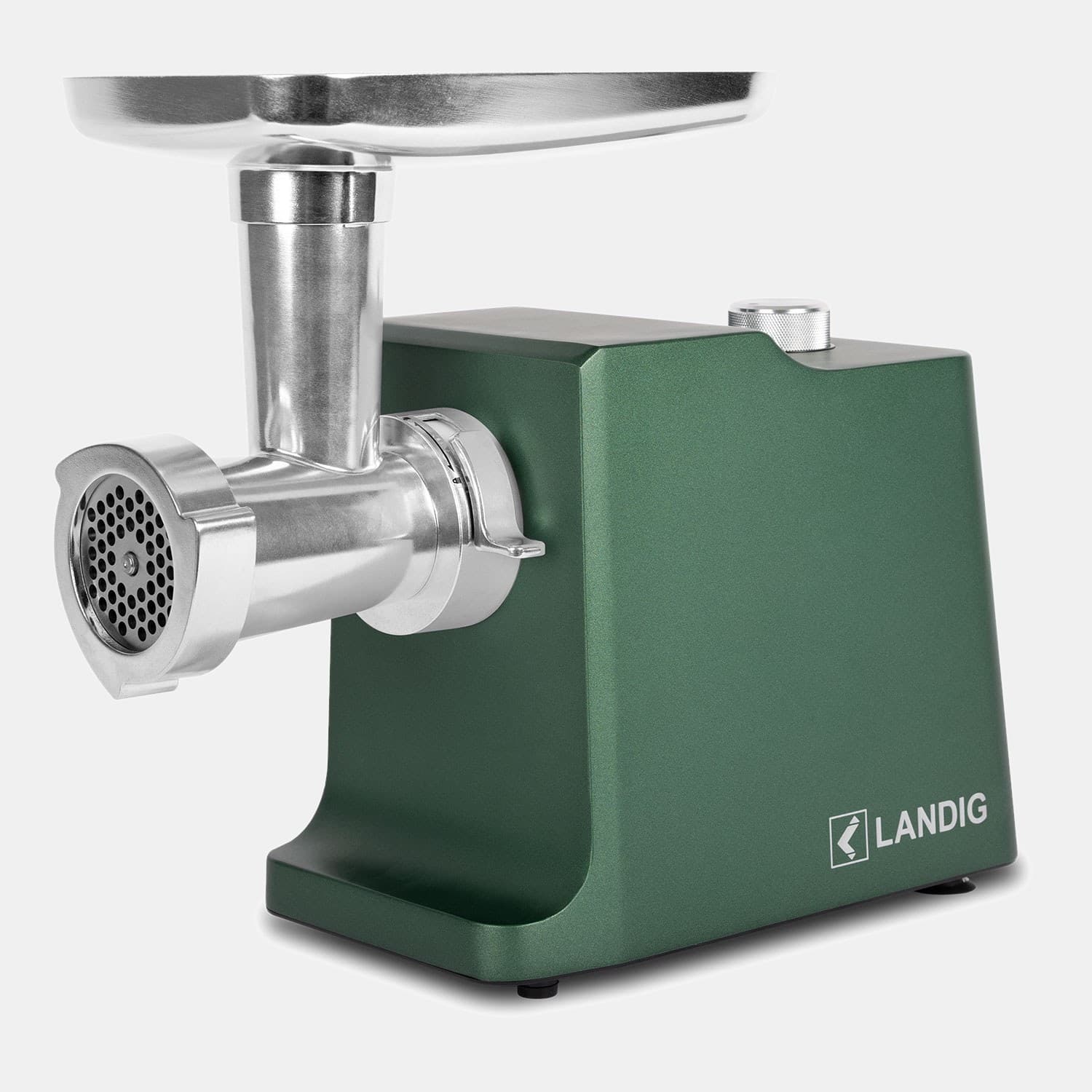
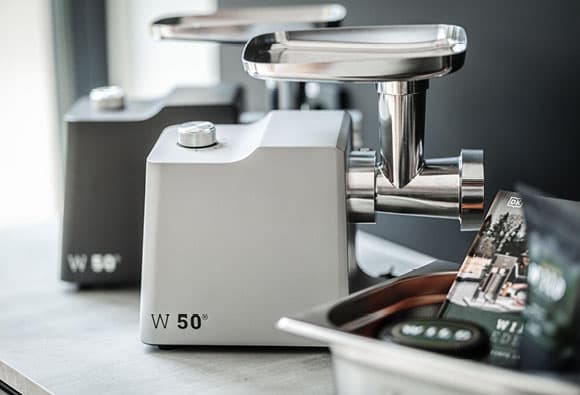
- Aluminium. Robust and long-lasting, but not as hygienic as stainless steel. The W 50 has a brushed aluminium housing in hunting green, edelweiss white or anthracite.
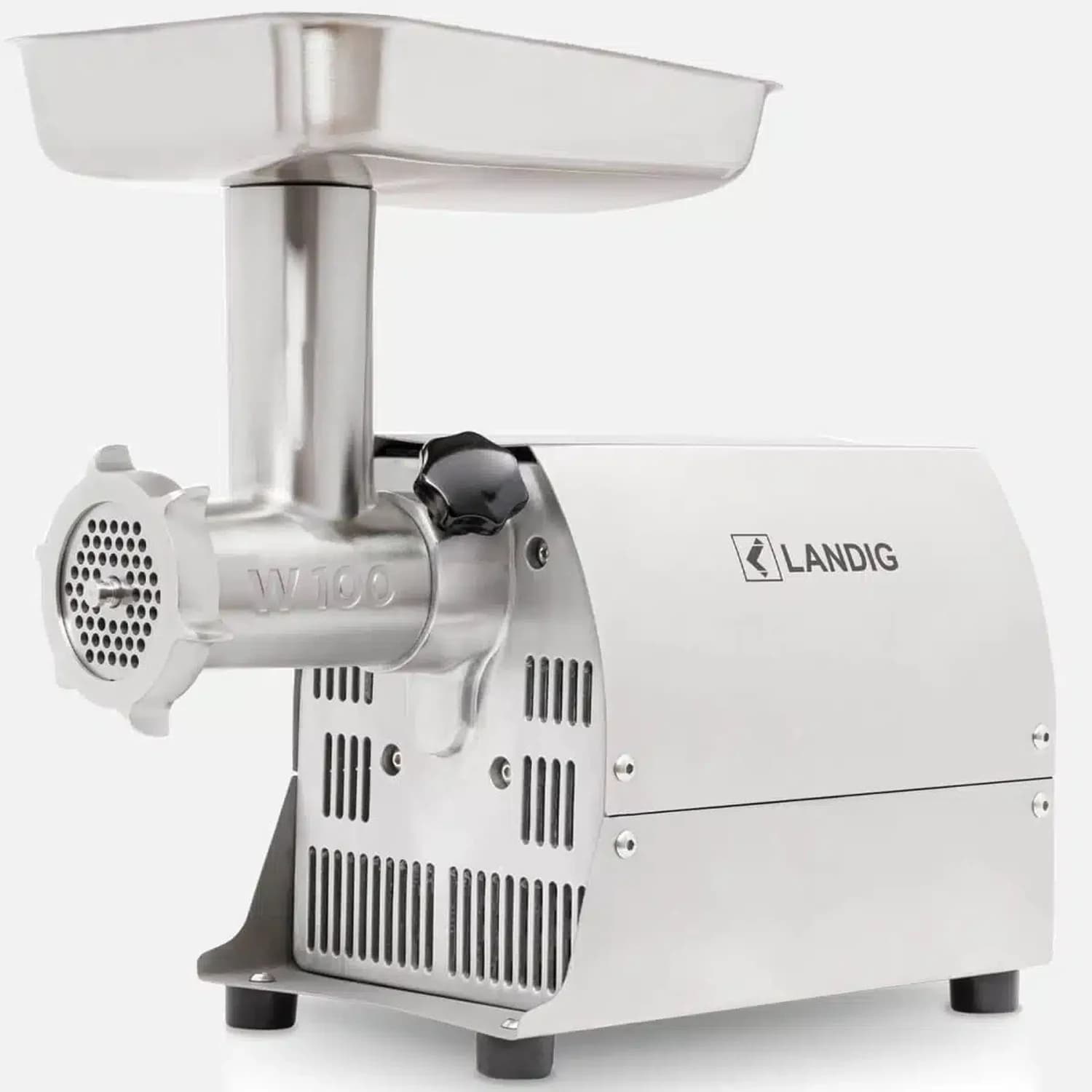
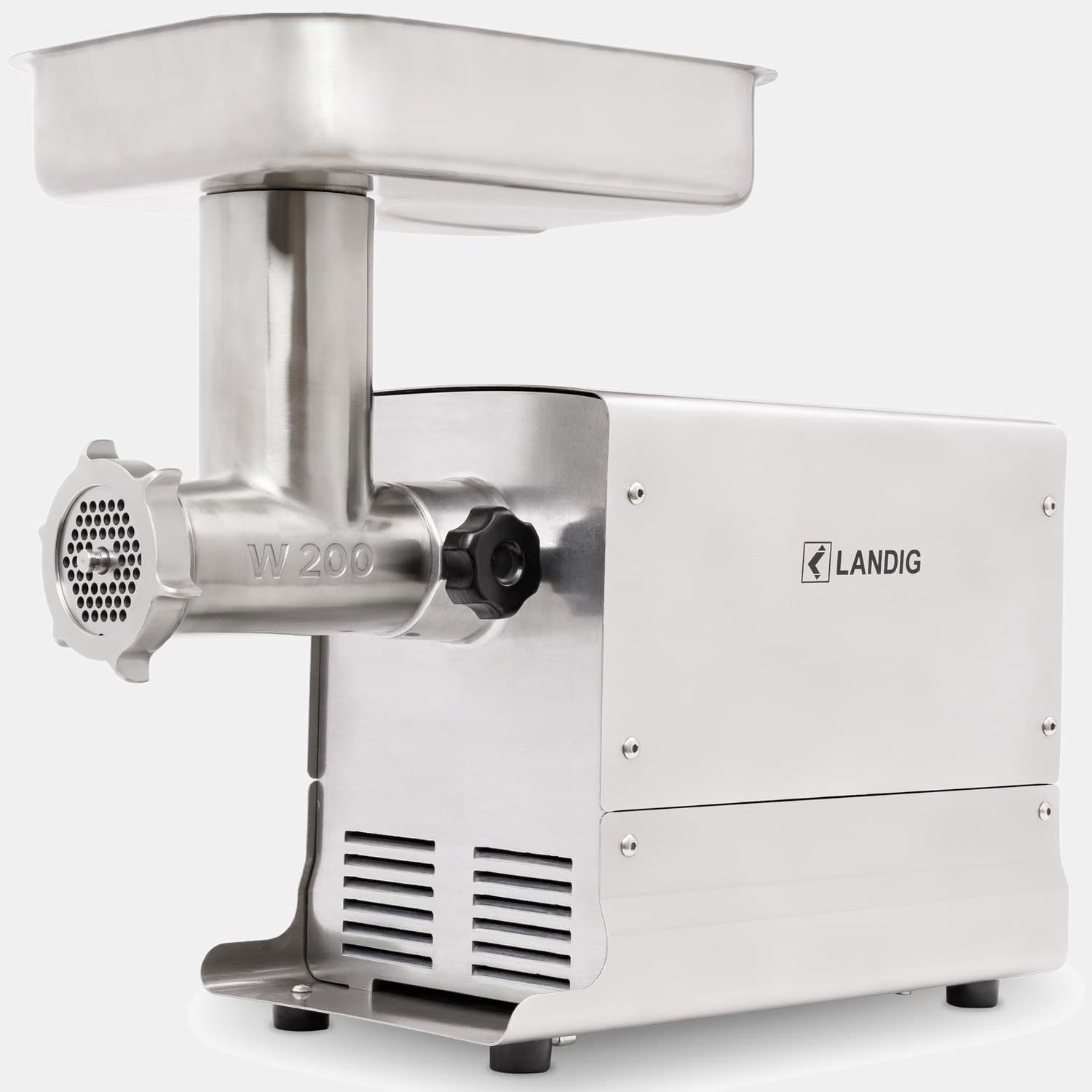
- Stainless steel. Hygienic and long-lasting, and the most expensive. The W 100 and W 200 are stainless steel from the housing to the feeding tray.
Cleaning
Clean the mincer thoroughly after every use, so bacteria can't build up. Stainless steel parts can go in the dishwasher, one more reason for a stainless cutting set. Parts made of other materials, such as the W 50's aluminium grinding head, auger and locking ring, are washed by hand. Wipe the housing with a damp cloth, warm water and a little detergent.
Accessories that make it a multitool
Accessories widen what a mincer can do. Check that they fit your model, and that the maker sells them when you need them.
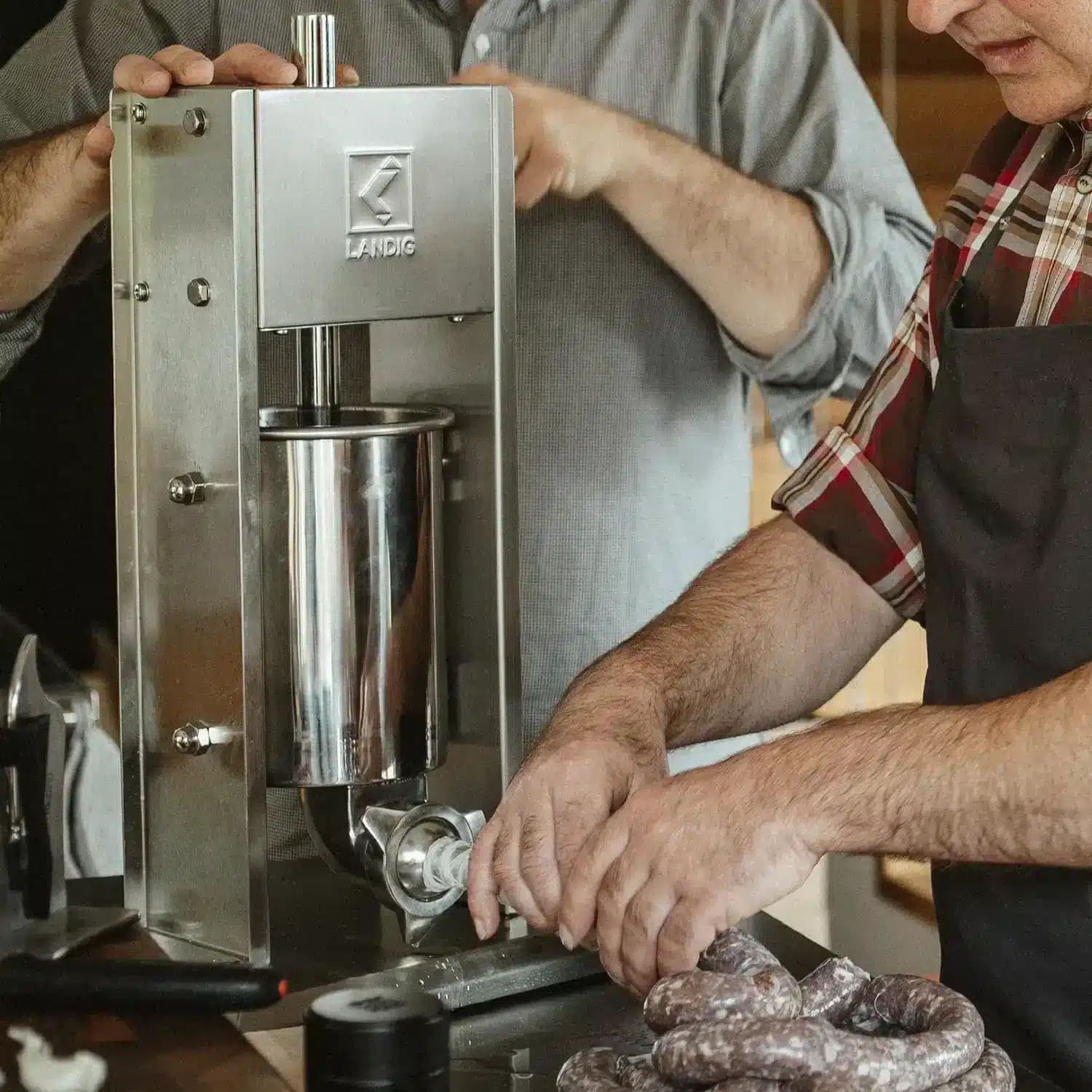
- Sausage funnel. Every LANDIG mincer comes with one, so it can fill a small batch of sausages: 24mm on the W 50, 22mm on the W 100, 25mm on the W 200. The funnel set adds 15, 25 and 35mm for the W 100 and W 200.
- More hole plates. Fine plates for smooth sausages and pâté, coarse ones for rustic sausages and a first pass.
- Foot pedal. The foot pedal switch runs the mincer while you press it and stops it when you let go, so both hands stay free. It fits the W 100 and W 200.
- Kibbeh and biscuit attachments. Both come with the W 50.
Which LANDIG for which hunter
Now and then: W 50
For hunters starting to process their own game and mincing now and then. Compact and light at 4.7kg, up to 90kg an hour, with a reverse gear. Comes with 3, 5 and 8mm plates, a sausage funnel, and a kibbeh and a biscuit attachment.
Helps: LANDIG W 50
Every season: W 100
LANDIG's smallest stainless steel mincer, 8kg, for regular use: up to 100kg an hour, the WolfsHeart motor for continuous use and the BigFeed grinding head, which takes larger pieces and moves them quickly to the blade. Comes with 4.5 and 8mm plates and a sausage funnel.
Helps: LANDIG W 100
Larger amounts: W 200
For frequent use and bigger batches: up to 150kg an hour. At 16.7kg it stands very steady on the bench, and its auger takes even large pieces without overfilling the cutting set. Comes with 4.5 and 8mm plates and a sausage funnel.
Helps: LANDIG W 200
Before you buy
- How often, how much. For the odd batch of mince or sausages, an entry model is enough. For regular use or larger amounts, a heavier stainless steel mincer built for continuous use.
- Build quality. Solid materials and good workmanship.
- Room to work and store. A light mincer is easy to put away; a heavy one stands steadier. The W 50 weighs 4.7kg, the W 100 8kg and the W 200 16.7kg.
- Spare parts. Blades wear and plates go missing: make sure both are sold for your model. Ours are with the meat grinders.
LAVA AustraliaOfficial LAVA distributor and vacuum-packaging specialists since 2018.