The short answer
- Keep everything cold, the meat, the fat and the mincer's metal parts: warm fat smears and makes the sausage crumbly.
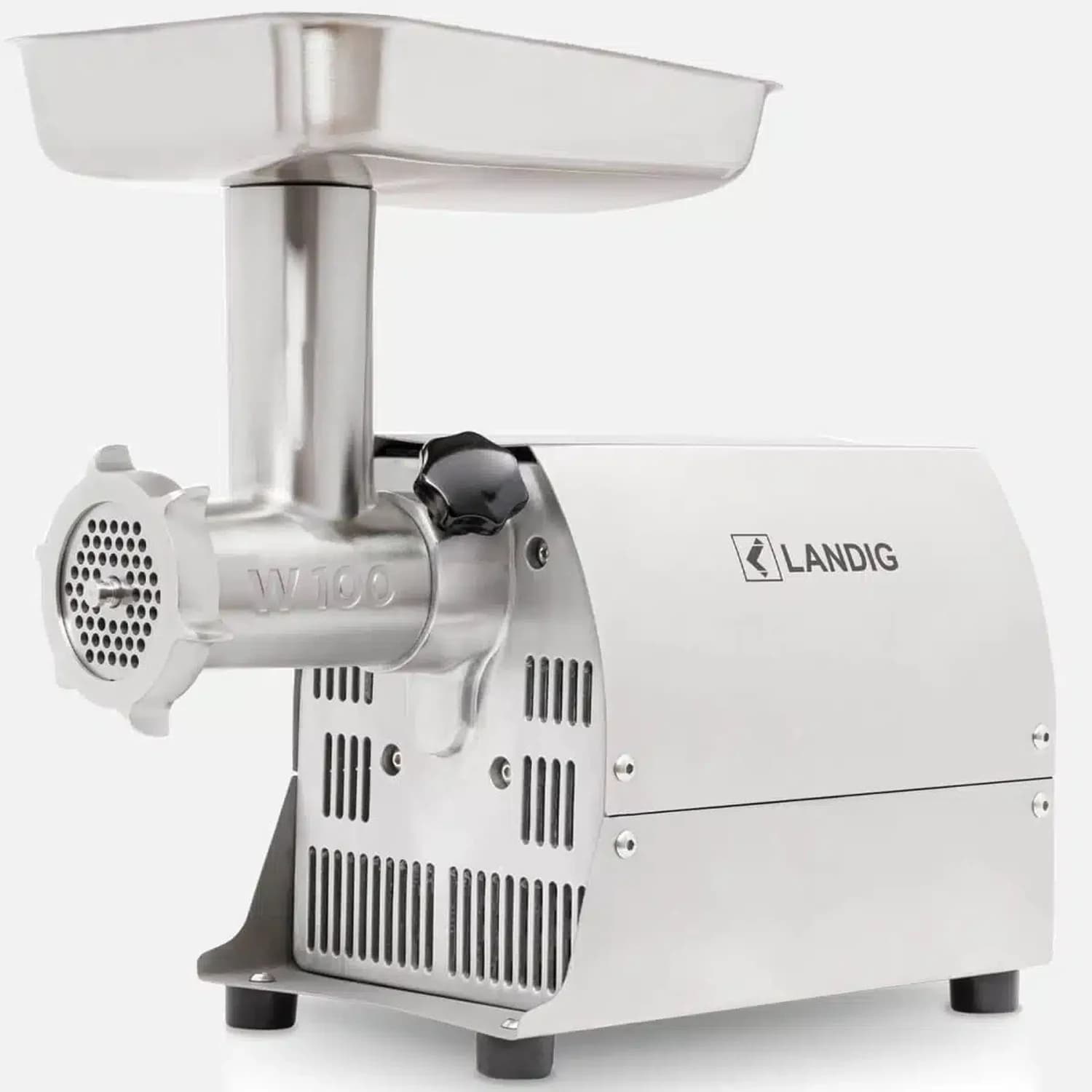
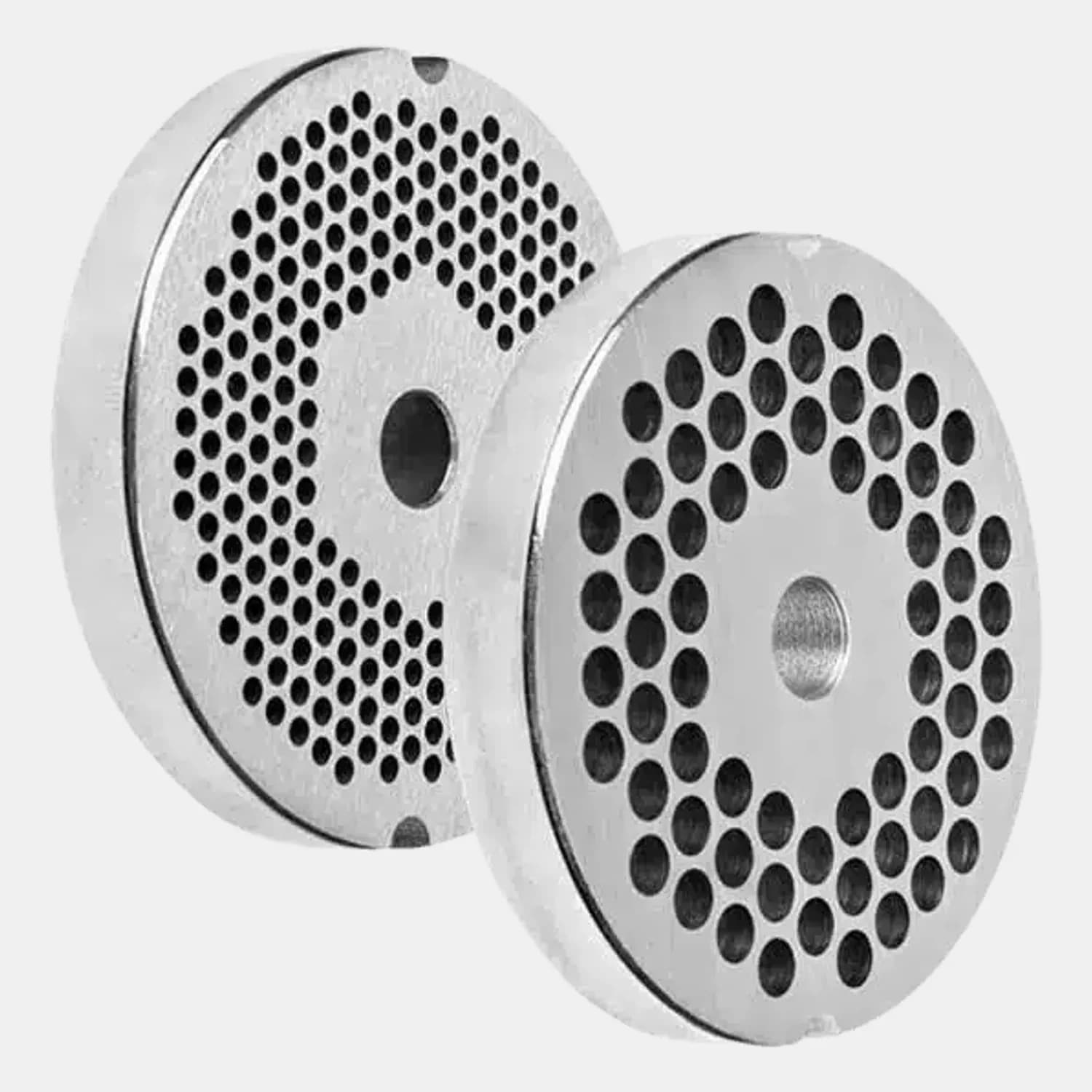
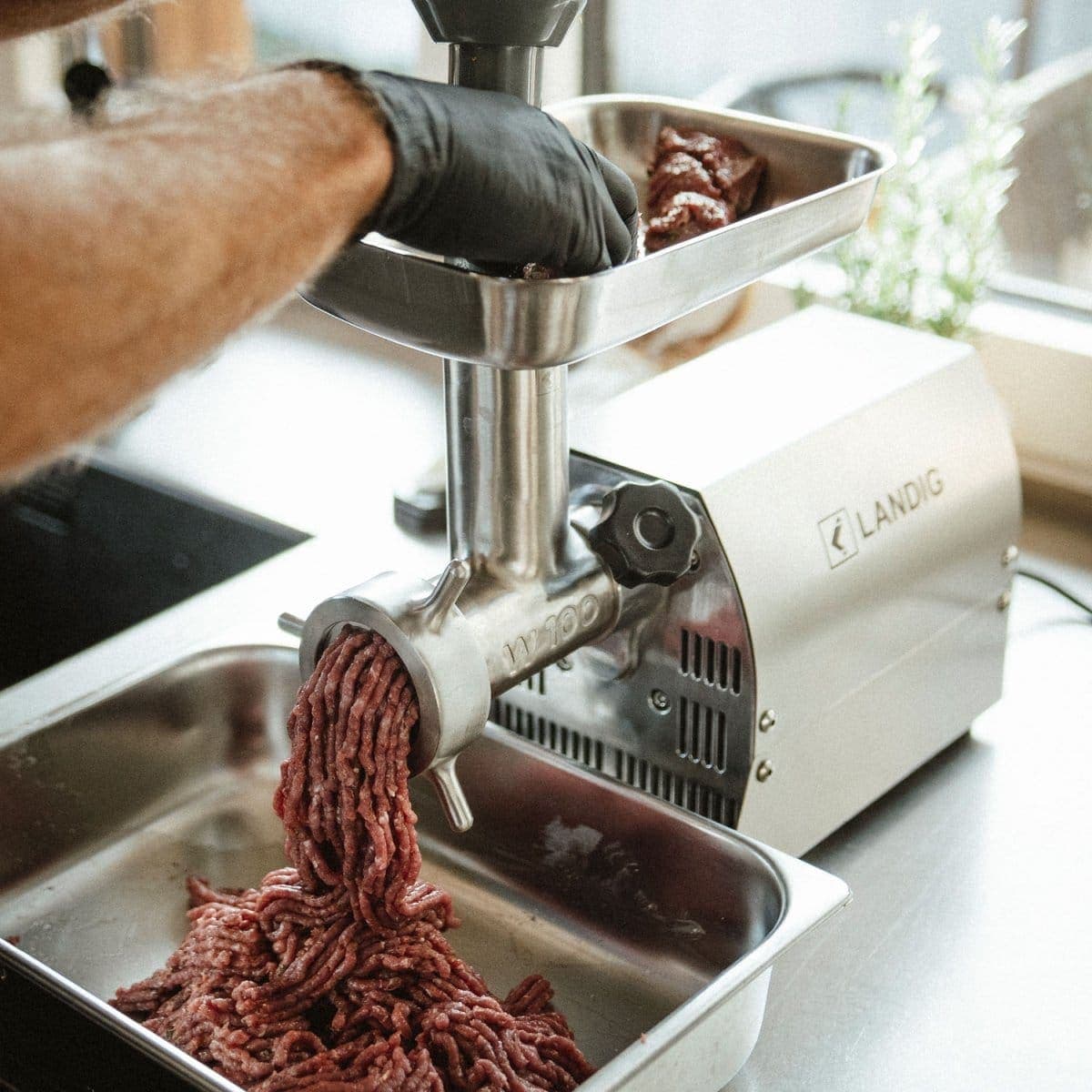
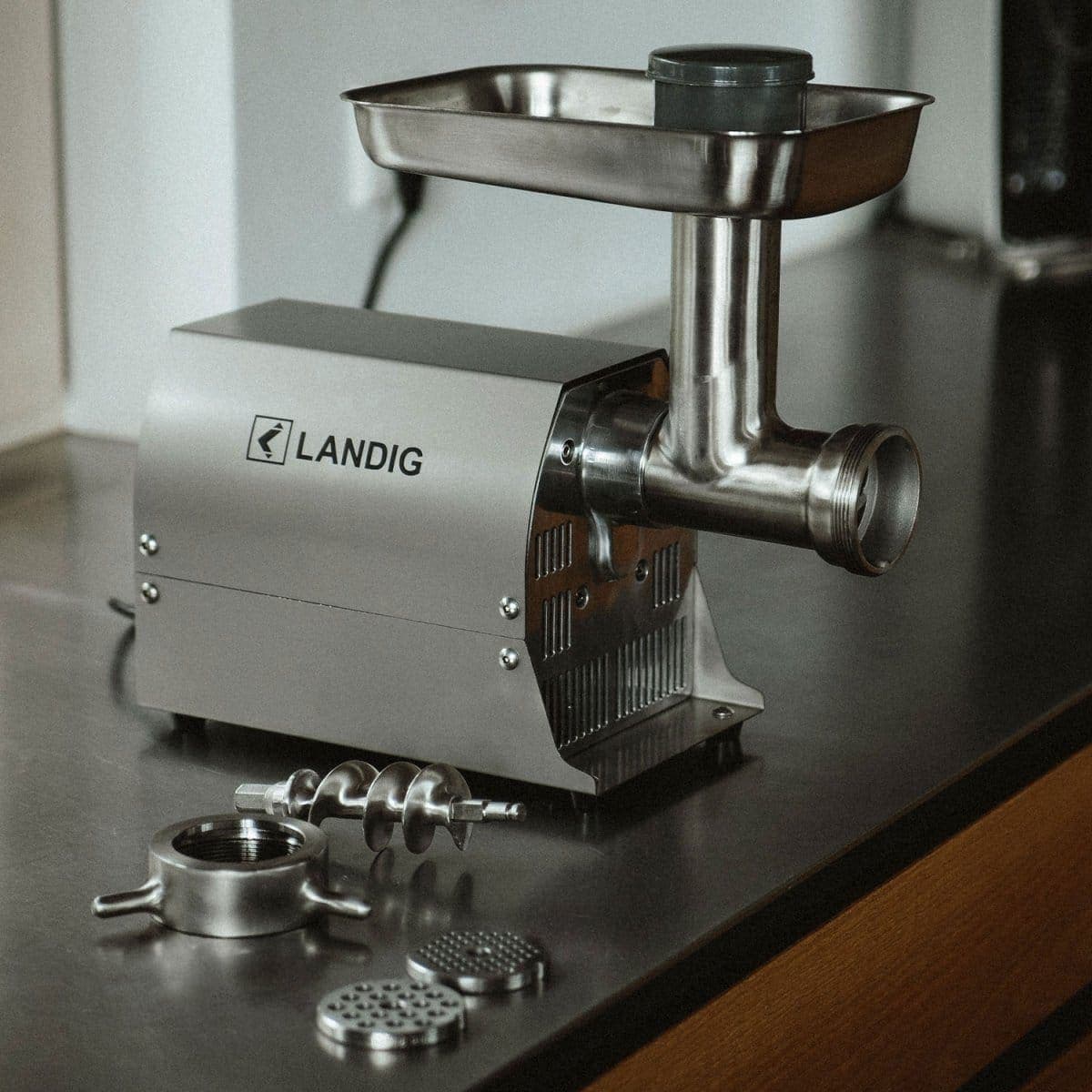
- Mince through the 8mm disc for rustic sausages and the 4.5mm disc for most fresh ones; the LANDIG W100 comes with both.
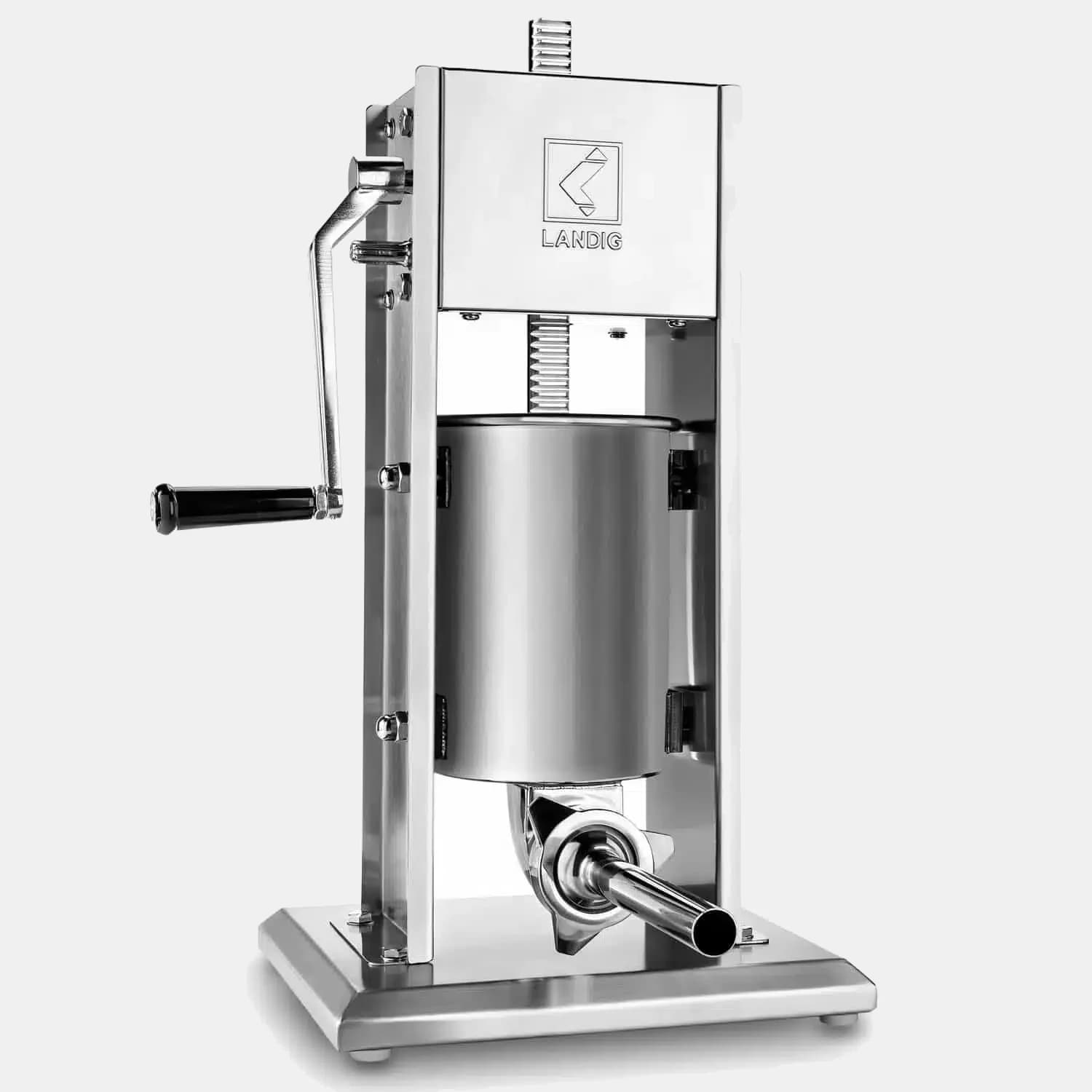
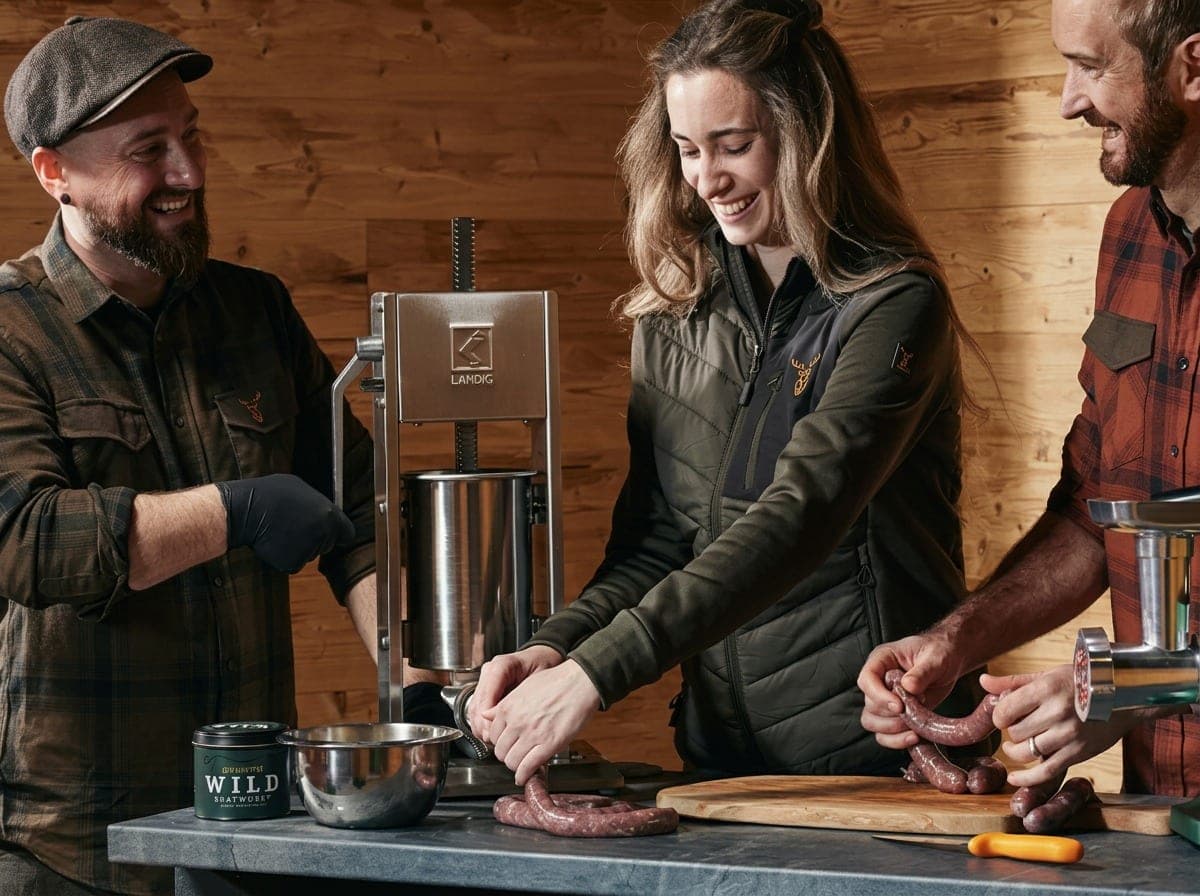
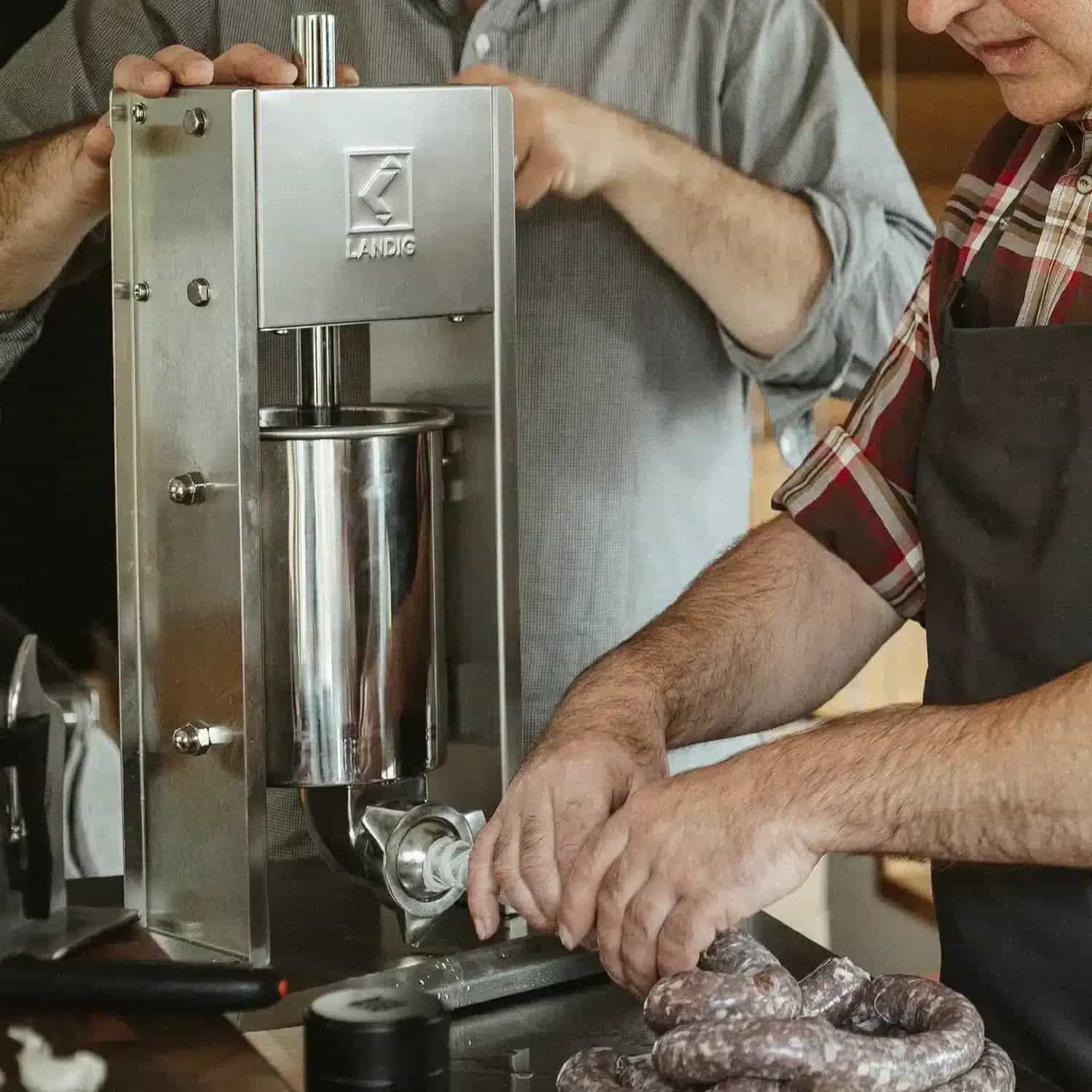
- A piston filler fills casings evenly and quickly; the mincer's funnel is fine for a small batch.
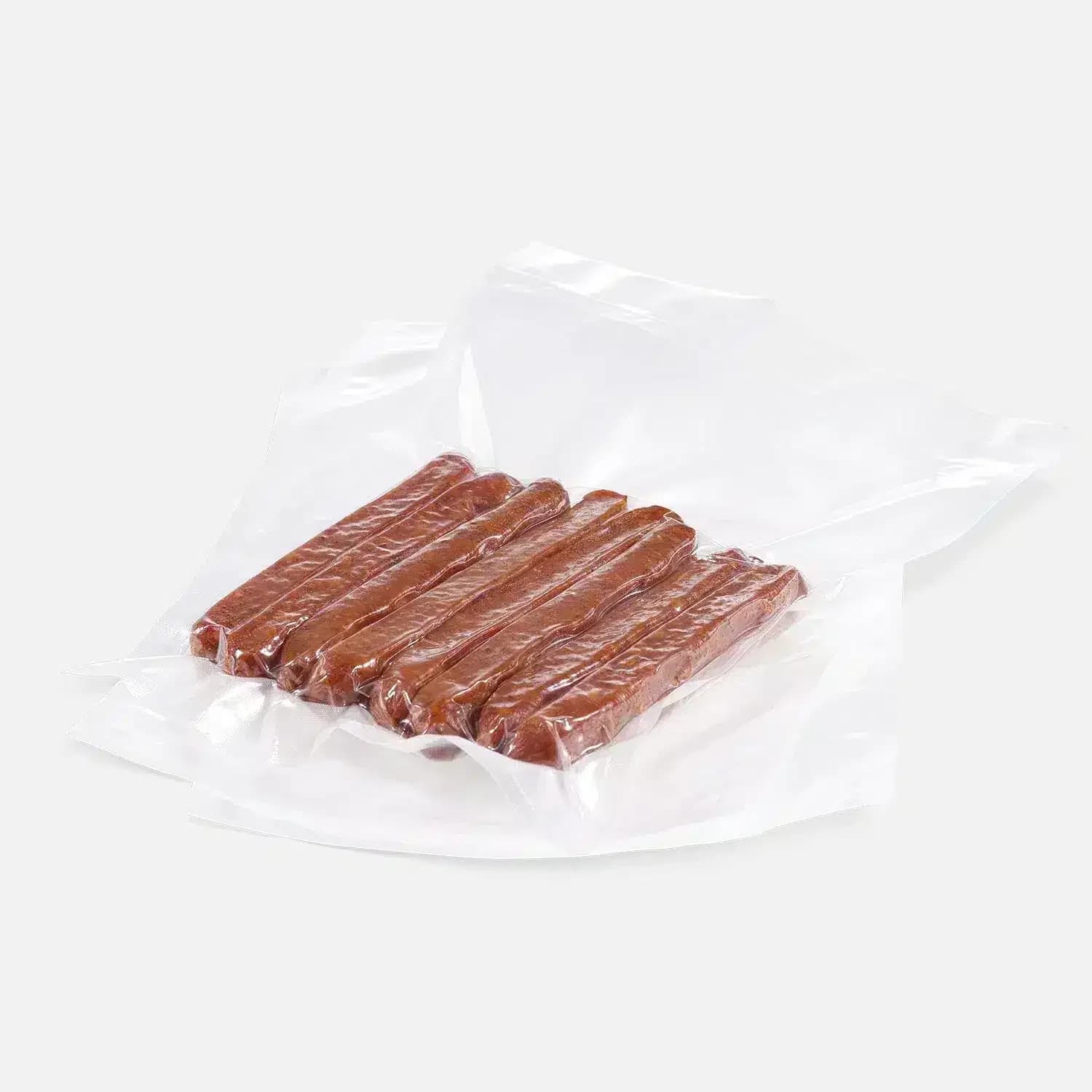
- Rest the sausages in the fridge overnight, then vacuum seal and freeze them: about 12 months, like mince.
What you need
Meat with enough fat, salt and spices, casings, a meat grinder and, from a few kilos on, one of the sausage stuffers. Pork shoulder, beef chuck, lamb shoulder and venison all work. Most fresh sausages have around 20–30 % fat: less, and they cook up dry, so lean game or kangaroo is mixed with pork fat or fatty pork.
Natural casings come salted or in brine: rinse them inside and out and soak them in lukewarm water before use. A kitchen scale matters more than you'd think, because recipes give salt and spices per kilo of meat: the scale, knives and gloves are among our butcher supplies, and grinders, fillers and sous vide sticks together are on meat processing equipment.
Fig. 18 · Mince to freezer
Seven steps
Cold all the way through, until the sausages are sealed.
Step by step
1 · Chill everything
Meat and fat go into the freezer for 30 to 60 minutes, until they're firm at the edges, and the mincer's auger, cross blade and disc go in with them. Cold fat is cut cleanly; warm fat smears over the lean meat and the sausage turns greasy and crumbly.
2 · Cut into cubes
Pieces that drop easily into the feed opening. Take off sinew and silverskin, which wrap around the blade.
3 · Mince
Feed the pieces in without pushing hard and let the auger pull them through. The mince should come out in clean strands. If it turns to paste, stop and check that the blade and disc are clean, sharp and tightened.
Helps: LANDIG W100 mincer · Perforated discs · Cross blade
4 · Season and mix
Weigh the mince, then the salt and spices for that weight: most fresh sausage recipes use about 15–20g of salt per kilo. Mix by hand or in a mixer until the mince turns sticky and binds; a splash of ice-cold water helps. Fry a small patty and taste before you fill.
Helps: LANDIG table scale
5 · Fill
Slide the casing onto the tube and leave a short tail. Turn the filler at an even speed while your other hand guides the casing off the tube. Fill firmly but not tight, so the links can be twisted without bursting. The filler's air valve lets trapped air out of the cylinder; prick any bubbles left in the casing with a clean needle.
6 · Twist, rest, seal
Twist the sausage into links, turning the other way each time. Let the links rest uncovered in the fridge overnight, so the casings dry and the flavours settle, then seal them in portions.
Helps: R-Vac bags
Which disc for what
| Disc | Texture | Typical use |
|---|---|---|
| 2–3mm | Very fine | Smooth sausages such as frankfurters, pâté; usually after a coarser first pass |
| 4.5mm | Fine to medium | Most fresh sausages, burgers (comes with the W100) |
| 6mm | Medium | Bratwurst-style sausages, meatballs |
| 8mm | Coarse | Rustic sausages, chilli and ragù (comes with the W100) |
| 10–12mm | Very coarse | A first pass before a finer disc, chunky mixes |
Discs for the LANDIG W 100 and W 200 come in 2, 3, 4.5, 6, 8, 10 and 12mm. The uses are a general guide.
Tube and casing
The tube has to slide easily inside the casing, so the casing sets the tube size.
| Casing | Typical width | Tube |
|---|---|---|
| Sheep casing | about 20–24mm | 10 or 16mm |
| Hog casing | about 32–36mm | 16 or 22mm |
| Beef or large casings | 40mm and up | 32 or 38mm |
The LANDIG 3L filler has tubes of 10, 16, 22, 32 and 38mm. The W100 mincer comes with a 22mm funnel; the funnel set adds 15, 25 and 35mm. Casing widths vary by supplier.
Keeping them
- 1
Firm them up firstSoft fresh sausages lose their shape under full vacuum. An hour on a tray in the freezer firms them up, then seal.
- 2
Seal in meal portionsSide by side in one layer, as many as you cook at once: thawed sausages shouldn't be frozen again.
- 3
Freeze flat, label everythingFlat packs freeze faster and stack like files. Write the type and date on each: in the freezer every sausage looks the same.
- 4
About 12 monthsThat's LAVA's figure for vacuum-sealed mince at −18 °C, against about 4 months unsealed.
Fresh sausage is raw mince. Keep the meat at 5 °C or below while you work, clean the mincer, boards and hands as you would for any raw mince, and cook the sausages through: Australia's Food Safety Information Council advises 75 °C in the centre for sausages and mince.
LAVA AustraliaOfficial LAVA distributor and vacuum-packaging specialists since 2018.