The short answer
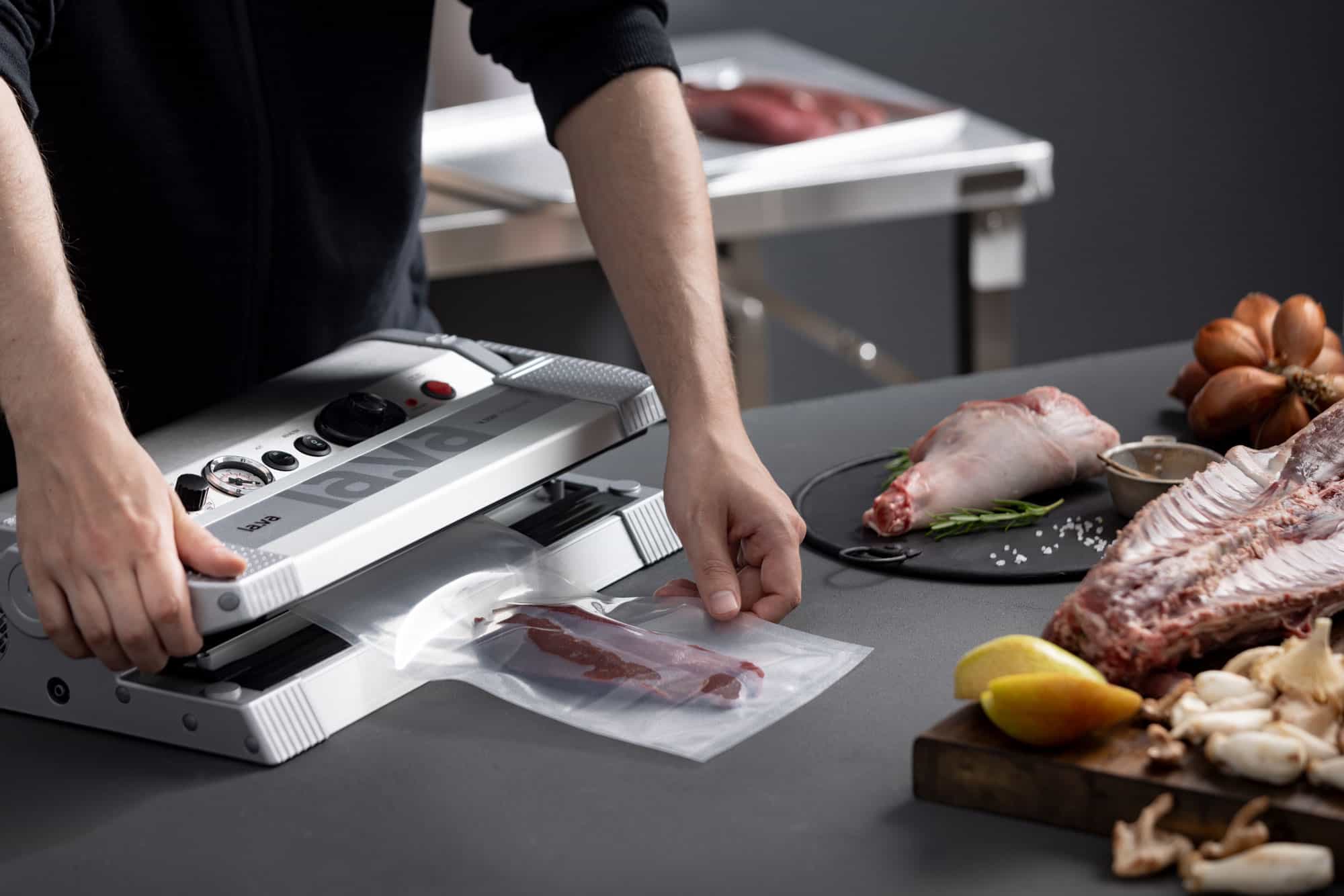
- In an external sealer the bag is the vacuum chamber: only the open end goes into the machine.
- One cycle: lid closes → pump pulls the vacuum (to −0.94 bar on a LAVA) → seal bar welds the bag → air is let back in → lid opens.
- Embossed bags are a must: their channels let the air out of every corner.
- The parts that wear (foam seals, seal tape) can be replaced, so the machine can be repaired instead of replaced.
External sealer or chamber machine?
There are two kinds of vacuum sealer. In a chamber machine the whole bag sits inside a closed box, and the box is pumped empty. In an external sealer like every LAVA, only the open end of the bag goes into the machine: a small chamber under the lid, closed off by two foam seals, is pumped empty, and with it the bag. The bag itself is the vacuum chamber.
That makes an external sealer compact and fast, and it seals bags of any length up to the width of its seal bar. What it can't do is seal liquid in a bag: the liquid would be drawn towards the pump. That's what freezing first, a container or a LiquidStop strip are for (which foods need a trick).
Fig. 10 · One cycle
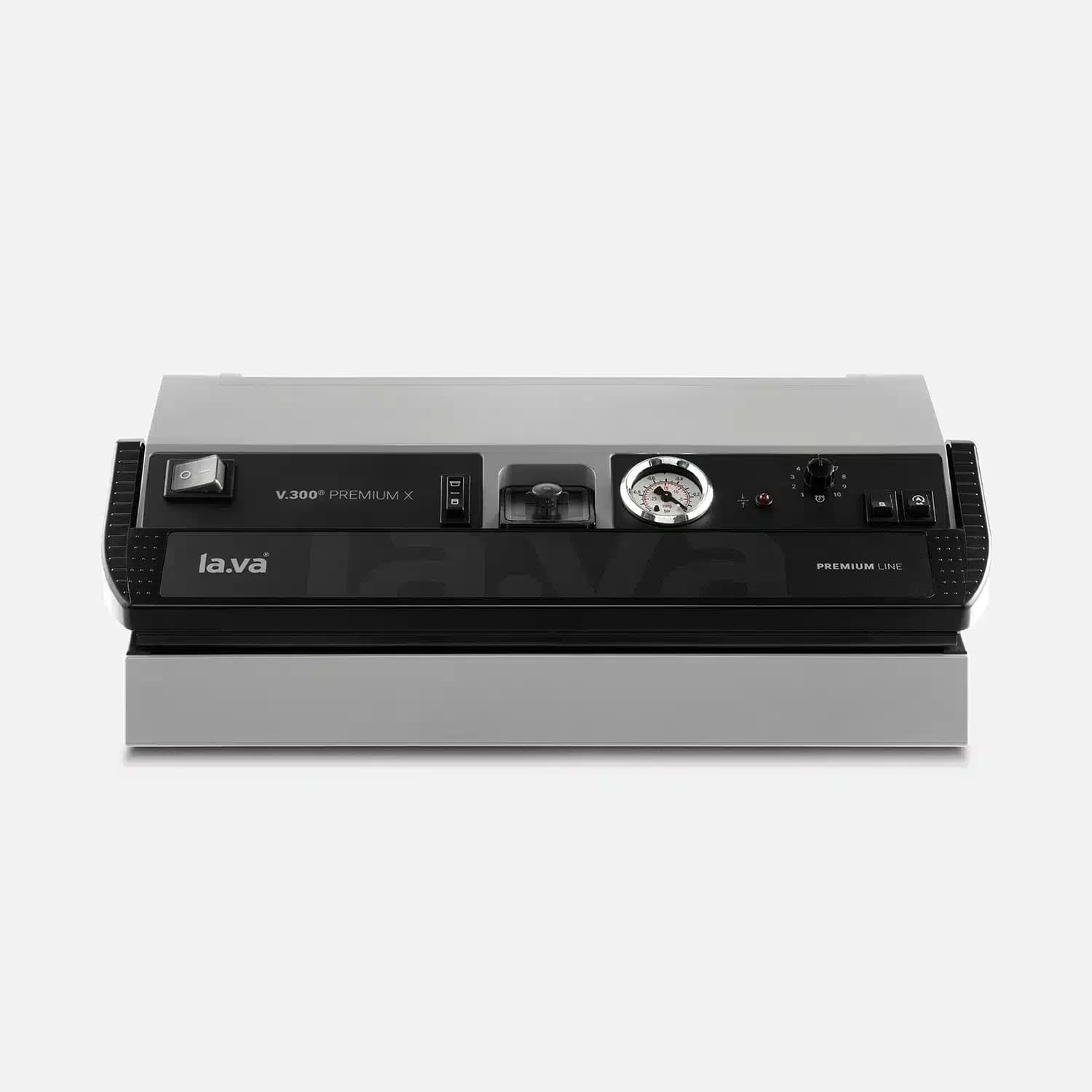
What the gauge shows
Pressure under the lid during one cycle; schematic, not to scale in time.
- 1
Lid closesClose the lid with the bag's open end on the seal bar. On a LAVA the LAVA Closing System holds the lid magnetically, so you don't have to press it down.
- 2
Pump pulls the vacuumThe piston pump draws the air out of the small chamber under the lid and out of the bag through its embossed channels. The gauge needle moves from 0 towards −0.94 bar. With L+ you stop earlier, for soft food.
- 3
Seal bar welds the bagAt the set vacuum the heated seal bar melts the two layers of the bag together: two seams on a double-seal machine, three on a triple seal. The sealing time (1–10) matches the bag's thickness.
- 4
Air back in, lid opensA valve lets air back into the chamber under the lid, the needle returns to 0 and the lid releases. The bag stays at its vacuum: it's sealed.
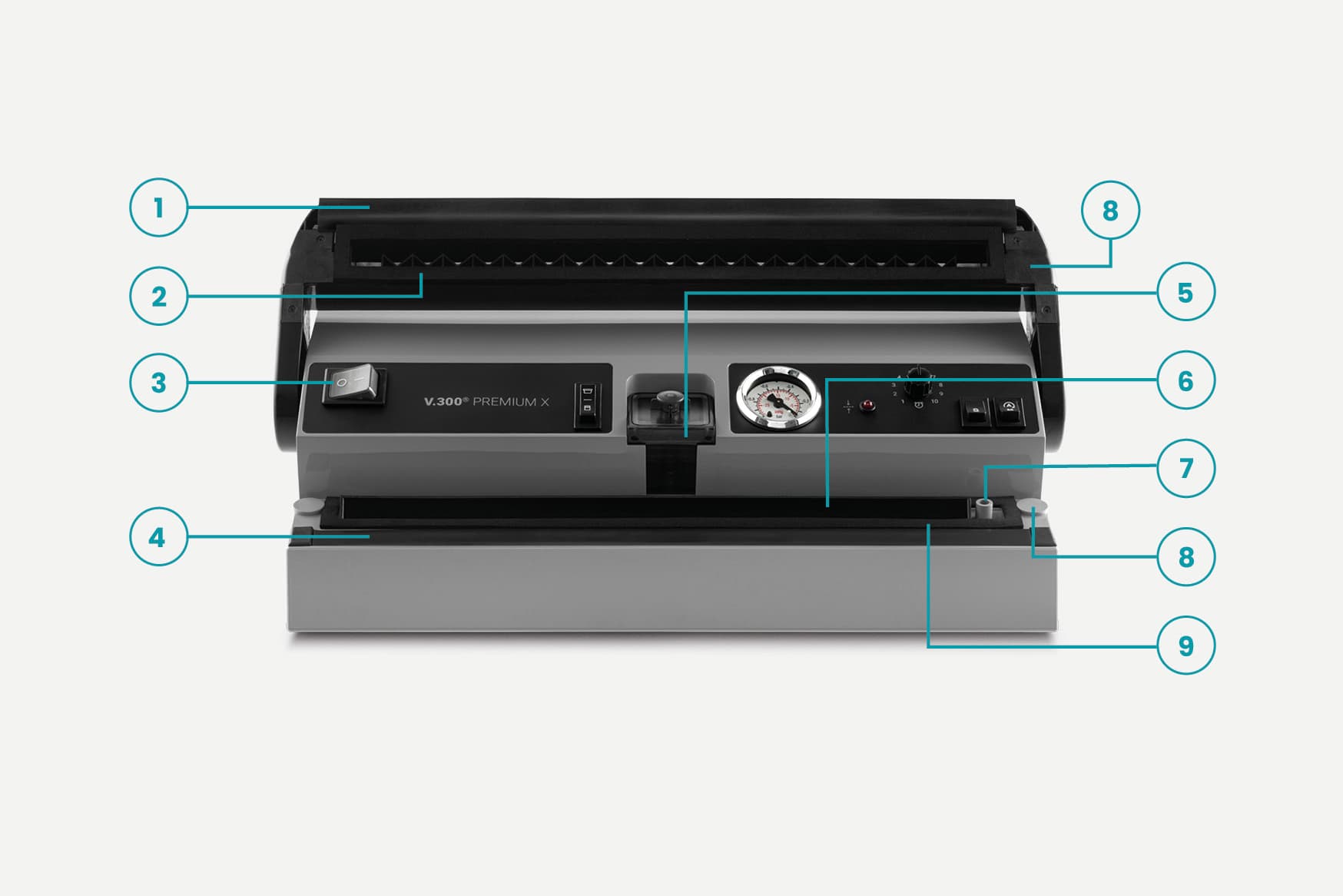
The parts of a LAVA sealer
- 1
Counter-pressure strip: in the lid, presses the bag onto the seal bar
- 2
Upper foam seal: closes the vacuum chamber from above
- 3
On/off switch
- 4
Seal bar: with glass-fabric tape, so the bag doesn't stick to it
- 5
Liquid separator: catches moisture before it reaches the pump; lifts out for cleaning
- 6
Bag stop: where the bag's end goes; removable
- 7
Container connection: for the hose to vacuum containers and jars
- 8
LCS magnets: hold the lid closed during the cycle
- 9
Lower foam seal: closes the vacuum chamber from below
The controls
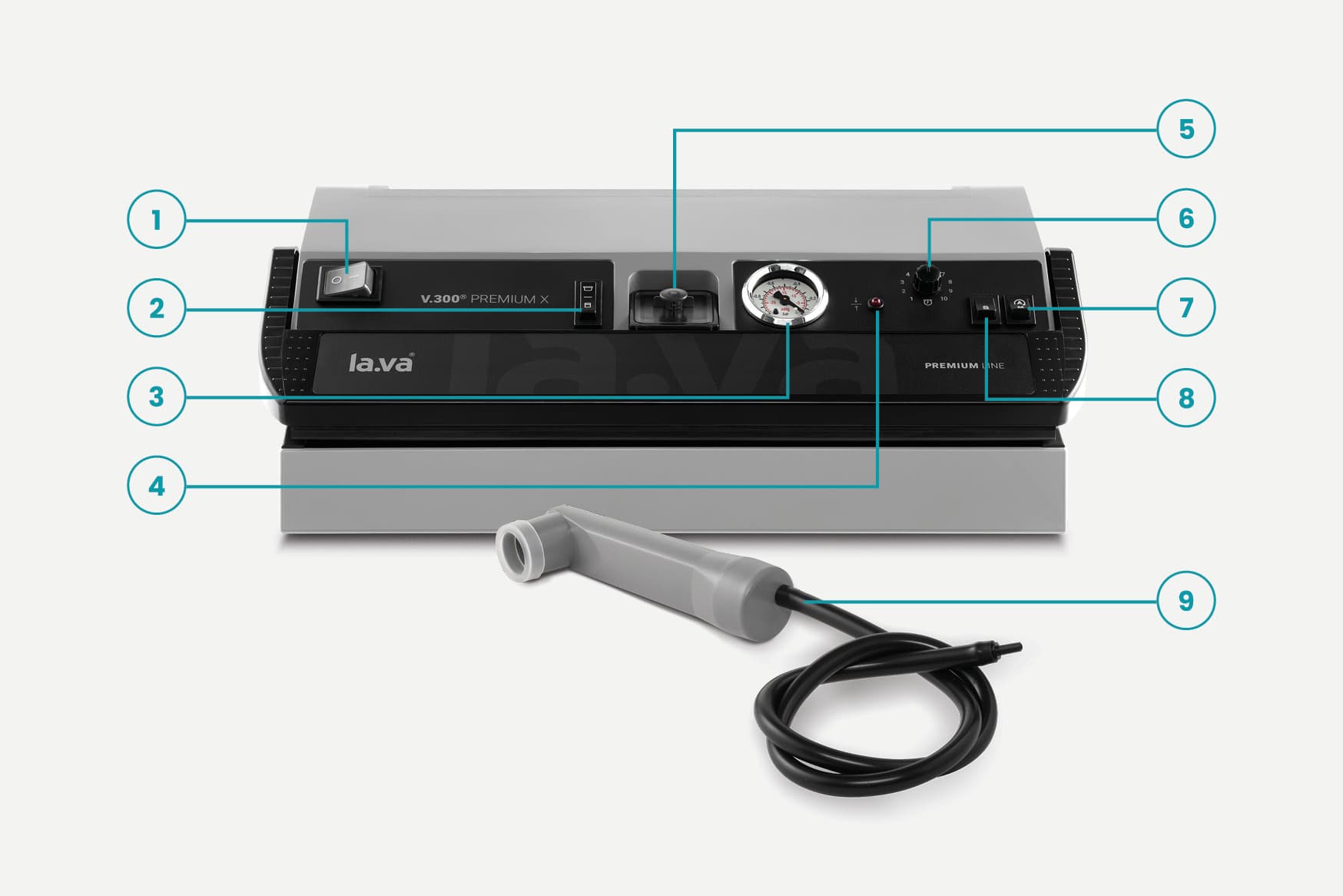
- 1
On/off switch
- 2
Bag or container: selector
- 3
Pressure gauge: the real vacuum in bar
- 4
Sealing light: on while the bar seals
- 5
Window on the liquid separator
- 6
Sealing time: 1 to 10
- 7
Automatic or manual: sealing
- 8
Seal now: starts the seal by hand
- 9
Container hose
Automatic or manual?
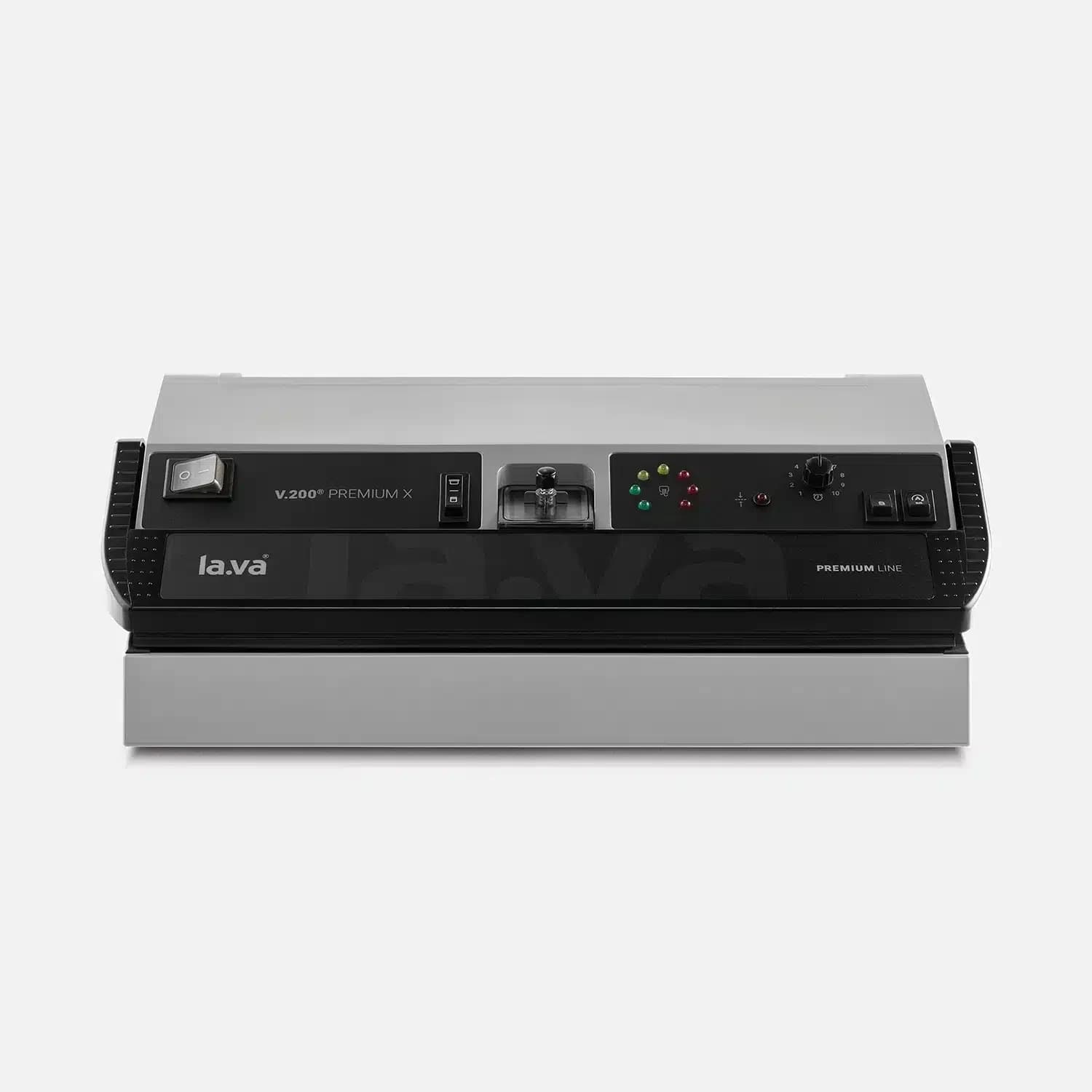
In automatic mode the machine seals by itself at full vacuum: close the lid and wait. In manual mode the pump runs until you press "seal now", so you decide when, for example at a gentler vacuum for soft bread (how to seal soft food). The LAVA V.100 Premium X is manual; from the V.200 Premium X up, every LAVA does both.
Why embossed bags
Smooth bags lie flat against the food, so the air in the corners has nowhere to go and the pump can't reach it. Embossed bags have a fine raised pattern on one side that forms channels, and the air flows out along them. That's why external sealers need embossed bags and rolls, while smooth bags are made for chamber machines.
Keep it working for decades
After each session
Unplug the machine, let the seal bar cool, empty and rinse the liquid separator and wipe the chamber with a damp cloth. Never put the machine in water. Leave the lid unlatched in storage so the foam seals don't flatten.
When it stops pulling a full vacuum
Most often a foam seal is worn, flattened or dirty, or the seal tape is burnt. Both are cheap parts and easy to change at home: LAVA machines are built to be repaired, not replaced, and the spare parts are stocked in Australia.
Mind the seal bar. It gets hot during sealing. Unplug the machine and let it cool before cleaning or changing the seal tape.
LAVA AustraliaOfficial LAVA distributor and vacuum-packaging specialists since 2018.