The short answer
- Full vacuum presses on the bag with almost 1kg on every square centimetre: fine for meat, too much for bread or berries.
- Eating it within days or weeks: seal it at a gentle vacuum with L+.
- Storing it for months: freeze it on a tray first, seal it frozen at full vacuum, and cut a corner of the bag open before thawing.
- Soups, purées, very ripe fruit: use a vacuum container instead of a bag.
Why full vacuum crushes soft food
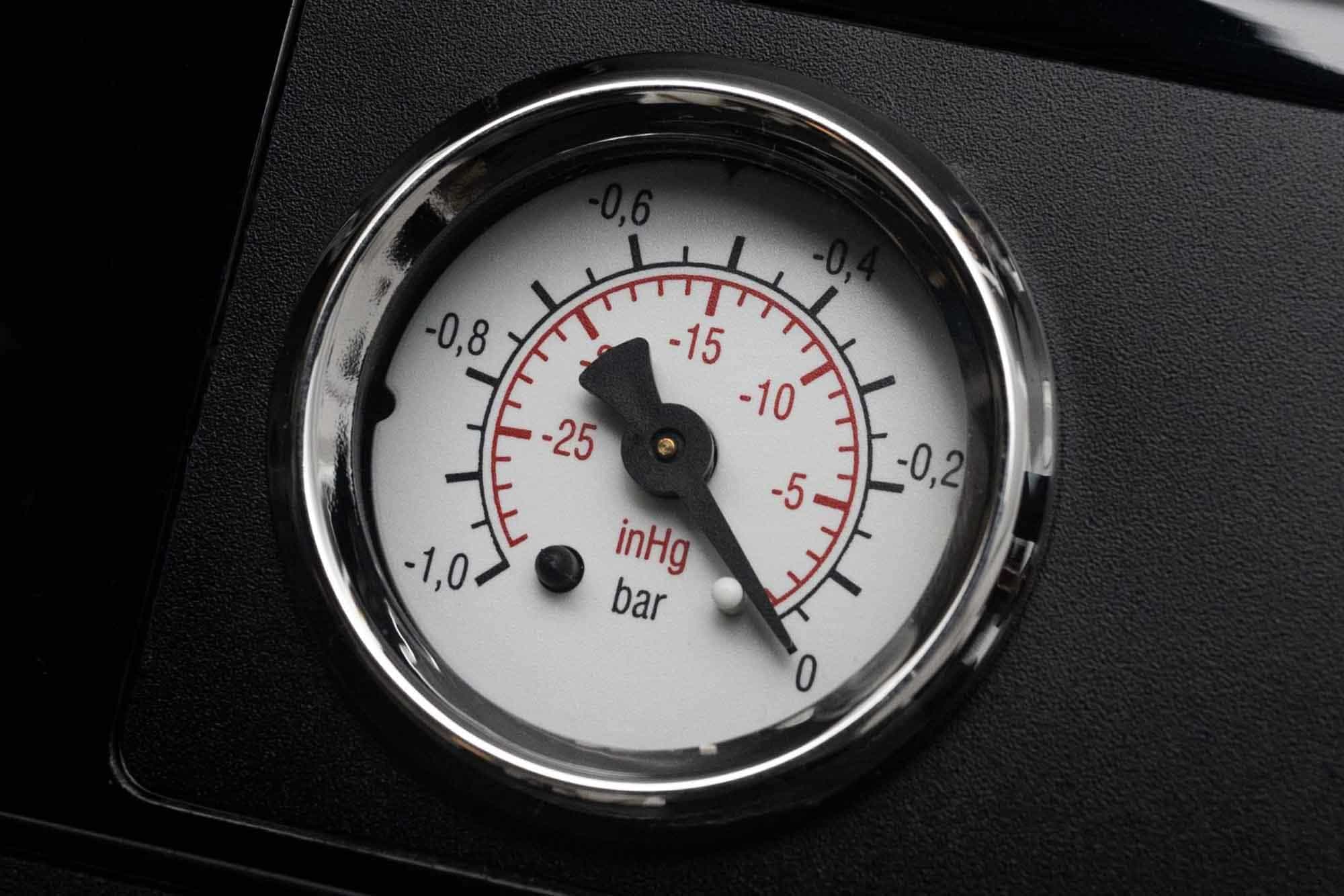
At −0.94 bar a LAVA takes almost all the air out of the bag. What's left is the air outside, pressing on the bag from every side: roughly 100g on every square centimetre for each tenth of a bar, so at full vacuum almost 1kg per square centimetre.
A steak doesn't mind. A loaf of bread, a raspberry or a thin fillet of fish does: their soft structure gives way and they come out flattened, burst or torn. The fix is to press less, or to make the food firm before you press.
Fig. 11 · Gentle or full
How hard the air presses
Vacuum in bar and what it means on every square centimetre of the bag (1 bar ≈ 1kg/cm²). L+ goes down to about −0.2 bar (−0.3 on some models).
Three ways to seal soft food
1 · Gentle vacuum with L+
For food you'll eat within days or a few weeks. Turn the vacuum down until the bag just closes around the food, then seal. Less air comes out, so less pressure goes on the food. The trade-off: some air stays in the bag, so the food keeps for less time than at full vacuum.
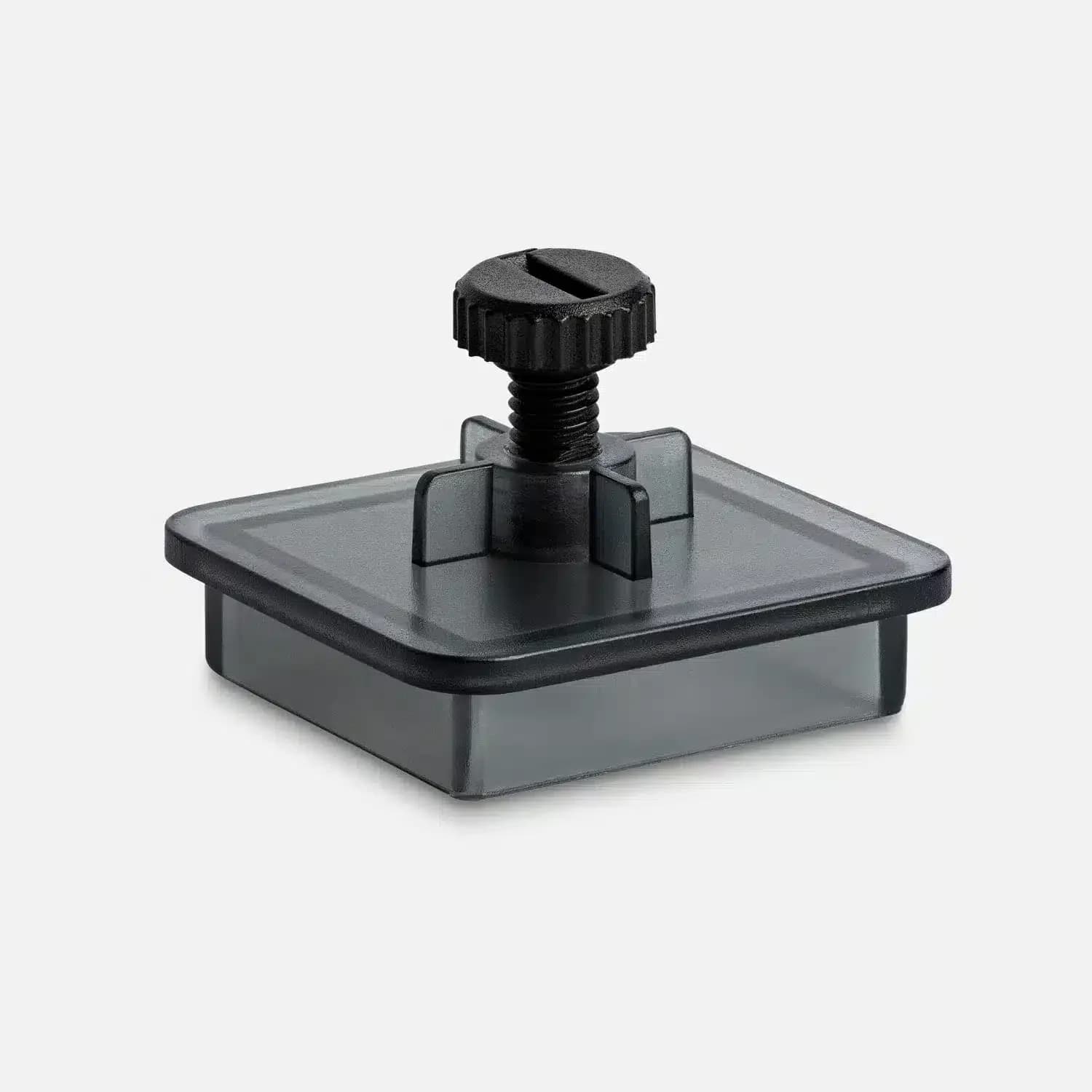
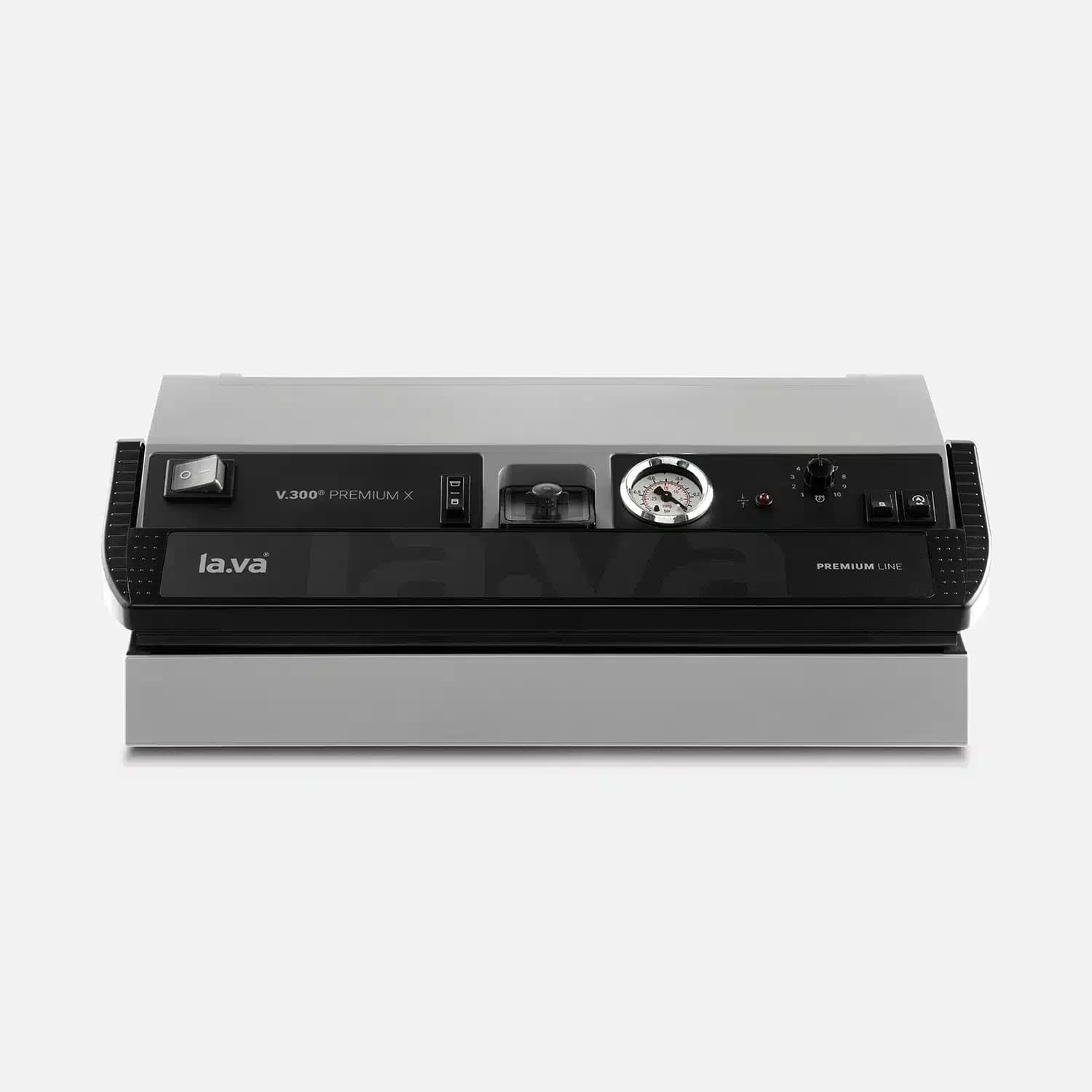
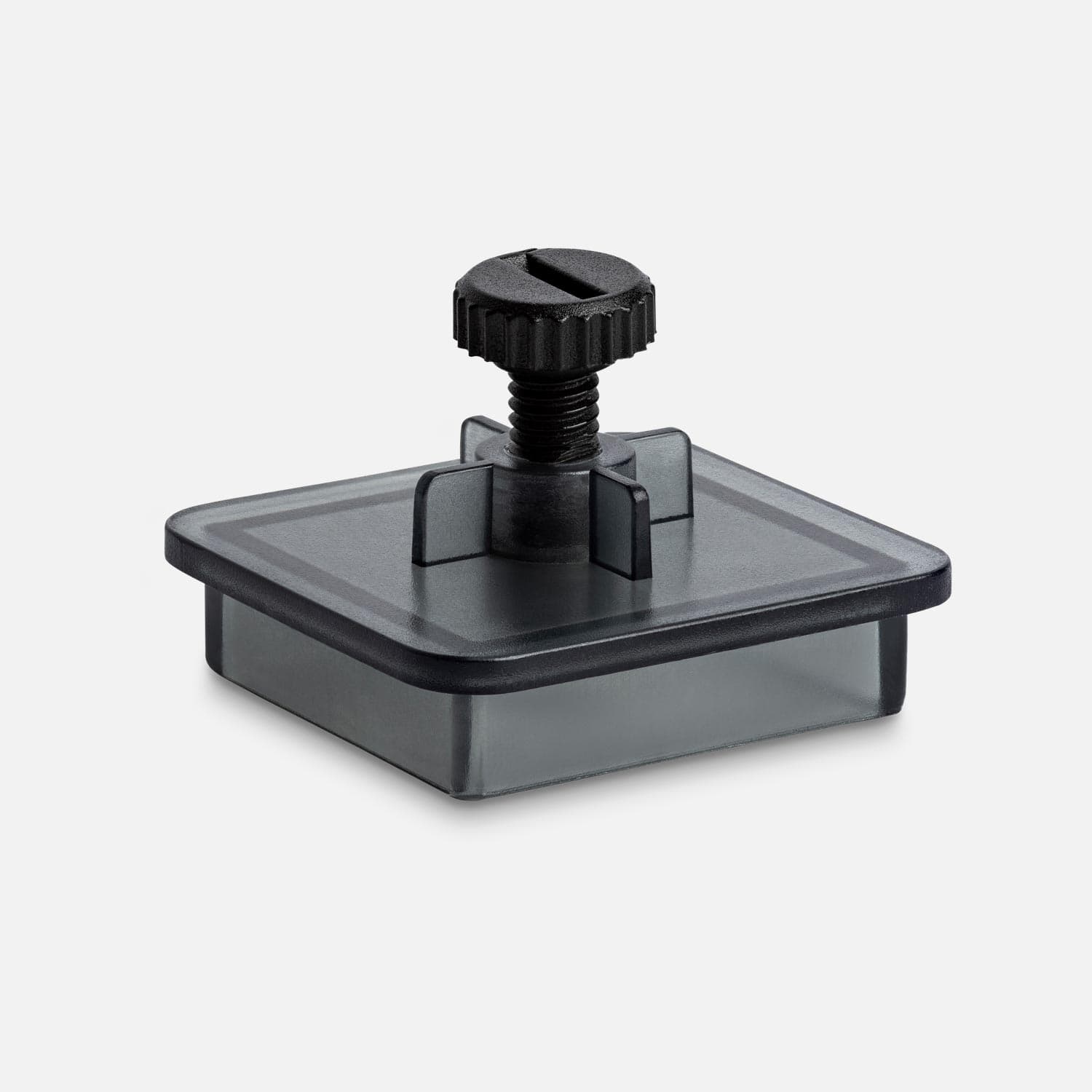
Helps: Vacuum Pressure Control L+ (an add-on for the V.100 and V.200; built into the V.300 and up)
2 · Freeze first, then full vacuum
For storing for months. Spread berries, bread slices or fish fillets on a tray and freeze them overnight. Frozen food is firm, so you can seal it at full vacuum for the longest freezer life. Before thawing, cut one corner of the bag open: otherwise the vacuum squashes the food as it softens.
3 · A container for liquids and purées
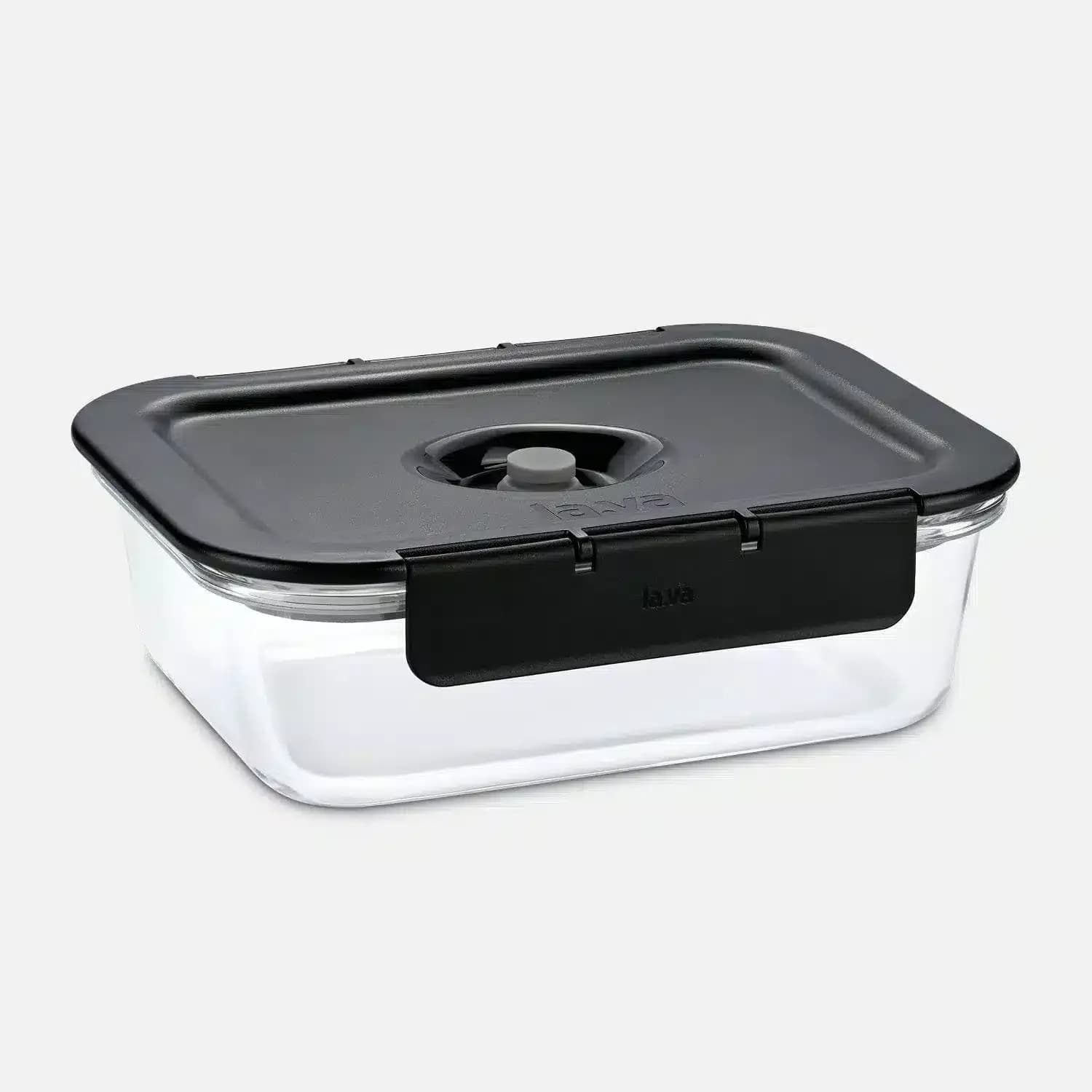
Soups, sauces, purées and very ripe fruit go into a vacuum container: the lid takes the pressure, not the food. No freezing needed.
Helps: G-Line glass containers · Flex Jar-Sealer
Using L+, step by step
- 1
Fit it (V.100 and V.200)Lift the lid off the liquid separator and put the L+ in its place. From the V.300 up it's already built in.
- 2
Bag and manualSet the selector to bag and the machine to manual sealing, so you decide when it seals.
- 3
Open the screwThe further the screw is turned out, the gentler the vacuum. For bread or berries, start with it well open.
- 4
Start and turn in slowlyClose the lid and start. With the screw wide open the vacuum is too weak to hold the lid, so press it down with your palm. Watch the gauge (on the V.100 and V.200 the pressure display) and turn the screw in slowly until the bag just hugs the food.
- 5
Seal by handPress "seal now" once the reading holds at your setting. Note the setting for each food: next time it's the same.
Food by food
| Food | Eat within weeks | Store for months |
|---|---|---|
| Bread, rolls, cakes | L+, gentle, once fully cool | Freeze slices on a tray, seal frozen |
| Berries, cherries, plums | L+, gentle, or a container | Freeze on a tray, seal frozen |
| Fish fillets | L+, a little gentler than for meat; pat dry | Freeze on a tray, seal frozen |
| Soft cheese (not white-rind) | L+, gentle | Freezing changes its texture: better eaten within weeks |
| Herbs, spinach, rocket | L+, gentle, leaves dry | Spinach and chard: blanch, freeze, then seal |
| Tomatoes, aubergine | L+, gentle, or a container | Cook into a sauce, freeze flat, then seal |
Foods from LAVA's list of pressure-sensitive foods; the freeze-first method from LAVA's L+ instructions.
Gentle vacuum, shorter storage. With L+ some air stays in the bag, so food keeps for less time than at full vacuum. It still belongs in the fridge or freezer.
LAVA AustraliaOfficial LAVA distributor and vacuum-packaging specialists since 2018.